
Listen to this Post
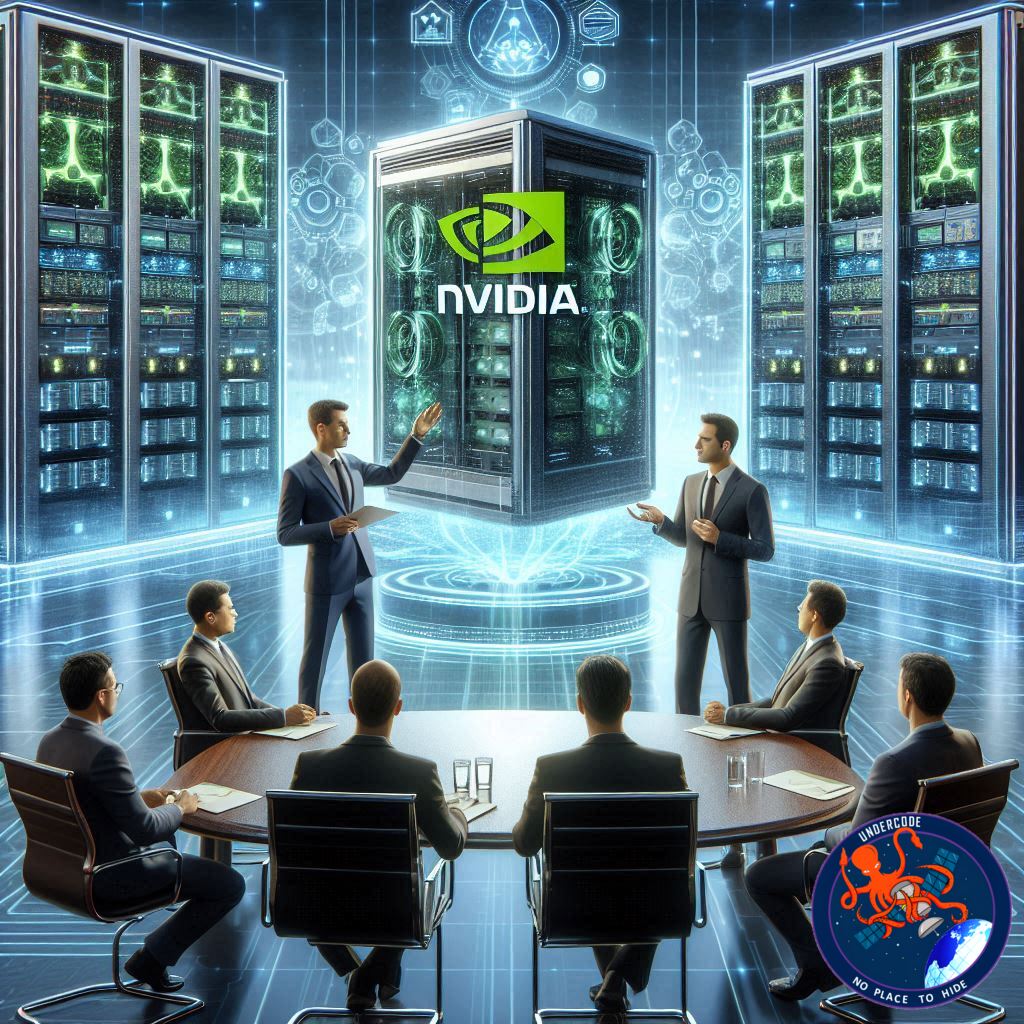
Rising Tension in the AI Silicon Landscape
A quiet tremor has been running through the AI hardware ecosystem, and it erupted into the open when whispers emerged that Meta may spend billions on Google’s custom chips. Nvidia, long considered the unshakable titan of the accelerator world, stepped forward with an icy calm. In a brief statement online, the company insisted it remains one full generation ahead of every competitor and that its platform is the only one capable of running every major AI model across every major compute environment. It even praised Google’s AI advancements, a gesture that sounded confident on the surface yet carried a subtle undertone of competitive vigilance.
Escalating Competition in a Shifting Market
This reassurance arrived after a detailed report revealed that Meta, one of Nvidia’s largest customers, is exploring the possibility of using Google’s TPUs for both cloud and on-premise data centers. The timing struck a nerve. Nvidia’s stock slipped more than three percent on fears that one of the largest AI spenders on the planet could shift a meaningful share of its massive budget toward a different supplier.
Meta’s Potential Move Toward Google Silicon
According to early indications, Meta may start renting TPUs from Google Cloud as early as next year, with purchases for its internal data centers beginning around 2027. Considering Meta plans up to seventy-two billion dollars in AI infrastructure spending this year alone, even a partial migration could reshape the power balance in the hardware market. It would also signal Google’s pivot from relying on TPUs mainly inside its own data centers to actively competing for the global AI processor market.
Google’s Steady Strength in the AI Stack
Google responded diplomatically, reaffirming its commitment to supporting both its custom TPUs and Nvidia GPUs. Demand is accelerating for each, the company said, and both technologies will continue to play central roles in its cloud ecosystem. With strong momentum from its latest Gemini 3 model and the advantage of controlling nearly every layer of the AI stack, Google is emerging as an increasingly influential force as generative AI demand accelerates.
Wall Street’s Watching Eyes
All this unfolds against an uneasy backdrop for Nvidia. Despite delivering spectacular third-quarter earnings, the company has endured volatile trading weeks as investors reassess how much competitive pressure Google, Meta, and others could generate. The AI hardware boom is no longer a single-lane race. It is becoming a crowded highway, and the biggest players are signaling they intend to take more than just the scenic route.
the Original
Nvidia’s Calm Response to Rising Competitors
Nvidia publicly downplayed concerns that Google is threatening its dominance in AI chips. The company emphasized that it remains a full generation ahead of the entire market and continues supplying hardware to Google, calling the search giant’s AI advancements impressive.
Meta’s Billion-Dollar Consideration Toward Google Chips
Nvidia’s comments followed a report stating that Meta is in talks with Google to use TPUs to power its data centers. News of this potential deal immediately shook investors, contributing to a more than three percent drop in Nvidia’s share price.
Immediate and Long-Term Shifts in Buying Behavior
The report suggests Meta could rent Google TPUs beginning next year, and may purchase them directly for internal use starting in 2027. This matters because Meta is one of Nvidia’s biggest customers, planning up to seventy-two billion dollars in AI infrastructure spending this year. Even a modest shift toward Google could reshape the market.
Google’s Expanding Strategy
A deal with Meta would symbolize
Google’s Confidence and Its Growing AI Footprint
Google responded by emphasizing that it continues to support both its own TPUs and Nvidia GPUs. Demand for both is rising as AI workloads expand. Google also recently gained renewed momentum with its Gemini 3 model, which received positive industry reviews. Its ability to control the entire AI pipeline from research to cloud infrastructure gives it an edge many rivals cannot match.
Nvidia’s Market Volatility
The rising competition comes during a volatile period for Nvidia. Despite strong third-quarter earnings that initially eased concerns of an AI bubble, renewed fears surfaced as investors weighed the possibility of Google capturing some of Meta’s massive spending. Wall Street analysts are now paying close attention as competitive dynamics begin to shift more visibly.
What Undercode Say:
Fragmenting Allegiance in AI Hardware Procurement
Meta’s interest in renting or acquiring TPUs is more than a procurement decision. It signals that hyperscalers are tired of being beholden to a single supplier during a historic compute shortage. Nvidia’s powerful ecosystem remains unmatched, but its overwhelming dominance comes with one unavoidable pressure point: dependence. Meta exploring Google TPUs is an act of strategic hedging, not necessarily abandonment.
The Full-Stack Advantage Could Become Google’s Greatest Weapon
Google’s position is quietly potent. It can test, refine, deploy, and scale AI models on custom hardware within its own cloud before offering those breakthroughs commercially. That iterative loop is something Nvidia does not control. If Meta finds that Google’s hardware-software unity delivers more predictable performance per watt or lower total cost of ownership, the gravitational pull toward Google may increase substantially.
Nvidia’s Brand Strength Still Holds Immense Weight
Despite growing competition, Nvidia’s ecosystem remains the gold standard for training advanced AI models. Tools, libraries, and hardware remain more mature than any competitor’s. Even if Meta adopts TPUs for inference or specific workloads, Nvidia’s GPUs will likely continue anchoring the heaviest training tasks. The notion of a zero-sum outcome oversimplifies a market that is expanding faster than any one company can service.
Investor Anxiety Reflects Market Reality, Not Weakness
The market reaction to the Meta-Google report reveals how tightly Nvidia’s valuation is tied to continued hyperscaler loyalty. A three percent drop shows just how sensitive investors are to any sign of diversification. But in reality, the AI hardware landscape is becoming so large that multiple winners are not only possible but inevitable. Nvidia’s challenge is to maintain premium positioning as the industry matures.
Meta’s Timelines Hint at a Strategic Multi-Vendor Future
The suggestion that Meta’s on-premise TPU purchases might begin in 2027 is crucial. It suggests that Meta is building a roadmap for a mixed environment: Nvidia for core training pipelines, and Google TPUs for specific efficiency-optimized tasks. This aligns with how large platforms approached CPU vendors decades ago: diversify to prevent lock-in.
The Next Era Will Be Measured in Ecosystems, Not Chips
The battle is no longer just about chip performance. It is about hardware paired with frameworks, cloud scalability, model interoperability, developer experience, and energy efficiency. Google’s full-stack nature allows it to integrate improvements in a way no other competitor can replicate easily. Nvidia’s counterweight remains CUDA and its enormous developer footprint.
Fact Checker Results
✅ Nvidia did release a public statement asserting it is a generation ahead of the industry.
✅ Reports confirm Meta is exploring the use of Google TPUs, including potential rentals beginning next year.
❌ There is no confirmation that Meta has committed to replacing Nvidia hardware entirely, only exploration and discussion.
Prediction
A Dual-Supplier Future Will Dominate the AI Chip Landscape 🔮📊
Meta is likely to adopt a hybrid strategy where it relies on Nvidia for core training and selectively integrates Google TPUs for specialized workloads. Google will gain ground, but Nvidia’s momentum will remain strong. The long-term outcome will be a diversified compute ecosystem where hyperscalers shape the market through multi-vendor strategies rather than exclusive commitments.
🕵️📝✔️Let’s dive deep and fact‑check.
References:
Reported By: timesofindia.indiatimes.com
Extra Source Hub (Possible Sources for article):
https://www.instagram.com
Wikipedia
OpenAi & Undercode AI
Image Source:
Unsplash
Undercode AI DI v2
Bing
🔐JOIN OUR CYBER WORLD [ CVE News • HackMonitor • UndercodeNews ]
📢 Follow UndercodeNews & Stay Tuned:
𝕏 formerly Twitter 🐦 | @ Threads | 🔗 Linkedin | 🦋BlueSky | 🐘Mastodon


