
Listen to this Post
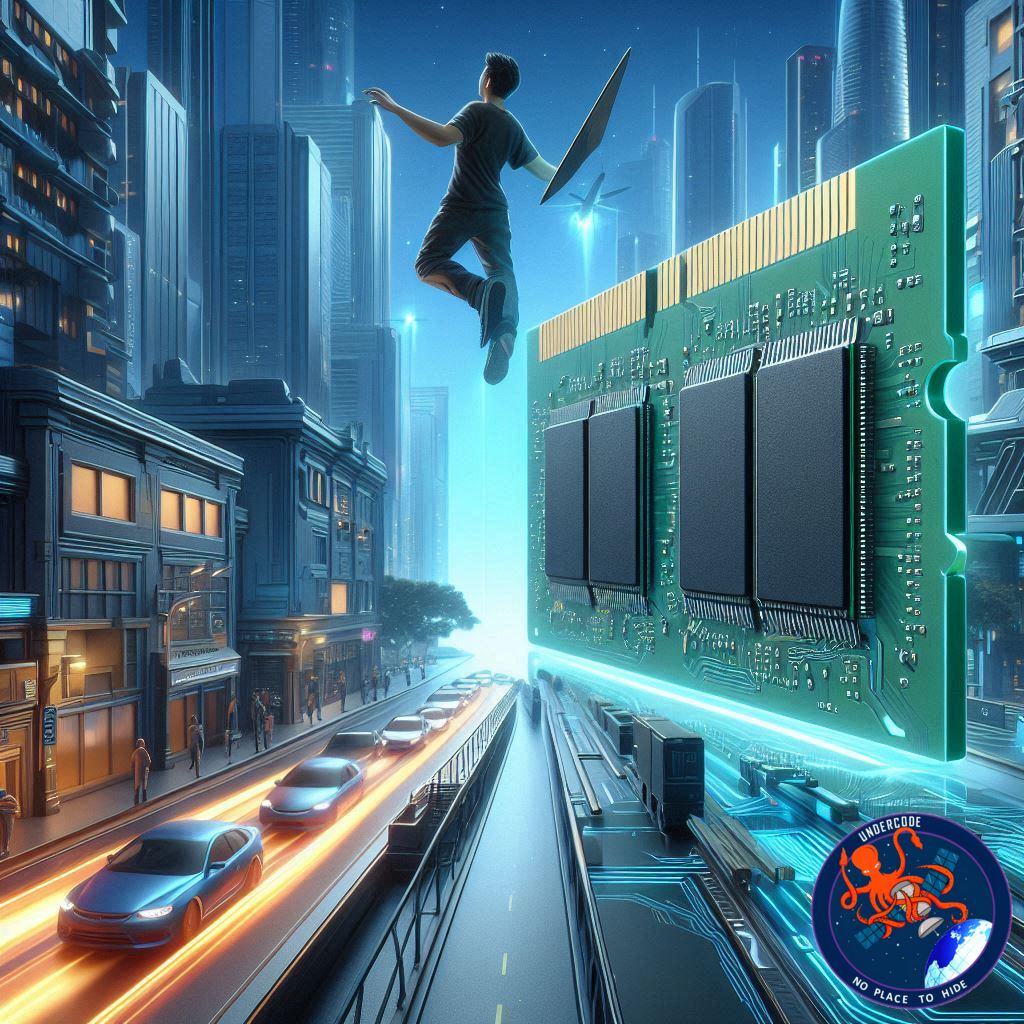
Introduction, Rising Demand for Deep-Storage Memory
Kioxia Holdings is preparing a major technological leap as the era of artificial intelligence pushes global data infrastructure to its limits. Data centers processing massive AI workloads require memory solutions with higher endurance, faster throughput, and dramatically expanded long-term storage capacity. In response to this accelerating demand, Kioxia will begin producing its next-generation NAND flash memory at the Kitakami plant in Iwate Prefecture in 2026. This move marks a strategic restructuring of its manufacturing ecosystem, allowing the company to divide roles between Kitakami and the existing Yokkaichi facility and build an efficient, future-proof production framework.
Expanded the Original Report
Next-Generation Production Strategy
Kioxia Holdings plans to initiate full-scale production of its tenth-generation NAND memory at the Kitakami plant starting in 2026. This new generation represents a significant enhancement in data retention capability and density, engineered specifically to support the rapidly expanding needs of AI-driven data centers around the world.
AI-Optimized Memory Architecture
The upgraded NAND flash technology is developed to handle long-term data storage with greater durability. Its design is built for environments where vast amounts of information must be preserved while simultaneously enabling high-speed parallel processing, which AI workloads heavily rely on.
Dual-Site Production Structure
Kioxia will reorganize responsibilities between its two core sites. Yokkaichi, located in Mie Prefecture, will continue serving as the company’s technological backbone, while Kitakami will take on next-generation mass production. This division aims to increase efficiency across both research and manufacturing pipelines, reducing development bottlenecks and improving output stability.
Industry Context and Semiconductor Landscape
The memory market is deeply intertwined with the broader semiconductor sector. From PCs and smartphones to electric vehicles and data infrastructure, demand for high-performance chips continues to grow. Companies like TSMC, Rapidus, and Kioxia are all navigating rapid shifts in supply chains, global shortages, and evolving market shares. As semiconductor types diversify, including power chips for EVs and advanced logic chips for AI, the role of high-density NAND memory becomes increasingly critical for devices and data systems worldwide.
What Undercode Say:
Strategic Capacity Expansion in the AI Era
Kioxia’s 2026 production timeline is not merely an upgrade in fabrication capability. It is a calculated response to one of the most transformative shifts in digital infrastructure. AI systems rely on persistent storage to feed neural networks, train models, and maintain vast datasets. NAND memory lies at the heart of these operations, serving as the silent engine behind the scenes.
A Manufacturing Pivot Designed for Scalability
Separating Kitakami and Yokkaichi into distinct functional centers reflects a clear industrial logic. Yokkaichi, long established as the hub of Kioxia’s development activity, can now streamline innovation cycles while Kitakami scales up production without interrupting R&D. This ensures that advanced nodes can reach mass production faster and with fewer quality-control risks.
The Long-Term Storage Race
The new tenth-generation NAND technology signals an emerging competition among global memory manufacturers. Longer data retention, higher density layers, and increased durability are features deeply aligned with AI training farms and hyperscale cloud providers. Companies that fail to enhance long-term reliability may find themselves sidelined as cloud architecture grows more complex.
Japan’s Semiconductor Renaissance
Kioxia’s move also reflects Japan’s broader semiconductor revival, which includes TSMC’s Kumamoto plant and Rapidus’ efforts to build advanced logic chip manufacturing capability. Japan aims to re-establish itself as a critical node in the global tech supply chain. High-end memory production is a vital component of this resurgence.
Market Implications for Data-Driven Industries
The tenth-generation NAND rollout suggests several domino effects. Cloud providers may gain improved energy efficiency due to lower write amplification and higher endurance. PC and smartphone manufacturers could pivot toward slimmer form factors with larger onboard storage. Even EV systems, which increasingly store system diagnostics and driver data, may benefit from improved memory resilience.
Competitive Pressure and Innovation Cycles
Kioxia’s investment will likely intensify competition among memory giants. Samsung, SK hynix, and Micron are all accelerating roadmap cycles for 3D NAND technologies. The company that delivers the most layers, the highest cell endurance, and the fastest I/O interface will shape market pricing and global supply dynamics.
Broader Technological Significance
This shift in production is more than an industrial adjustment. It signifies a turning point where memory design becomes a driving force behind AI scalability. As models grow larger and require petabytes of data movement, memory speed and durability become decisive performance parameters rather than background specifications.
Fact Checker Results
✅ Kioxia is confirmed to begin production of next-generation NAND memory in Kitakami in 2026.
✅ The technology belongs to the upcoming tenth-generation NAND architecture.
❌ No evidence suggests that EV power semiconductors are part of this specific production shift.
Prediction
Over the next decade, memory manufacturers will enter an accelerated innovation cycle driven by AI models that exceed current storage assumptions. Kioxia’s tenth-generation NAND will likely become a foundational component in next-generation data centers. 📊 Companies that master high-density, low-latency memory will define the competitive edge of global semiconductor markets.
🕵️📝✔️Let’s dive deep and fact‑check.
References:
Reported By: xtechnikkeicom_0c2bc91d35f01342834f98da
Extra Source Hub (Possible Sources for article):
https://www.reddit.com/r/AskReddit
Wikipedia
OpenAi & Undercode AI
Image Source:
Unsplash
Undercode AI DI v2
Bing
🔐JOIN OUR CYBER WORLD [ CVE News • HackMonitor • UndercodeNews ]
📢 Follow UndercodeNews & Stay Tuned:
𝕏 formerly Twitter 🐦 | @ Threads | 🔗 Linkedin | 🦋BlueSky | 🐘Mastodon


