
Listen to this Post
Introduction, The Hidden Cost of Intelligence
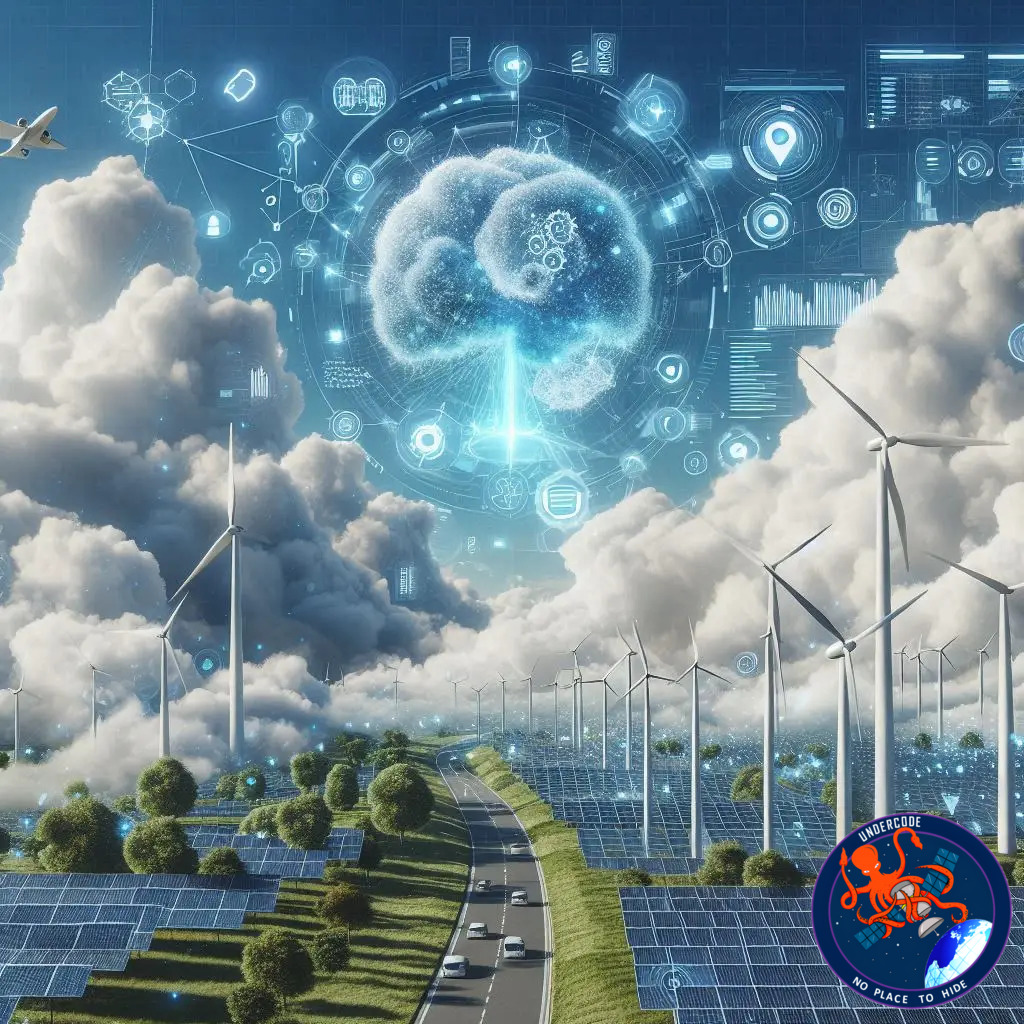
Artificial intelligence is often celebrated for its breathtaking speed, accuracy, and transformative potential. What rarely enters the public conversation is the enormous electrical force required to keep this intelligence alive. Behind every breakthrough sits a data center burning through staggering amounts of power. At the Fortune Brainstorm AI event in San Francisco, Google Cloud CEO Thomas Kurian offered a rare and candid look into how Google anticipated this crisis years before most competitors did. His remarks revealed a company preparing for the future not with panic, but with a methodical plan to overcome the looming energy bottleneck of the AI era.
Global Anticipation of AI’s Energy Strain
Google understood, long before the rise of giant language models, that AI would push the limits of global energy infrastructure. Kurian explained that Alphabet recognized early on that electricity, not just chips, would be the defining constraint for modern AI.
A Problem Years in the Making
Speaking at the event, he noted that Google had been developing AI technologies long before today’s generative systems. This gave them visibility into the eventual explosion in computational energy needs, allowing them to begin preparing well before the crisis reached public attention.
The Growing Weight of AI Power Consumption
Kurian warned that energy would eventually become the most problematic bottleneck for AI, equal to or greater than processor shortages. The International Energy Agency supports this view, estimating that a single AI-optimized data center can consume as much electricity as 100,000 homes. The largest upcoming facilities could require up to twenty times more.
Data Center Capacity Rising at Record Speed
Meanwhile, analysts at Knight Frank forecast a 46 percent surge in global data center capacity within two years, pushing AI’s energy draw upward by nearly 21,000 megawatts. The result is a future where energy supply and computational demand collide.
Google’s Three-Layered Strategy for Reliable AI Energy
Kurian outlined a structured approach to ensure that Google Cloud can meet massive future energy loads without disruption. The first step, he said, is diversifying energy sources. He dismissed the idea that all forms of power can support AI training, explaining that high-intensity training spikes strain certain energy systems beyond their limits.
Managing the Shockwaves of Training Models
He emphasized that fast, high-power training cycles pull such intense surges of electricity that only specific energy infrastructures can sustain them safely. This forces Google to choose power sources strategically rather than opportunistically.
The Second Phase, Radical Efficiency Inside the Data Center
The company is also using artificial intelligence itself to control and optimize energy flow inside data centers. Google’s systems monitor thermodynamic exchange in real time, capturing and reusing energy that would otherwise dissipate.
The Third Phase, Unknown New Technologies on the Horizon
The boldest part of Google’s plan involves developing new forms of energy generation entirely. Kurian did not reveal details, but the statement signals a shift toward technologies not yet seen in mainstream data infrastructure.
Expanding Collaborations to Build the Power Grid of AI
NextEra Energy and Google Cloud have also expanded their partnership to build new U.S. data center campuses equipped with fresh power plants. This marks a shift toward cloud providers becoming active players in the national energy ecosystem.
Industry Leaders Agree, Energy Is the New Silicon
Executives across the tech world are acknowledging that the pace of AI depends as much on energy availability as it does on advances in GPUs and model architectures. Nvidia CEO Jensen Huang recently stated that even the construction timeline for data centers is emerging as a competitive barrier.
China’s Advantage in Speed of Infrastructure
Huang added that China’s ability to build massive facilities at extreme speed gives the country a structural advantage. He contrasted this with the U.S., where erecting an AI-ready data center can take three years, while China can build a hospital in a weekend.
What Undercode Say:
Energy as the New Strategic Battleground
Artificial intelligence has created a shift where energy is not just a resource, but a strategic asset. Google’s early awareness allowed it to prepare for a future in which electricity becomes the primary constraint on innovation.
The Unseen Complexities of High-Intensity Computation
AI training is not simply power-hungry, it is power-volatile. Training spikes behave like electrical shockwaves, demanding instant capacity that many energy sources cannot provide. This is why nuclear, hydro, and advanced grid-balanced systems are increasingly essential.
Why Efficiency Alone Isn’t Enough
Even with recycled heat, AI-enhanced cooling, and optimized computational pipelines, the sheer volume of electricity required by frontier models will outpace any reasonable efficiency gains. The industry will need new forms of generation, not just smarter consumption.
The Market Reality Driving Google’s Decisions
Google is not merely preparing based on theory. The acceleration of AI models and the global race for faster, larger compute clusters forces the company to fortify its energy supply chain. Whoever controls the power controls the intelligence.
Data Centers Becoming the Power Stations of the Future
The next era of AI will blur the line between tech companies and energy providers. Data centers will resemble hybrid technology-energy facilities, equipped with micro-grids, on-site generation, and AI-driven optimization.
Why Partnerships Like NextEra Matter
Google’s collaboration with energy firms shows a move toward vertical integration. Cloud providers are no longer just renting space, they are constructing dedicated infrastructures capable of supporting multi-megawatt AI superclusters.
A New Kind of Infrastructure Race
Competition between nations will not depend only on chip manufacturing. It will depend on how fast they can construct data centers, expand power grids, and deploy next-generation energy systems. The countries that build fastest will compute fastest.
The Shadow Cost of AI Expansion
As AI systems grow, so will environmental and regulatory pressure. Governments will demand transparency on energy usage, carbon impact, and grid strain. Companies will be judged not only on innovation, but sustainability.
Why Kurian’s Warning Matters Now
Google’s early recognition of this problem positions it better than many rivals, but it also signals a warning to the global tech ecosystem. Energy constraints will not be a hypothetical challenge, they will define the trajectory of AI progress.
The Coming Era of Energy-First AI Architecture
Architects of AI systems will need to design models with energy consumption as a primary factor, not an afterthought. The future of AI depends on balancing compute ambition with physical reality.
Fact Checker Results
Google Cloud confirmed long-term planning for AI energy constraints. ✅
International Energy Agency data aligns with the electricity estimates shared. ✅
Details about Google’s new energy technologies remain undisclosed. ❌
Prediction
AI infrastructure will spark a new wave of energy innovation. ⚡
Countries will begin competing on data center construction speed and energy output. 🌍
Tech giants will increasingly operate as hybrid energy-technology conglomerates. 🔧
🕵️📝✔️Let’s dive deep and fact‑check.
References:
Reported By: timesofindia.indiatimes.com
Extra Source Hub (Possible Sources for article):
https://www.discord.com
Wikipedia
OpenAi & Undercode AI
Image Source:
Unsplash
Undercode AI DI v2
Bing
🔐JOIN OUR CYBER WORLD [ CVE News • HackMonitor • UndercodeNews ]
📢 Follow UndercodeNews & Stay Tuned:
𝕏 formerly Twitter 🐦 | @ Threads | 🔗 Linkedin | 🦋BlueSky | 🐘Mastodon


