
Listen to this Post
Introduction, The Hidden War Beneath the Network
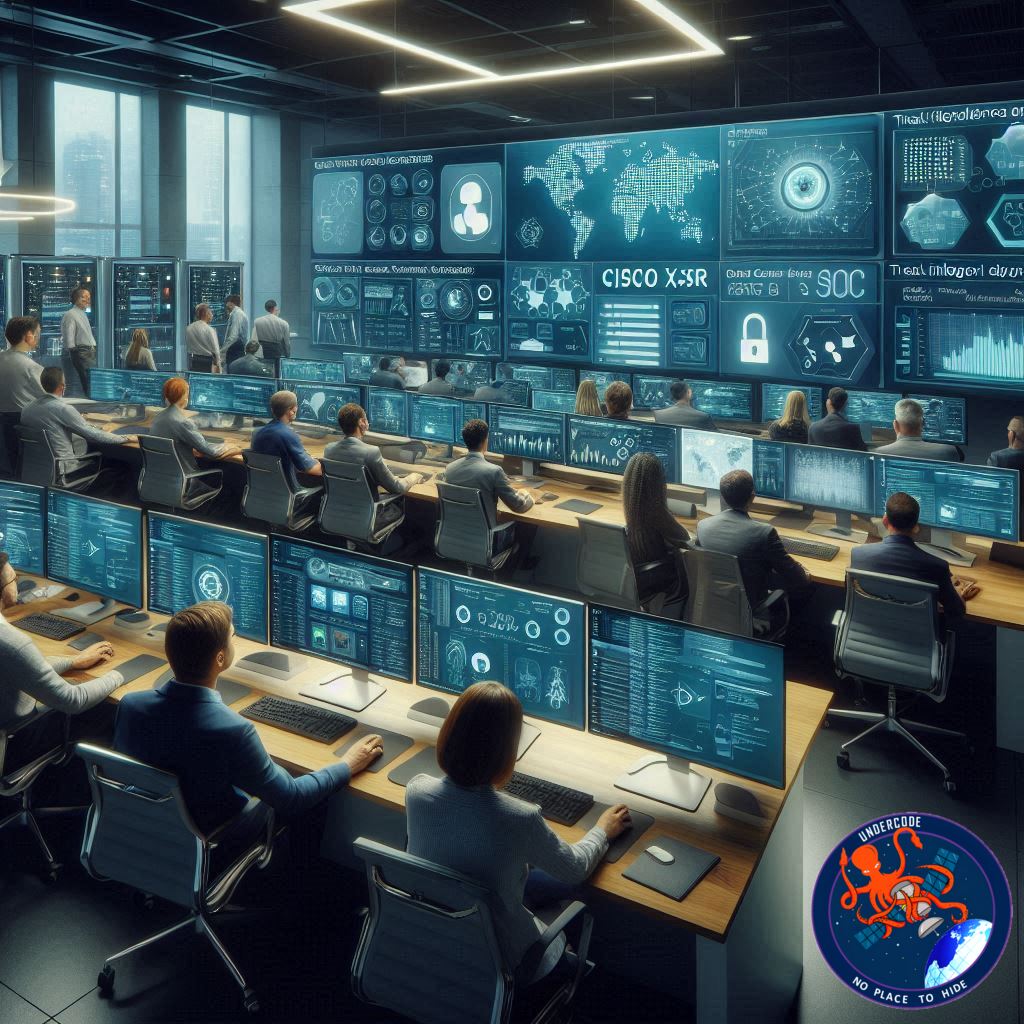
Cybersecurity rarely gives us a front-row seat to the invisible battles raging behind corporate firewalls. Yet at Cisco Live Melbourne, the Security Operations Centre became exactly that, a living laboratory where the world’s most advanced security tools collided with real threats. The standout moment came when Cisco XDR integrated seamlessly with StealthMole, an AI-driven dark web intelligence engine, exposing compromised credentials linked to malicious IP activity. What unfolded was more than a demo. It was a glimpse into the future of modern detection, response, and threat-hunting.
Summary of the Original , A High-Impact Fusion of XDR and Dark Web Intelligence
Dark Web Insight That Cuts Through Noise
In the heart of Cisco Live Melbourne, the SOC team showcased how StealthMole, an AI-powered dark web intelligence platform, elevates traditional threat monitoring. StealthMole scans deep and dark web sources to identify leaked credentials, exposed data, and threat signals that conventional security tools often miss.
Open Integrations That Strengthen XDR Pipelines
Cisco XDR’s open integration model allowed the SOC to plug StealthMole directly into its detection workflows. By blending these capabilities, analysts gained richer incident context, especially when dealing with exposed credentials and malicious infrastructure.
How Cisco XDR Triggered the First Alert
The operation began when Cisco XDR flagged suspicious outbound traffic. Internal systems were pinging a malicious external IP. That hostile address had already been classified as suspicious within XDR’s intelligence sources.
Dark Web Data That Changed Everything
With a single pivot, analysts called StealthMole for deeper intelligence. The platform uncovered that the same malicious IP was tied to leaked user credentials found on the dark web. This was no coincidence, it was a sign of potential credential misuse.
Correlating Leaks With Internal Assets
Once analysts had the leaked credential data, they compared it with internal systems. The correlation exposed possible attack routes and clarified which assets or accounts might be affected.
Sharper Visibility and Readiness
The integration revealed how an attacker might pivot across the network, using stolen usernames or passwords to access internal systems. This enriched intelligence reshaped the investigation.
Immediate Response From the SOC Team
After confirming credential exposure, analysts launched response measures. Impacted users were notified, credentials were reset, and extra monitoring was applied to the affected machines.
A Practical Use Case That Mirrors Real-World Risks
One scenario stood out. If cleartext credentials appear on a dark web forum and Cisco XDR detects matching anomalies, the integration triggers automated alerts and begins a credential reset workflow.
A Modern SOC’s Lesson, Stay Adaptive
The article underscored the importance of continuously evaluating integrations, validating data across sources, and using context-rich intelligence to stay ahead of cyber threats.
Stronger Together
The takeaway was clear. Combining StealthMole’s dark web visibility with Cisco XDR’s detection and response capabilities creates a unified, more powerful defense against evolving adversaries.
What Undercode Say, Deep Analysis of the SOC Demonstration
Where Integrations Reshape Incident Response
Modern SOCs need more than alerts, they need context. The integration highlighted at Cisco Live Melbourne demonstrates how valuable enriched data is when decisions need to be immediate, precise, and defensible. Cisco XDR alone is strong, but adding StealthMole turns reactive defense into proactive intelligence-driven security.
The Dark Web Is No Longer a Separate Universe
Traditionally, dark web monitoring operated in a silo. Analysts had to manually check for leaked credentials or rely on periodic reports. By embedding StealthMole inside Cisco XDR, that intelligence becomes part of every incident. This shifts security from periodic checks to continuous awareness.
Credential Exposure Remains a Top Attack Vector
Most cyber intrusions begin with compromised credentials. The demonstration reminds us that attackers depend on weak passwords, reused credentials, and leaked login data. Direct visibility into credential exposure shrinks the attacker’s advantage dramatically.
Correlation Is the New Currency of Security
What sets this integration apart is correlation. Seeing malicious traffic is one thing. Seeing malicious traffic tied to credentials leaked hours or days earlier is game-changing. SOC teams can see not just what happened, but why it happened and who might be targeted next.
Automation Makes Analysts Faster and More Accurate
The workflow shown would traditionally require three separate tools and manual cross-checking. With automated enrichment, an analyst can jump from detection to remediation in minutes. This is how modern SOCs scale without burning out their teams.
Better Intelligence Means Better Prioritization
One of the rarely discussed SOC challenges is noise. Thousands of alerts, few actionable. When StealthMole enriches a Cisco XDR alert with proven dark web exposure, that alert becomes high-priority. This helps teams stop wasting cycles on low-risk anomalies.
Real-World Demonstrations Matter More Than Labs
What made this event impactful was the operational realism. At conferences, demos often rely on prebuilt scenarios, yet this SOC was built as a live environment. Analysts weren’t replaying scripts, they were investigating real telemetry.
Visibility Breeds Confidence
When analysts understand exactly why an alert matters, they can make decisions faster and communicate them clearly. This integration provides confidence by showing the full threat story instead of isolated pieces.
Unified Security Architecture Is the Future
Organizations can no longer rely on fragmented security stacks. The demonstration reinforces that the highest value emerges when detection, automation, and threat intelligence operate as one. Cisco’s open architecture makes these partnerships possible.
Dark Web Intelligence Will Soon Be Mandatory
As threat actors increasingly trade stolen data, integrated dark web visibility will become a required capability for every modern SOC. The Melbourne demonstration showed why. Without StealthMole, the credential compromise might have gone unnoticed.
🔍 Fact Checker Results
Cisco XDR does support open integrations with third-party platforms like StealthMole.
Dark web intelligence significantly improves credential-related incident response.
Real-world SOC exercises at Cisco Live events use live telemetry, not simulated datasets. ✅
📊 Prediction
Dark web intelligence will soon merge directly into XDR platforms as a standard feature, not an optional integration. 🔐
Organizations that fail to adopt proactive credential-exposure monitoring will see higher breach rates. ⚠️
Hybrid SOC models, blending human analysts with AI-powered enrichment, will become the global norm. 📈
🕵️📝✔️Let’s dive deep and fact‑check.
References:
Reported By: blogs.cisco.com
Extra Source Hub (Possible Sources for article):
https://www.discord.com
Wikipedia
OpenAi & Undercode AI
Image Source:
Unsplash
Undercode AI DI v2
Bing
🔐JOIN OUR CYBER WORLD [ CVE News • HackMonitor • UndercodeNews ]
📢 Follow UndercodeNews & Stay Tuned:
𝕏 formerly Twitter 🐦 | @ Threads | 🔗 Linkedin | 🦋BlueSky | 🐘Mastodon


