
Listen to this Post
🎯 Introduction
Artificial intelligence is no longer confined to isolated models running on single machines. Today’s AI workloads are massive, distributed, and relentless in their demand for speed, bandwidth, and reliability. From training trillion-parameter language models to running real-time inference across global systems, the modern data center has become a living, breathing AI organism. At the center of this transformation lies a technology most people overlook but no AI system can survive without: the AI Network Interface Card, or AI NIC. Understanding why AI NICs exist, what problems they solve, and how they reshape data center architecture is critical to understanding the future of AI itself.
What Is an AI NIC and Why It Exists
AI workloads are pushing infrastructure far beyond traditional limits. Generative AI, agentic systems, and physical AI all rely on massive GPU clusters operating in tight coordination. These clusters do not work in isolation. They constantly exchange data, synchronize parameters, and redistribute workloads across nodes. This shift toward scale-out data centers means the network is no longer a passive pipe. It is an active participant in AI performance.
Traditional Ethernet has become the dominant standard for connecting GPU clusters, with nearly 90 percent of organizations already using or planning to use Ethernet-based AI networking. However, Ethernet was originally designed for general-purpose traffic, not for the extreme bandwidth and ultra-low latency demands of AI workloads. Packet loss, congestion, and unpredictable latency become serious bottlenecks when millions of data packets are exchanged across dozens or hundreds of GPUs.
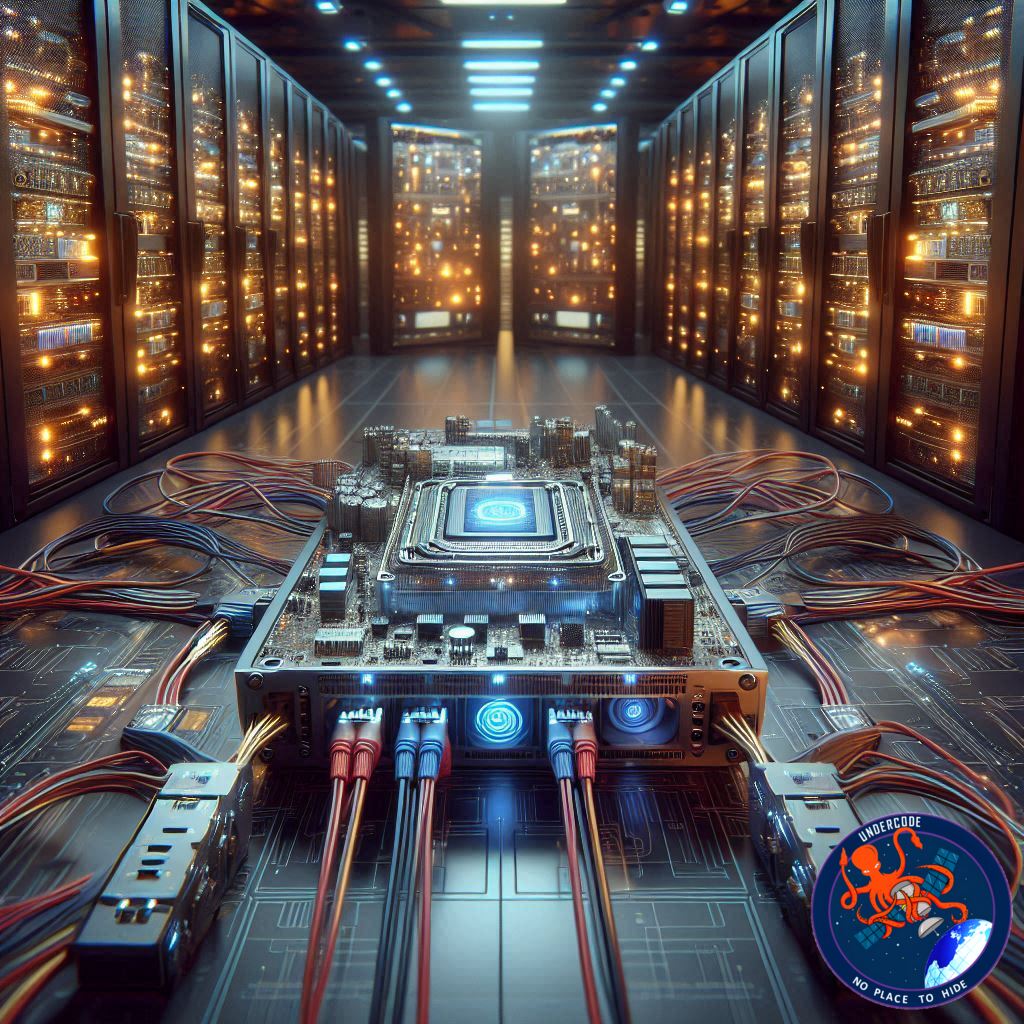
An AI NIC is designed specifically to address these challenges. It offloads network-related tasks from CPUs and GPUs, optimizes bandwidth usage, and intelligently manages traffic flows. By doing so, it enables efficient GPU-to-GPU communication at scale. The result is a network that behaves less like a bottleneck and more like a performance accelerator.
What AI NICs Do Inside the Data Center
Modern data centers are deploying increasingly large GPU clusters to process enormous and often unpredictable data flows. Without intelligent networking, these clusters can suffer from congestion, packet drops, and cascading delays. What seems like a minor network hiccup can quickly snowball into training slowdowns or failed inference jobs.
AI NICs are built to prevent these issues before they occur. They monitor traffic patterns in real time, reroute data around congested paths, and minimize packet loss. Advanced implementations, such as AMD’s Pensando Pollara 400 AI NIC, use techniques like path-aware congestion avoidance, selective retransmission, and packet multipathing to keep data flowing efficiently even under heavy load.
Beyond performance, AI NICs introduce programmability into the network layer. Instead of being locked into static routing paths, organizations can adapt how data moves through the infrastructure. This flexibility is critical in an AI landscape that evolves faster than traditional hardware refresh cycles. A programmable AI NIC ensures compatibility across GPUs, switches, and workloads while protecting long-term data center investments.
When and Where AI NICs Are Used
AI NICs are most critical in environments where GPUs operate in parallel across multiple nodes. Training large AI models on a single GPU can take weeks or months. By contrast, distributed GPU clusters enabled by high-speed networking can reduce training time dramatically. AI NICs make this possible by ensuring fast, synchronized data transfers across the entire cluster.
Once models move into production, reliability becomes just as important as speed. AI NICs provide Reliability, Availability, and Serviceability features that give operators visibility into network errors and performance anomalies. Fault detection and diagnostics help maintain uptime, reduce job failures, and ensure consistent AI performance.
Security is another major concern in scale-out networks. AI workloads often process sensitive or proprietary data at massive scale. AI NICs enhance security by supporting robust encryption and isolating network tasks from general-purpose processors. This reduces attack surfaces and protects data as it moves across the infrastructure.
AI NICs as the Foundation of Scalable AI
At their core, AI NICs exist to solve one fundamental problem: the network must keep up with the intelligence it supports. By offloading tasks from CPUs and GPUs, minimizing latency, and enabling secure, high-speed communication, AI NICs transform the network into an intelligent fabric. Their programmability ensures that as AI workloads grow more complex, the infrastructure can evolve alongside them rather than becoming obsolete.
What Undercode Say:
AI NICs represent a quiet but decisive shift in how data centers are designed. The industry spent years focusing almost exclusively on GPUs, treating networking as a secondary concern. That approach no longer works. In large-scale AI systems, the network defines the ceiling of performance just as much as compute does.
What makes AI NICs strategically important is not just speed, but control. By embedding intelligence directly into the network interface, vendors are effectively decentralizing decision-making across the data center. Congestion control, traffic prioritization, and fault recovery no longer depend solely on centralized switches or overloaded CPUs.
This has deep implications for AI economics. Faster training cycles mean lower energy costs and quicker model iteration. More reliable inference pipelines reduce downtime and operational risk. Over time, AI NICs could become as essential and differentiated as GPUs themselves, shaping vendor lock-in and architectural choices.
Another overlooked aspect is software-defined networking at the AI layer. Programmable AI NICs blur the line between hardware and software, enabling rapid adaptation without physical reconfiguration. This flexibility is critical as AI models grow larger, more distributed, and more latency-sensitive.
From an investment perspective, AI NICs protect data center longevity. Instead of ripping and replacing infrastructure every time AI workloads evolve, operators can adapt through firmware and software updates. In an industry where change is constant, that adaptability may be the most valuable feature of all.
🔍 Fact Checker Results
✅ AI NICs are designed to reduce latency and packet loss in large GPU clusters
✅ Ethernet is the dominant standard for AI networking today
❌ Traditional NICs alone are sufficient for large-scale AI workloads
📊 Prediction
🔮 AI NICs will soon become a standard requirement in enterprise AI deployments
🚀 Network intelligence will rival GPU performance as a key AI differentiator
📈 Vendors that control both compute and networking will dominate AI infrastructure markets
🕵️📝✔️Let’s dive deep and fact‑check.
References:
Reported By: www.amd.com
Extra Source Hub (Possible Sources for article):
https://www.discord.com
Wikipedia
OpenAi & Undercode AI
Image Source:
Unsplash
Undercode AI DI v2
Bing
🔐JOIN OUR CYBER WORLD [ CVE News • HackMonitor • UndercodeNews ]
📢 Follow UndercodeNews & Stay Tuned:
𝕏 formerly Twitter 🐦 | @ Threads | 🔗 Linkedin | 🦋BlueSky | 🐘Mastodon


