
Listen to this Post
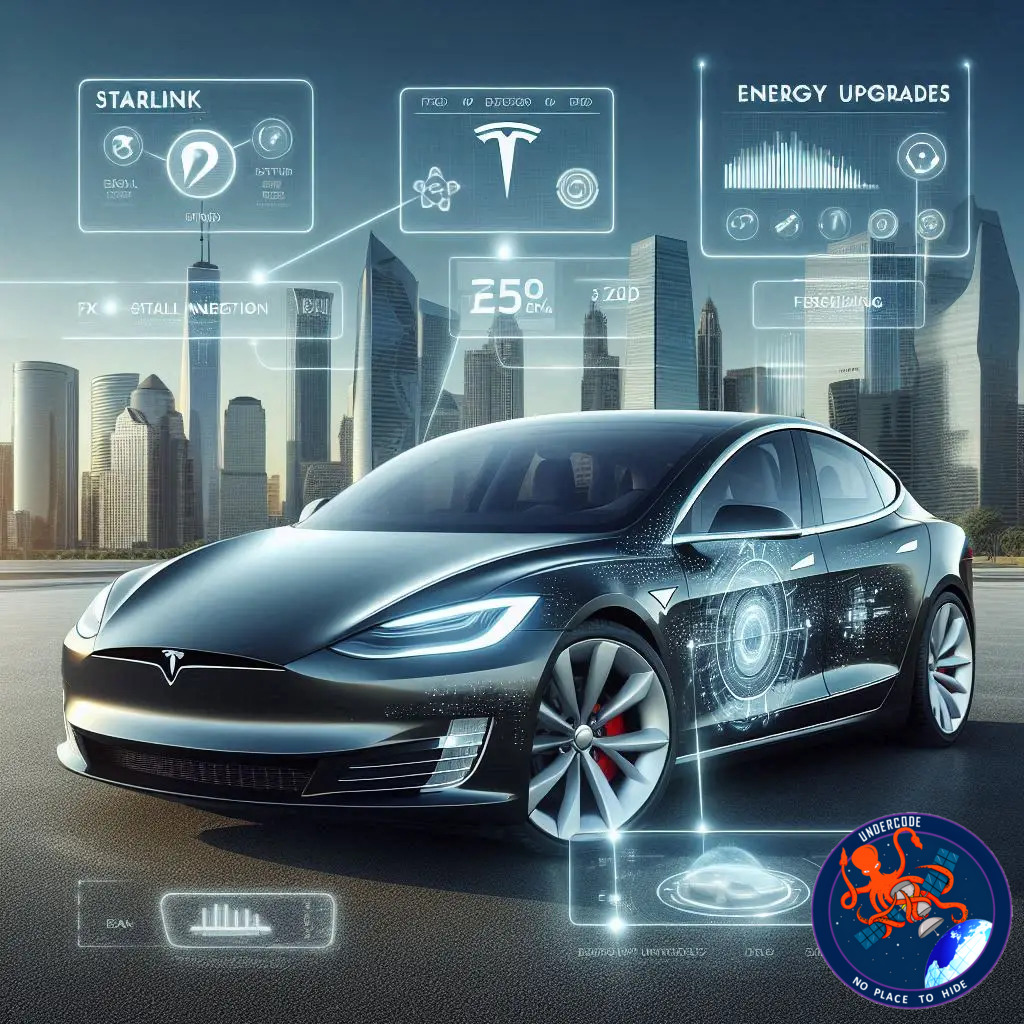
Tesla continues to push the boundaries of automotive innovation, merging advanced connectivity, autonomous driving, and energy solutions. From hints of Starlink integration to new Full Self-Driving software releases and Cybertruck Powershare updates, the company is reshaping the EV experience. With Tesla’s latest patents, software updates, and infrastructure expansions, the automaker is clearly aiming to redefine what a car can do—not just on the road, but in connectivity, energy, and lifestyle.
Starlink Integration Hints in Tesla Vehicles
Tesla’s latest patent, Pub. No U.S. 2025/0368267, reveals a potential integration of Starlink satellite internet directly into vehicles. The patent describes a vehicle roof assembly made from RF-transparent polymer blends instead of traditional glass or metal. Materials like polycarbonate and ABS (Acrylonitrile Butadiene Styrene) would allow uninterrupted RF transmission, enhancing connectivity with satellites and other devices.
The patent emphasizes safety, noting a four-layer roof design to ensure rigidity, crashworthiness, and compliance with FMVSS standards. By combining safety and signal efficiency, Tesla aims to facilitate constant connectivity—even in remote areas, where cellular service often falters. This integration could benefit Tesla owners during off-grid trips and be critical for future Robotaxi fleets, ensuring real-time monitoring and control.
While some owners already mount Starlink dishes inside their vehicles, a built-in system could become a standard or optional feature, offering seamless internet connectivity for Tesla vehicles in the near future.
Tesla Full Self-Driving v14.2.1.25 Surprises Owners
Tesla’s Holiday Update brought an unexpected bonus: a refined Full Self-Driving (FSD) release for Hardware 4 owners. FSD v14.2.1.25 builds on v14.2.1 with improvements in speed limit recognition, parking, and speed profile adjustments. While FSD remains impressive, some minor regressions in prior versions highlighted Tesla’s ongoing fine-tuning process.
The update also includes a range of lifestyle and entertainment features such as Grok with Navigation Commands, Tesla Photobooth, Dog Mode Live Activity, Santa Mode, and enhanced Dashcam Viewer metrics. Navigation and Supercharger mapping improvements, as well as customizable vehicle wraps, show Tesla’s focus on combining functional updates with user experience enhancements.
Cybertruck Powershare Update Delayed
Tesla is updating Cybertruck owners on Powershare, a bidirectional charging system allowing the vehicle to act as a power source for homes, appliances, and other EVs. Originally promised for 2024, the feature is now scheduled for mid-2026. Powershare integrates with Powerwall for vehicle-to-home (V2H) and vehicle-to-load (V2L) functionality.
Tesla explains that delays are due to technical complexities in coordinating multiple Powerwall generations and ensuring grid safety. While transparency is appreciated, some owners feel frustrated after paying extra for the Foundation Series expecting immediate access.
Northernmost Supercharger in North America Opens
Tesla continues expanding charging infrastructure with its northernmost Supercharger in Fairbanks, Alaska. The V4 station offers eight stalls, charging at up to 325 kW, with plans to expand to 48 stalls. Despite the harsh Arctic conditions, Tesla is ensuring reliable charging options for Alaskan EV owners.
The expansion reflects Tesla’s global strategy, adding over 7,700 stations and 73,800 stalls in 2025 alone—a 16% increase in stations and 18% in stalls compared to 2024. The company is on track to install more than 12,000 stalls this year, averaging roughly one new stall every hour.
What Undercode Say:
Tesla is demonstrating a multi-pronged approach to redefining the EV ecosystem. The Starlink integration patent signals a future where vehicles become fully connected nodes, not just for infotainment but for operational reliability in autonomous fleets. RF-transparent polymer roofs indicate Tesla’s commitment to marrying cutting-edge technology with safety—a delicate balance that has historically challenged automakers.
The FSD update reinforces Tesla’s iterative software approach. Despite occasional regressions, the constant refinement of autonomous systems underscores Tesla’s adaptive strategy, where real-world user feedback shapes software evolution. Including entertainment and lifestyle features alongside core driving improvements shows Tesla’s understanding that modern vehicles are extensions of personal digital environments, not just transportation tools.
Powershare’s delays, while disappointing, illustrate the technical difficulty of integrating grid-forming devices across multiple generations. Tesla’s transparency about testing and certification suggests they are prioritizing reliability and safety over speed—a crucial move for credibility in the energy sector. Once launched, Powershare could dramatically shift how EVs are perceived: from vehicles to mobile energy hubs.
The Supercharger expansion, especially in extreme climates like Alaska, highlights Tesla’s strategy of removing geographic barriers to EV adoption. Coupled with Starlink, FSD, and Powershare, Tesla is creating a vertically integrated ecosystem that enhances mobility, energy resilience, and connectivity simultaneously.
Tesla’s innovations also reveal broader strategic moves. Starlink integration positions the automaker to capitalize on SpaceX’s satellite network, ensuring Tesla vehicles remain digitally independent of traditional cellular infrastructure. FSD refinements continue to prepare Tesla for scaling autonomous taxi services, while Powershare sets a precedent for energy-as-a-service from EV platforms. Each initiative feeds into the company’s long-term vision: a self-sufficient, autonomous, and connected mobility ecosystem.
However, challenges remain. The timeline for Powershare, the real-world efficacy of RF-polymer roofs in extreme weather, and user adoption of integrated Starlink all pose potential friction points. Tesla’s ability to execute seamlessly across hardware, software, and energy layers will determine whether these innovations translate from visionary concepts to practical advantages.
Tesla’s ongoing growth is not just technical but symbolic. The company is shaping expectations for what an EV can be—integrated, autonomous, connected, and resilient. The convergence of Starlink, FSD, Powershare, and Supercharger infrastructure illustrates a broader trend in the auto industry: vehicles are no longer isolated products, but nodes in a larger ecosystem of energy, connectivity, and intelligent services.
Fact Checker Results:
✅ Tesla patent confirms RF-transparent polymer roof for satellite connectivity.
✅ Powershare with Powerwall delayed to mid-2026 due to technical complexity.
✅ Fairbanks Supercharger is northernmost in North America, V4 capable, eight stalls.
Prediction:
🌐 Tesla could fully integrate Starlink by 2026, making vehicles independent of cellular networks.
🤖 FSD updates may accelerate Robotaxi readiness, particularly in regions with reliable satellite connectivity.
⚡ Powershare could redefine EV utility, positioning Cybertruck as both a vehicle and mobile energy hub, especially for off-grid applications.
🕵️📝✔️Let’s dive deep and fact‑check.
References:
Reported By: www.teslarati.com
Extra Source Hub (Possible Sources for article):
https://stackoverflow.com
Wikipedia
OpenAi & Undercode AI
Image Source:
Unsplash
Undercode AI DI v2
Bing
🔐JOIN OUR CYBER WORLD [ CVE News • HackMonitor • UndercodeNews ]
📢 Follow UndercodeNews & Stay Tuned:
𝕏 formerly Twitter 🐦 | @ Threads | 🔗 Linkedin | 🦋BlueSky | 🐘Mastodon


