
Listen to this Post
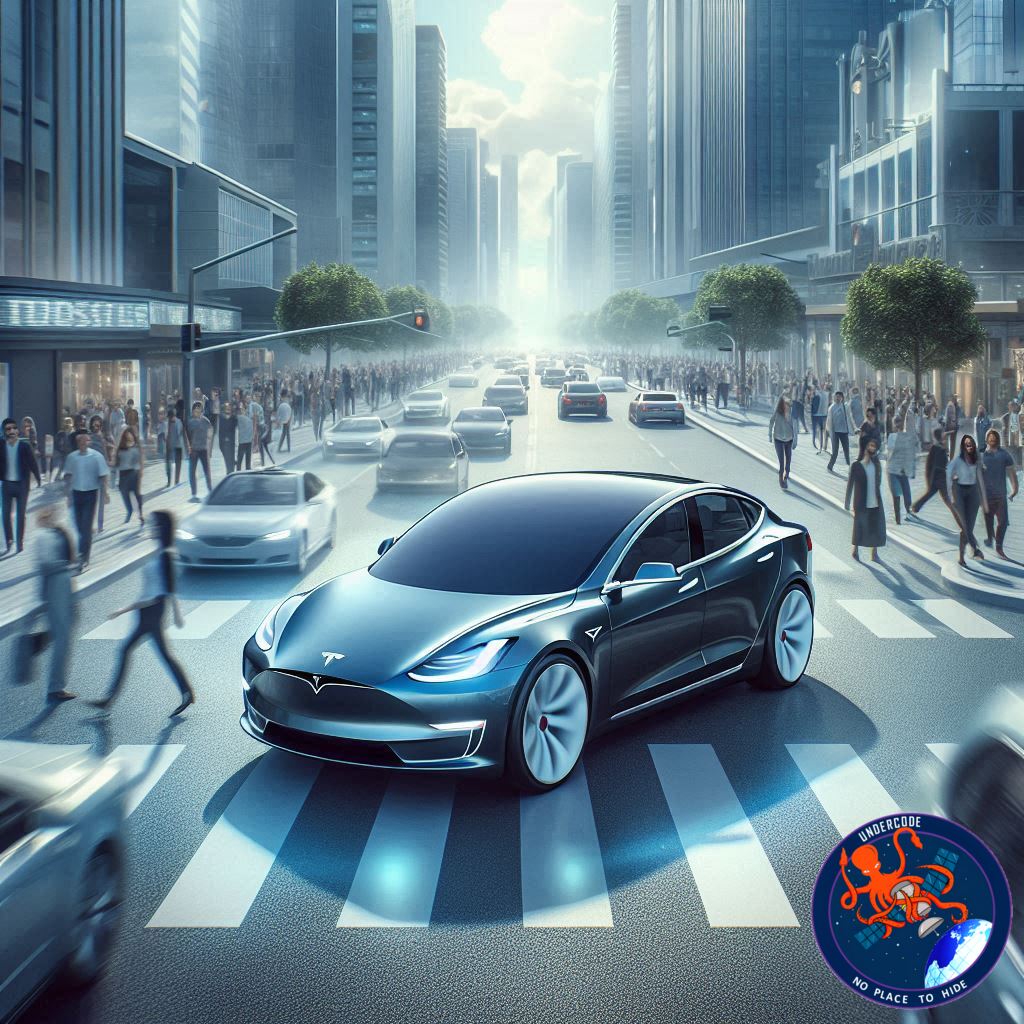
A Turning Point for Tesla’s Autonomous Vision
Tesla’s march toward full autonomy has entered a decisive new phase. In Austin, Texas, the company has begun testing Robotaxi vehicles on public roads with no human occupants inside. This is not a quiet software tweak or a minor operational test. It is a public signal that Tesla believes its technology is ready to take responsibility in the real world.
For years, autonomy has lived in the gray zone between promise and practicality. Tesla’s latest move suggests that this gray zone is shrinking fast. By removing Safety Monitors and deploying truly driverless vehicles, Tesla is testing not just its software, but public trust, regulatory tolerance, and the future shape of urban transportation.
the Original Report
Tesla confirmed that it has begun fully autonomous Robotaxi testing in Austin, Texas, with no Safety Monitors or vehicle occupants inside. Two Model Y Robotaxi units were seen operating on public roads in the South Congress and Dawson neighborhoods, marking one of the most significant steps yet in Tesla’s Robotaxi program.
This testing phase comes shortly after Elon Musk stated that Safety Monitors would be removed from Robotaxi vehicles within weeks. Tesla has been preparing for this transition since launching the Robotaxi fleet earlier in the year, with the explicit goal of enabling driverless rides by the end of the year.
The sightings of two separate vehicles operating independently reinforce the seriousness of Tesla’s efforts. These were not isolated demonstrations but part of a broader push to expand fleet capacity and meet growing demand for autonomous ride-hailing.
Tesla’s long-term objective remains clear: build a scalable, fully autonomous transportation network that can eventually extend beyond Robotaxi fleets and into consumer vehicles. Current Tesla owners already use Full Self-Driving, a system that remains supervised but is widely regarded as one of the most advanced driver-assistance platforms available.
Alongside Robotaxi developments, Tesla has continued refining Full Self-Driving software. The release of Full Self-Driving v14.2.1.25 addressed several issues introduced in earlier versions, particularly around speed profiles, lane-change behavior, and speed-limit recognition. These refinements significantly improved highway driving performance and reduced the need for driver intervention.
Tesla has also hinted at deeper technological integration across its ecosystem. A recent patent suggests the possibility of Starlink connectivity being built directly into Tesla vehicles through RF-transparent roof materials. Such integration could provide uninterrupted internet access, improve fleet monitoring for Robotaxi operations, and eliminate cellular dead zones.
Finally, Tesla quietly rolled out the improved Full Self-Driving version alongside its Holiday Update, particularly for Hardware 4 vehicles in the Early Access Program. This update bundled autonomy improvements with a wide range of user-facing features, from navigation enhancements to entertainment additions, underscoring Tesla’s strategy of rapid, continuous software evolution.
What Undercode Say:
Tesla’s decision to remove Safety Monitors from Robotaxi testing is not just a technical milestone; it is a strategic declaration. This move reframes Tesla’s position in the autonomy race from “leading contender” to “first mover willing to absorb real-world risk.”
Unlike competitors that rely heavily on geofencing, lidar redundancy, and constrained operational domains, Tesla is betting on a vision-based system that learns at scale. Deploying empty vehicles on public roads suggests Tesla believes its neural networks have crossed a reliability threshold that justifies public exposure. That confidence did not appear overnight. It is the product of billions of miles of data and relentless iteration.
The choice of Austin is equally revealing. Texas offers a relatively favorable regulatory climate and diverse driving conditions, making it an ideal proving ground. Dense urban areas, unpredictable traffic behavior, and mixed road infrastructure provide exactly the kind of edge cases Tesla needs to validate autonomy claims.
What stands out most is the timing. Tesla is aligning Robotaxi deployment with meaningful improvements in Full Self-Driving behavior. The refinements in speed profile logic and lane-change confidence directly address human comfort and traffic flow, two factors that matter far more in driverless ride-hailing than in privately owned vehicles.
Speed discipline, in particular, has long been a weak point for autonomous systems. Tesla’s shift toward traffic-aware speed behavior rather than rigid sign interpretation hints at a more human-like driving philosophy. That philosophy becomes critical when no Safety Monitor is present to intervene.
The Starlink patent adds another layer to the strategy. Reliable, satellite-based connectivity is not a luxury for Robotaxi fleets; it is infrastructure. Real-time monitoring, over-the-air updates, and remote diagnostics all depend on uninterrupted communication. Integrating Starlink directly into vehicles would give Tesla a vertical advantage no other automaker currently possesses.
From a systems perspective, Tesla is quietly assembling a closed loop: autonomous driving software, fleet-level data collection, satellite connectivity, and centralized control. Each component strengthens the others. Remove any one piece, and the system weakens. Keep them tightly integrated, and scalability becomes possible.
There is also a psychological dimension. By demonstrating empty cars navigating public streets, Tesla normalizes the idea of autonomy. Public perception often shifts not through press releases, but through repetition. Seeing driverless Teslas become part of everyday city life may prove more persuasive than any technical whitepaper.
Still, this strategy is not without risk. One high-profile failure could slow regulatory progress and invite scrutiny. Tesla appears willing to accept that risk, likely because it believes delaying autonomy poses a greater long-term threat than confronting public skepticism now.
In short, Tesla is no longer asking whether full autonomy is possible. It is asking how quickly society is willing to adapt once autonomy arrives.
Fact Checker Results
✅ Tesla has confirmed Robotaxi testing in Austin with no Safety Monitors present.
✅ Full Self-Driving v14.2.1.25 introduced measurable improvements over earlier versions.
❌ No official confirmation yet that Starlink integration will appear in production vehicles.
Prediction
🚗 Tesla will expand driverless Robotaxi testing to additional U.S. cities within the next year.
🛰️ Starlink-based connectivity will become a core pillar of Tesla’s autonomous fleet strategy.
⚠️ Regulatory debates will intensify as public exposure to driverless vehicles increases.
🕵️📝✔️Let’s dive deep and fact‑check.
References:
Reported By: www.teslarati.com
Extra Source Hub (Possible Sources for article):
https://www.facebook.com
Wikipedia
OpenAi & Undercode AI
Image Source:
Unsplash
Undercode AI DI v2
Bing
🔐JOIN OUR CYBER WORLD [ CVE News • HackMonitor • UndercodeNews ]
📢 Follow UndercodeNews & Stay Tuned:
𝕏 formerly Twitter 🐦 | @ Threads | 🔗 Linkedin | 🦋BlueSky | 🐘Mastodon


