
Listen to this Post
Introduction
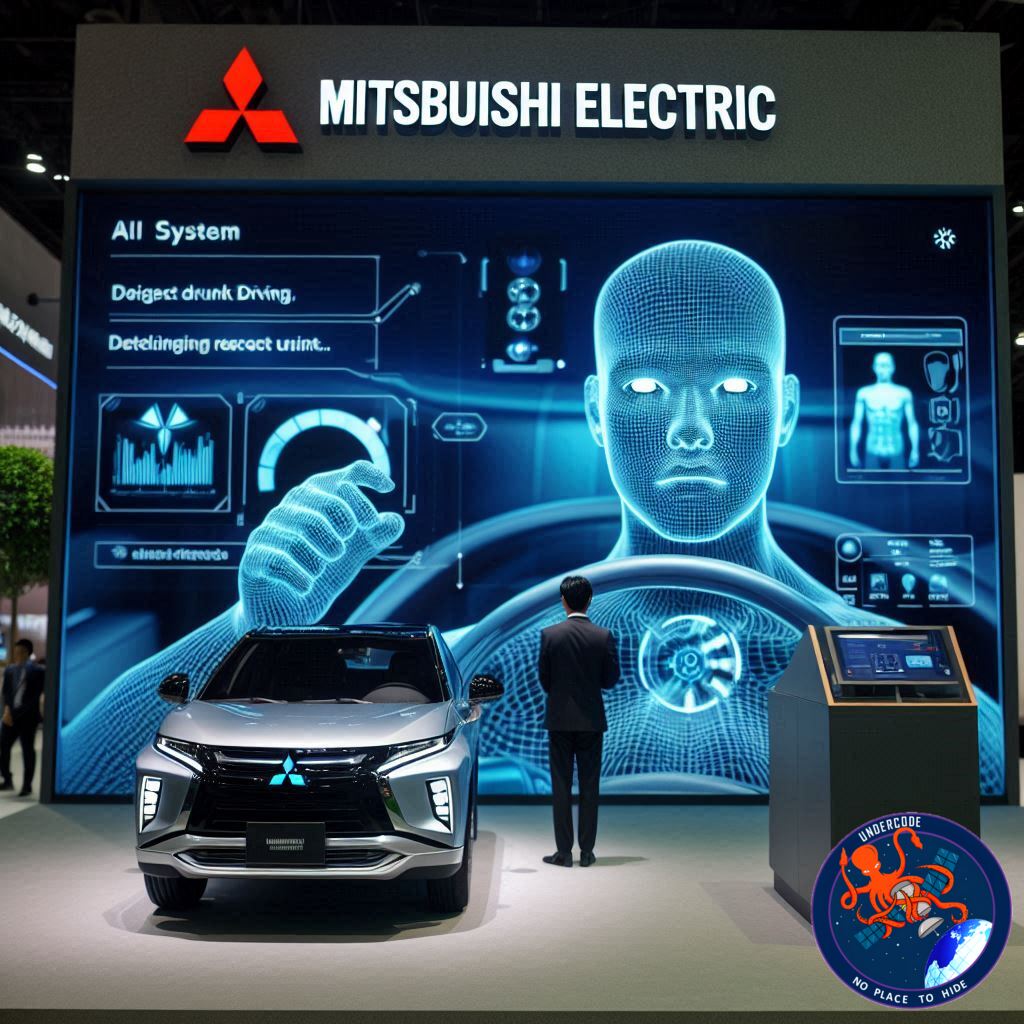
Drunk driving remains one of the most persistent threats to road safety, even as vehicles become smarter and more autonomous. Traditional countermeasures rely heavily on human judgment, law enforcement checks, or invasive breathalyzer systems that are rarely integrated into everyday driving. Mitsubishi Electric is now pushing this boundary by introducing an artificial intelligence technology designed to detect alcohol impairment directly inside the vehicle, using nothing more than cameras and non-contact biometric sensing. This development signals a shift toward preventative safety systems that intervene before tragedy occurs.
AI-Based Drunk Driving Detection Using Human Behavior Signals
Mitsubishi Electric announced the development of a new AI technology capable of estimating whether a driver is under the influence of alcohol by analyzing subtle human signals. The system uses in-vehicle cameras to observe eye movement patterns and facial expressions, while simultaneously measuring the driver’s pulse without physical contact. By combining visual behavioral data with physiological indicators, the AI forms a probabilistic assessment of intoxication rather than relying on a single metric.
When the system determines a high likelihood of alcohol impairment, it is designed to trigger safety responses such as activating hazard lights or even bringing the vehicle to a controlled stop. These functions are still under consideration, but Mitsubishi Electric has made it clear that the ultimate goal is direct vehicle intervention. The company plans to refine the technology in cooperation with automobile manufacturers, positioning it as a future standard feature rather than an optional add-on.
The underlying motivation is clear. Alcohol-related traffic accidents continue to claim lives worldwide, and post-incident solutions have proven insufficient. By embedding intelligence that can detect impairment in real time, Mitsubishi Electric aims to reduce accidents before they happen.
Between September 2024 and July 2025, the company conducted joint experimental research with the University of Auckland in the United States. The study collected driving data from approximately 100 participants across different age groups, races, and genders, all under conditions involving alcohol consumption. This diversity was critical to training the AI model to recognize impairment indicators across a wide range of facial features and physiological baselines.
According to Mitsubishi Electric, the experimental phase focused on improving detection accuracy and validating the system under realistic driving conditions. The company has stated that further technical improvements and evaluations will continue, with the goal of practical implementation from 2026 onward. If successful, this technology could redefine how vehicles perceive driver readiness and responsibility.
What Undercode Say:
Mitsubishi Electric’s approach reflects a deeper transformation in automotive safety philosophy. Instead of treating the driver as a perfectly rational operator, modern vehicle systems increasingly assume that human behavior is unpredictable and sometimes impaired. This AI does not look for obvious signs of drunkenness but focuses on micro-behaviors, subtle eye movement delays, facial muscle responses, and heart rate variability that humans themselves might not notice.
The decision to rely on non-contact pulse measurement is particularly strategic. Physical sensors often raise privacy and usability concerns, while camera-based biometrics allow continuous monitoring without active driver participation. This makes the system more scalable and easier to integrate into existing cabin designs.
However, the implications go beyond drunk driving alone. Once a vehicle can interpret emotional and physiological states, the same framework could be adapted to detect fatigue, stress, medical emergencies, or cognitive overload. Alcohol detection may simply be the first socially acceptable use case for a broader driver-state surveillance ecosystem.
There are also ethical and legal considerations that cannot be ignored. Automatic vehicle stopping based on AI judgment introduces questions of liability, false positives, and user consent. A system that misinterprets nervousness or health conditions as intoxication could create dangerous scenarios if not carefully constrained. Mitsubishi Electric’s emphasis on joint development with automakers suggests an awareness that such decisions cannot be made by technology providers alone.
From a market perspective, this technology aligns well with regulatory trends. Governments worldwide are tightening safety standards and encouraging advanced driver assistance systems. An AI capable of preventing drunk driving could become a powerful compliance tool, especially in commercial fleets, ride-hailing services, and logistics operations where liability risks are high.
Technically, the collaboration with an academic institution like the University of Auckland strengthens credibility. Academic datasets help reduce algorithmic bias and improve generalization, which is essential for a system that must perform reliably across cultures and demographics.
If Mitsubishi Electric succeeds in commercializing this system by 2026, it could set a precedent for AI-driven behavioral enforcement inside vehicles. The real innovation is not just detection, but intervention. The car is no longer a passive machine responding to commands, but an active guardian capable of overruling its driver in the name of safety.
Fact Checker Results
✅ Mitsubishi Electric has officially announced the development of an AI system for estimating drunk driving.
✅ The technology uses facial expressions, eye movement, and non-contact pulse measurement.
❌ Full-scale commercial deployment has not yet occurred and remains a future goal.
Prediction
🚗 AI-based driver state monitoring will expand beyond alcohol detection into fatigue and health risk prevention.
📈 Regulatory pressure will accelerate adoption of intervention-capable safety systems after 2026.
⚠️ Public debate over privacy and AI authority inside vehicles will intensify as such systems become mainstream.
▶️ Related Video (78% Match):
🕵️📝✔️Let’s dive deep and fact‑check.
References:
Reported By: xtechnikkeicom_56050e4bf492e3166fa63a7d
Extra Source Hub (Possible Sources for article):
https://www.stackexchange.com
Wikipedia
OpenAi & Undercode AI
Image Source:
Unsplash
Undercode AI DI v2
Bing
🔐JOIN OUR CYBER WORLD [ CVE News • HackMonitor • UndercodeNews ]
📢 Follow UndercodeNews & Stay Tuned:
𝕏 formerly Twitter 🐦 | @ Threads | 🔗 Linkedin | 🦋BlueSky | 🐘Mastodon


