
Listen to this Post
Introduction
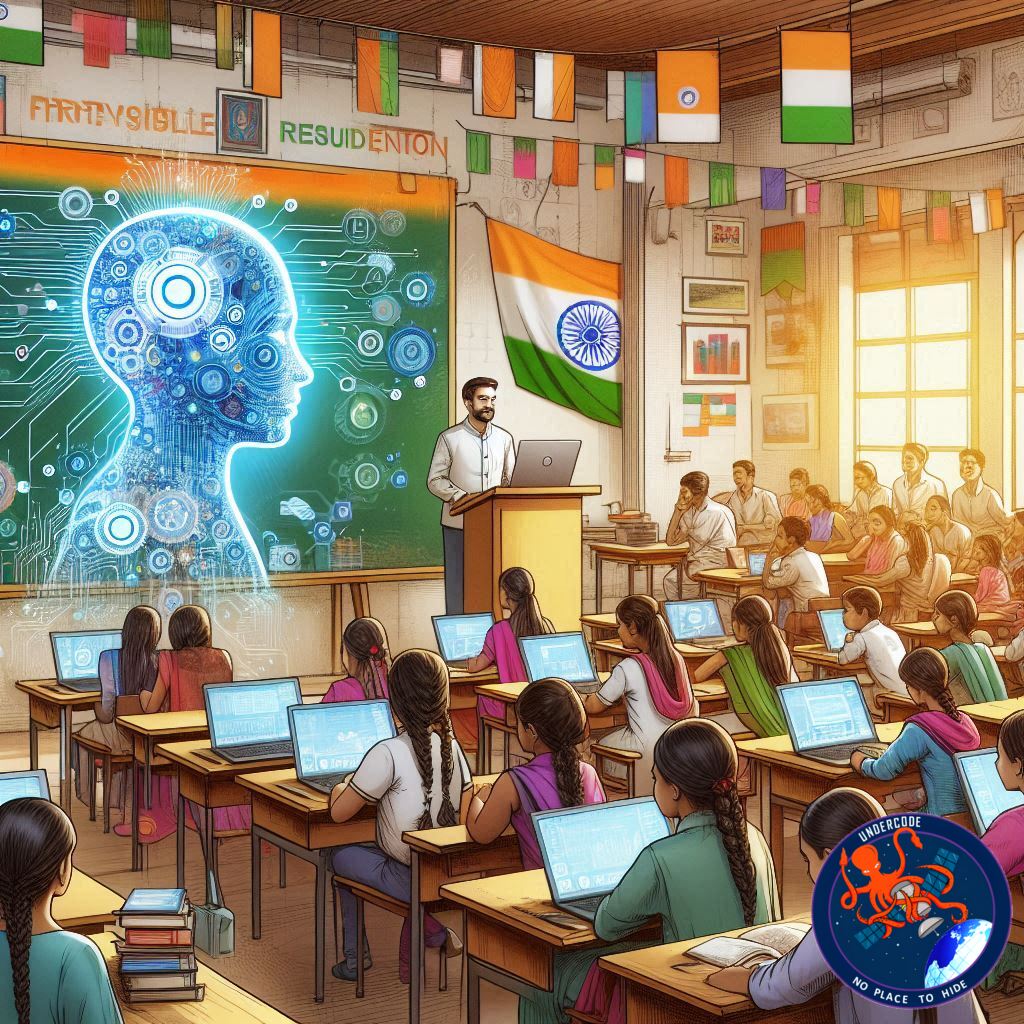
India’s education system is standing at a critical crossroads. Digital tools and artificial intelligence are no longer experimental ideas discussed in policy documents or pilot programs. They are gradually becoming part of classrooms, campuses, and leadership decisions. Yet this transition is far from uniform. While elite institutions and urban schools move ahead with AI-driven learning models, many others continue to struggle with basic digital access. Against this backdrop, conversations are shifting from whether AI belongs in education to how it should be used responsibly, ethically, and meaningfully. Recent developments, including a major education leadership conference in Hyderabad, offer a revealing snapshot of where the country stands and where it might be headed.
India’s Digital and AI Education Landscape, A the Shift
India’s education sector has seen measurable progress in digital access over the past two years, although the growth remains uneven. Data from the Ministry of Education shows that computer availability in schools increased from 57.2 percent in 2023–24 to 64.7 percent in 2024–25. Internet connectivity followed a similar upward trend, rising from 53.9 percent to 63.5 percent. These figures reflect a steady push toward digitisation, especially under national initiatives that emphasise technology-supported learning.
At the higher education level, the adoption of artificial intelligence has moved even faster. A 2025 survey revealed that more than 60 percent of higher educational institutions allow students to use AI tools in their academic work. Around 53 percent actively use generative AI to create learning materials, while many others deploy AI-powered tutoring systems, adaptive learning platforms, and data-driven assessment tools. AI is no longer peripheral; it is increasingly embedded in teaching methods, evaluation processes, and even campus operations.
Much of this momentum aligns with the National Education Policy 2020, which places strong emphasis on digital learning environments, virtual laboratories, and technology-led pedagogy. The policy framework envisions a system where technology enhances access, personalisation, and skill development, preparing learners for a future shaped by automation and intelligent systems.
However, this progress is accompanied by persistent challenges. A large number of government-run schools still lack reliable digital infrastructure. Gaps in teacher training, institutional readiness, and funding continue to widen the divide between well-resourced private institutions and underfunded public schools. As AI tools become more powerful, concerns around data privacy, academic integrity, student wellbeing, and over-reliance on technology are growing louder.
As a result, the central question facing educators and policymakers has evolved. The debate is no longer about whether AI should enter classrooms. Instead, it focuses on how AI can be integrated responsibly, without compromising human-centred learning, ethical standards, or equitable access.
Leading with AI, Hyderabad’s Education Leaders Take the Stage
These national conversations found a practical forum in Hyderabad, where Oakridge International School, Gachibowli, hosted a city-wide conference titled “Leading with AI: Shaping the Future of Education.” The event brought together senior school leaders from across the city to examine how artificial intelligence can be used thoughtfully to transform teaching, learning, and leadership.
The conference was designed as a working platform rather than a traditional seminar. Participants explored global trends in AI-driven education and discussed their implications for Indian schools. Sessions focused on real classroom applications, including personalised learning pathways, AI-supported assessments, and data-informed decision-making. Equal emphasis was placed on ethics, safeguarding, and student wellbeing, highlighting the need for balance between innovation and responsibility.
Dipika Rao, Principal of Oakridge International School, Gachibowli, emphasised that the school’s approach centred on leadership reflection and intentional action. Discussions addressed common myths and anxieties surrounding AI, while also examining sustainable use cases that protect data, encourage independent thinking, and prioritise student safety.
A major highlight of the conference was the keynote and workshop led by international leadership coach Ann Palmer. Her sessions guided delegates through practical frameworks for AI-enabled leadership, change management, and preparing students for an AI-influenced future. She urged school leaders to see AI not merely as a technical tool, but as a catalyst for rethinking pedagogy, leadership culture, and operational models.
The event also showcased Oakridge Gachibowli’s own journey toward AI readiness. The school has integrated a range of digital platforms, including Raz-Plus, ManageBac, Turnitin, Revision Village, JSTOR, CPOMS, and others, to support literacy development, academic integrity, wellbeing monitoring, and access to global knowledge resources. These tools are used across year levels to personalise learning and support holistic student growth.
By convening education leaders around a shared agenda, the conference positioned AI as a means to deepen learning, expand inclusion, and equip students with future-ready skills, rather than as an end in itself.
What Undercode Say:
India’s AI education narrative reveals a familiar pattern: ambition moving faster than infrastructure. The numbers show progress, but they also expose uncomfortable truths. A rise in computer and internet access does not automatically translate into meaningful digital learning. Without trained teachers, clear ethical frameworks, and consistent access, AI risks becoming another layer of inequality rather than a solution to it.
What stands out in the Hyderabad conference is not the technology itself, but the emphasis on leadership mindset. Too often, AI discussions focus on tools, platforms, and software subscriptions. This event shifted the lens toward leadership responsibility, cultural readiness, and long-term thinking. That shift matters. AI in education is less about automation and more about augmentation, supporting teachers, not replacing them.
The focus on myths, anxieties, and safeguarding reflects a mature understanding of AI adoption. Fear-driven resistance and blind enthusiasm are equally dangerous. Schools that succeed will be those that cultivate informed confidence, where educators understand both the capabilities and limitations of AI systems.
Another critical insight is the framing of AI as a catalyst rather than a shortcut. Using AI to reduce teacher workload in planning and assessment is valuable, but its deeper potential lies in enabling differentiated instruction and data-informed wellbeing strategies. When used thoughtfully, AI can free educators to focus more on mentorship, creativity, and emotional support, areas where human connection remains irreplaceable.
However, scalability remains the unresolved challenge. Conferences and pilot programs in urban, private institutions cannot represent the entire education ecosystem. For AI-driven education to be transformative at a national level, policy execution must address teacher training at scale, infrastructure investment in rural and government schools, and clear regulatory guidelines on data privacy and academic integrity.
The Oakridge initiative offers a blueprint rather than a finished model. It shows what is possible when leadership, training, and technology align. The real test will be whether such approaches can be adapted beyond elite contexts and translated into systemic change. If AI becomes embedded only where resources already exist, its promise of inclusion will ring hollow.
Fact Checker Results
✅ Official data confirms rising computer and internet access in Indian schools.
✅ Surveys support increased AI adoption across higher education institutions.
❌ Digital growth remains uneven, with many government schools still lacking infrastructure.
Prediction
📊 AI will become a standard feature in Indian classrooms within the next decade, but its impact will vary sharply by region and institution.
📊 Schools that invest in leadership training and ethical frameworks will see the most sustainable benefits.
📊 Without targeted policy intervention, the digital divide may widen before it begins to close.
▶️ Related Video (80% Match):
🕵️📝✔️Let’s dive deep and fact‑check.
References:
Reported By: timesofindia.indiatimes.com
Extra Source Hub (Possible Sources for article):
https://www.twitter.com
Wikipedia
OpenAi & Undercode AI
Image Source:
Unsplash
Undercode AI DI v2
Bing
🔐JOIN OUR CYBER WORLD [ CVE News • HackMonitor • UndercodeNews ]
📢 Follow UndercodeNews & Stay Tuned:
𝕏 formerly Twitter 🐦 | @ Threads | 🔗 Linkedin | 🦋BlueSky | 🐘Mastodon


