
Listen to this Post
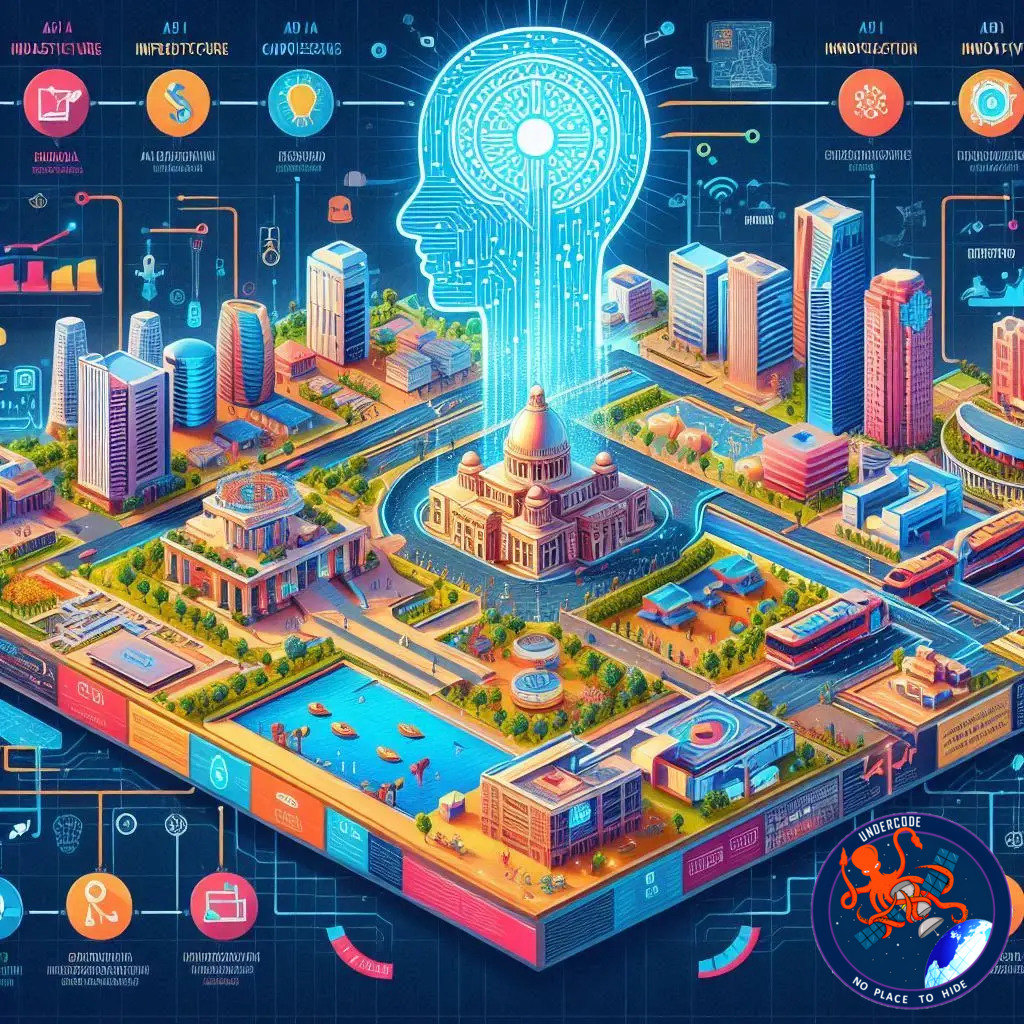
A System in Transition Between Ambition and Reality
India’s education system is moving through a decisive, and often uncomfortable, transition. Digital tools and artificial intelligence are no longer experimental concepts discussed only in elite institutions. They are steadily entering classrooms, assessment systems, and leadership strategies across the country. Yet this transformation is uneven, marked by sharp contrasts between policy ambition and on-ground readiness. While national frameworks promote technology-led learning, the daily reality in many schools still reflects gaps in access, infrastructure, and teacher preparedness. This tension defines the current moment for Indian education, where progress is visible, but far from complete.
National Momentum Toward Digital and AI-Enabled Learning
Recent data from the Ministry of Education shows a measurable rise in digital access within schools, with computer availability and internet connectivity increasing significantly between 2023–24 and 2024–25. Higher education institutions are moving even faster, with a majority now allowing student use of AI tools and more than half actively deploying generative AI to create learning materials. These developments align closely with the National Education Policy 2020, which places digital learning, virtual laboratories, and technology-driven pedagogy at the center of long-term reform. However, behind these encouraging numbers lies a more complex story of uneven adoption, where government-run schools and rural institutions often struggle to keep pace with private and urban counterparts.
Persistent Gaps in Infrastructure and Readiness
Despite clear progress, India’s digital education push remains constrained by systemic challenges. Many schools lack reliable hardware, stable internet access, or trained staff capable of integrating AI meaningfully into daily teaching. The divide is not merely technological but institutional, with disparities in funding, leadership capacity, and long-term planning. As a result, AI adoption risks becoming symbolic rather than transformative, reinforcing existing inequalities instead of reducing them. This reality has shifted the national conversation away from whether AI should be used in education toward how it can be implemented responsibly and equitably.
From Tools to Responsibility in AI Integration
Educators and policymakers are now grappling with deeper questions around data privacy, academic integrity, student well-being, and the balance between automation and human judgment. AI is no longer viewed simply as a productivity enhancer, but as a force that reshapes pedagogy, assessment, and leadership culture. Responsible integration has become the central theme, demanding frameworks that protect learners while enabling innovation. This evolving mindset set the stage for a significant gathering of school leaders in Hyderabad, focused on translating theory into practice.
Hyderabad’s Leadership Dialogue on AI in Schooling
Against this national backdrop, Oakridge International School, Gachibowli, convened a city-wide conference titled “Leading with AI: Shaping the Future of Education.” The event brought together senior school leaders from across Hyderabad to examine how AI can be embedded meaningfully into teaching, learning, and institutional leadership. Rather than promoting technology adoption for its own sake, the conference positioned AI as a strategic leadership challenge, one that requires clarity of purpose, ethical grounding, and collaborative action.
Leadership Perspectives on AI and School Culture
At the conference, school leadership emphasized reflection and intentionality as essential foundations for AI adoption. Discussions centered on confronting myths and anxieties surrounding AI while exploring sustainable models that protect data, encourage organic thinking, and prioritize student safety. The focus extended beyond classrooms to leadership visibility, staff alignment, and the cultivation of a school-wide culture that understands AI as a shared responsibility rather than a technical add-on.
Global Expertise and Practical Frameworks
A key feature of the event was the keynote and workshop led by international leadership coach Ann Palmer. Her sessions guided participants through practical frameworks for AI-enabled leadership, change management, and future-ready skill development. By connecting global trends with local realities, the conference highlighted how Indian schools can adapt international best practices without losing contextual relevance. The emphasis remained firmly on preparation, not prediction, equipping leaders to respond thoughtfully to rapid technological change.
Rethinking Pedagogy, Workload, and Well-Being
The conference reinforced the idea that AI’s true value lies in its capacity to reshape educational priorities. Delegates explored classroom use cases such as personalized learning pathways, adaptive assessment, and data-informed decision-making. Equally important were discussions on ethics, safeguarding, and mental well-being, acknowledging that technological efficiency must not come at the cost of human connection. AI was presented as a means to reduce teacher workload in planning and evaluation, allowing educators to focus more deeply on mentorship and student engagement.
Oakridge Gachibowli’s AI Readiness in Practice
Oakridge Gachibowli’s own journey toward AI readiness served as a practical reference point throughout the conference. The school has integrated a range of digital platforms across year levels to support literacy development, academic integrity, progress tracking, and student well-being. These tools are positioned not as replacements for teaching, but as enablers of more personalized, accountable, and globally connected learning experiences. This approach reflects a deliberate effort to align technology use with educational values rather than novelty.
Convening a Shared Agenda for the Future
By hosting “Leading with AI: Shaping the Future of Education,” Oakridge Gachibowli played a catalytic role in aligning Hyderabad’s school leaders around a common vision. The conference underscored that AI, when guided by ethical leadership and collaborative intent, can become a force for deeper learning, greater inclusion, and future-ready skills. It also highlighted the importance of local leadership forums in translating national policy aspirations into actionable school-level strategies.
What Undercode Say:
India’s education sector is standing at a crossroads where policy optimism meets structural constraint. The data shows undeniable momentum, yet numbers alone cannot capture readiness. AI adoption without leadership literacy risks becoming performative, offering dashboards instead of insight and automation instead of understanding. What stands out in the Hyderabad conference is not the technology showcased, but the framing of AI as a leadership responsibility rather than an IT initiative. This distinction matters deeply.
The emphasis on ethics, well-being, and intentional pedagogy signals a maturing conversation within Indian schooling. AI is being acknowledged as a system that shapes behavior, incentives, and institutional culture. Schools that treat it merely as a productivity tool may gain short-term efficiency but lose long-term coherence. In contrast, leadership-driven integration, as demonstrated at Oakridge Gachibowli, positions AI as a lens through which teaching, assessment, and community engagement are re-evaluated.
There is also a broader implication for equity. Conferences and platforms alone cannot bridge the digital divide, but they can redefine the narrative. When leaders focus on capability-building rather than fear, they create pathways for collaboration between private institutions, public systems, and industry partners. This approach offers a realistic route toward scaling responsible AI practices across diverse educational contexts.
Ultimately, the future of AI in Indian education will be shaped less by algorithms and more by judgment. The schools that succeed will be those that invest in leadership clarity, teacher confidence, and ethical guardrails. Hyderabad’s dialogue suggests that parts of the system are beginning to understand this truth, even as others struggle to catch up.
Fact Checker Results
✅ National data confirms rising computer and internet access in Indian schools.
✅ Surveys show widespread AI adoption in higher education institutions.
❌ Infrastructure readiness remains inconsistent across government-run schools.
Prediction
📊 AI adoption in Indian schools will accelerate unevenly, favoring institutions with strong leadership capacity.
📊 Ethical governance and data protection will become central benchmarks for AI readiness.
📊 Regional leadership forums will increasingly influence how national AI policies are interpreted and applied.
▶️ Related Video (84% Match):
🕵️📝✔️Let’s dive deep and fact‑check.
References:
Reported By: timesofindia.indiatimes.com
Extra Source Hub (Possible Sources for article):
https://www.discord.com
Wikipedia
OpenAi & Undercode AI
Image Source:
Unsplash
Undercode AI DI v2
Bing
🔐JOIN OUR CYBER WORLD [ CVE News • HackMonitor • UndercodeNews ]
📢 Follow UndercodeNews & Stay Tuned:
𝕏 formerly Twitter 🐦 | @ Threads | 🔗 Linkedin | 🦋BlueSky | 🐘Mastodon


