
Listen to this Post
Introduction: When the City Went Dark, Autonomous Driving Faced a Real Test
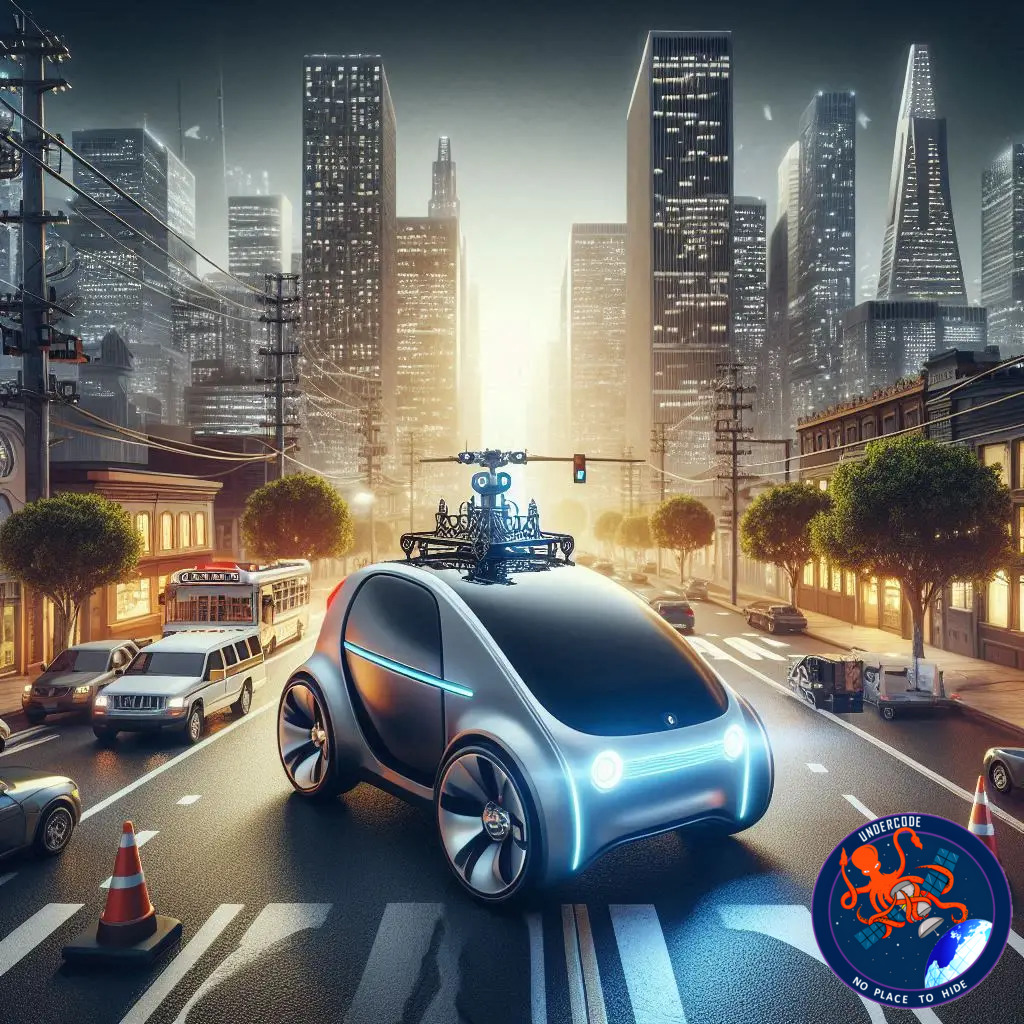
A sudden power outage across San Francisco last week did more than shut down traffic lights. It exposed the fragile intersection between urban infrastructure and autonomous mobility. As nearly one-third of the city lost power, streets descended into gridlock. Traffic signals went dark, police officers manually directed intersections, and emergency services urged residents to stay home. In the middle of this chaos, dozens of Waymo self-driving vehicles were seen stalled or pulling over, drawing public scrutiny and sharp comparisons to rival systems. Days later, Waymo responded with a detailed statement and a promise of immediate fleet-wide updates aimed at preventing a repeat of the incident.
Summary: How the San Francisco Outage Disrupted Waymo’s Autonomous Fleet
Waymo confirmed it is rolling out a fleet-wide software update following last weekend’s PG&E power outage that affected a large portion of San Francisco. The blackout disabled traffic lights across major corridors, creating city-wide congestion and forcing law enforcement to manually manage intersections. The severity of the situation led the San Francisco Department of Emergency Management to advise residents to avoid travel altogether.
According to Waymo, its autonomous system is designed to treat dark traffic signals as four-way stops, a standard rule in human driving. During the outage, Waymo vehicles successfully navigated more than 7,000 non-functioning traffic signals. However, the scale and concentration of the outage triggered an unusually high number of safety confirmation checks within the system. These checks, built into early deployment protocols to prioritize caution, created processing backlogs. In several areas, this resulted in delayed decisions and vehicles lingering longer than intended, worsening congestion on already overwhelmed streets.
As conditions deteriorated and city officials prioritized emergency response access, Waymo made the decision to temporarily pause its service. Vehicles were instructed to pull over and park safely, then return to depots in controlled waves. The company stated this move was intended to avoid obstructing first responders or adding pressure to recovery efforts.
Three days after the incident, Waymo published a blog post acknowledging the disruption and outlining corrective measures. The company emphasized that its mission remains centered on building the world’s most trusted driver, one capable of operating safely even when infrastructure fails. Waymo announced three immediate actions: integrating richer regional outage data into vehicle decision-making, strengthening emergency preparedness and response protocols in coordination with city leadership, and expanding training and engagement with first responders. The company highlighted its history of more than 100 million miles of fully autonomous driving and reaffirmed its long-term commitment to San Francisco.
What Undercode Say: Why This Incident Matters More Than Waymo Admits
The San Francisco outage was not just a technical hiccup. It was a stress test that revealed a deeper truth about autonomous driving maturity. Waymo’s system did not fail in the traditional sense, but it hesitated. In autonomous mobility, hesitation at scale becomes disruption.
Waymo’s confirmation-check bottleneck highlights a design philosophy rooted in early-stage caution. That caution has delivered strong safety metrics, but it also exposes a trade-off. When rare events become widespread events, conservative logic can collapse under its own safeguards. Human drivers instinctively adapt in chaotic environments. Autonomous systems require contextual awareness at a city scale, not just an intersection scale.
The comparison with Tesla, amplified by Elon Musk’s comments, underscores a philosophical divide. Tesla’s approach favors continuous movement and aggressive autonomy, while Waymo prioritizes controlled certainty. Neither approach is flawless. Tesla benefits from human fallback and decentralized decision-making. Waymo operates fully driverless, meaning every uncertainty must be resolved by software alone. In blackout conditions, that difference becomes stark.
Waymo’s decision to pause service was operationally responsible, but it also exposed a limitation in public readiness. A fully autonomous fleet cannot simply vanish during emergencies if cities are to rely on it as critical transportation infrastructure. True trust will not come from miles driven in ideal conditions, but from reliability when conditions break down.
The announced fleet-wide updates are directionally correct. Integrating regional outage data is essential. Autonomous vehicles must understand not just what they see, but why an entire neighborhood behaves differently. Emergency coordination is equally critical. However, the real challenge lies in predictive autonomy. Vehicles must anticipate infrastructure failure before it cascades into paralysis.
This incident should accelerate a shift in how autonomy is measured. Safety alone is no longer enough. Resilience, decisiveness, and adaptability during systemic failures will define the next phase of autonomous deployment. Waymo has the data, the discipline, and the resources to evolve. Whether it can do so faster than public patience erodes remains the open risk.
Fact Checker Results
✅ Waymo confirmed a fleet-wide update following the San Francisco power outage.
✅ The outage disabled traffic signals across nearly one-third of the city.
❌ Claims that Waymo vehicles universally failed to navigate intersections are misleading.
Prediction
📊 Autonomous vehicle regulations will increasingly require outage-specific resilience testing.
📊 Waymo will refine its decision latency thresholds to balance caution with urban flow.
📊 Future city contracts will evaluate autonomy based on emergency performance, not just safety metrics.
▶️ Related Video (82% Match):
🕵️📝✔️Let’s dive deep and fact‑check.
References:
Reported By: timesofindia.indiatimes.com
Extra Source Hub (Possible Sources for article):
https://stackoverflow.com
Wikipedia
OpenAi & Undercode AI
Image Source:
Unsplash
Undercode AI DI v2
Bing
🔐JOIN OUR CYBER WORLD [ CVE News • HackMonitor • UndercodeNews ]
📢 Follow UndercodeNews & Stay Tuned:
𝕏 formerly Twitter 🐦 | @ Threads | 🔗 Linkedin | 🦋BlueSky | 🐘Mastodon


