
Listen to this Post
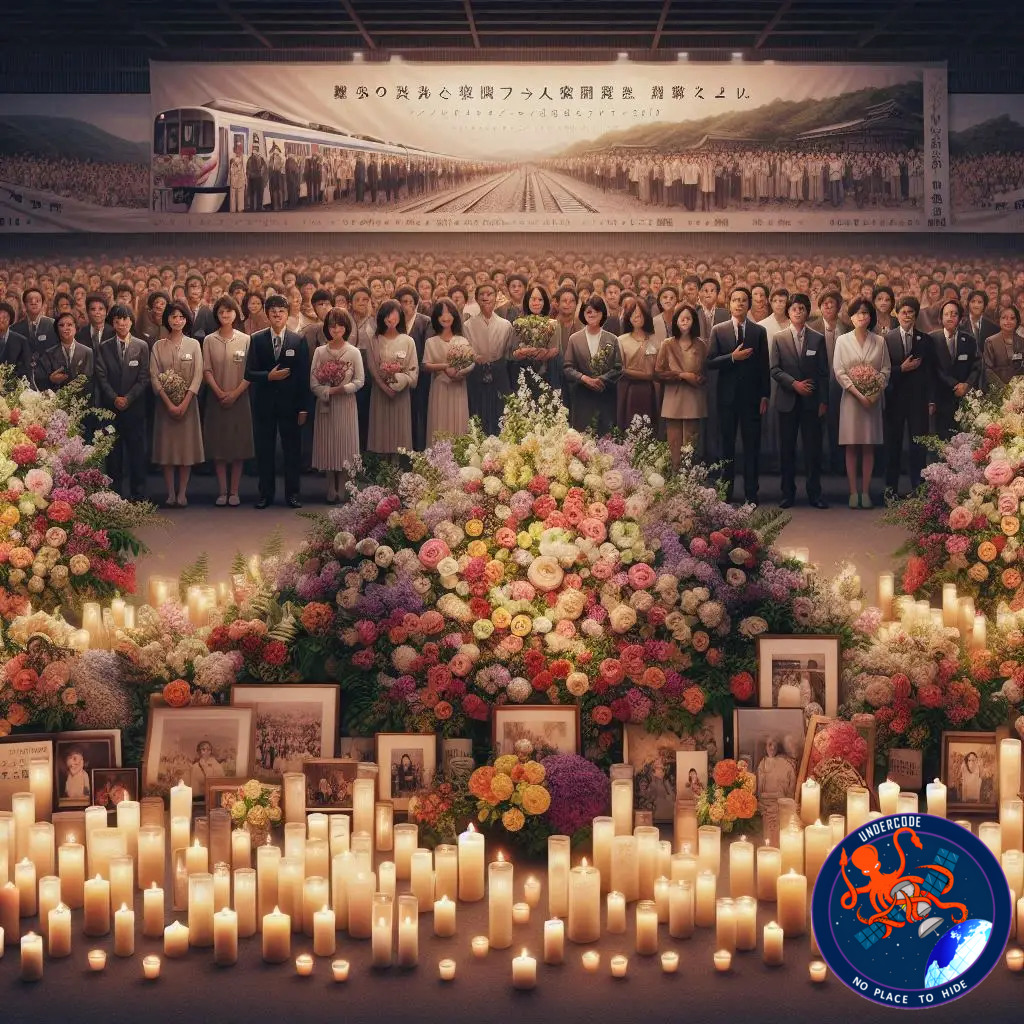
On December 25, 2025, the Uetsu Line derailment in Shonai Town, Yamagata Prefecture, marks its 20th anniversary—a tragic incident in which a special express train overturned due to a sudden gust of wind, claiming five lives and injuring dozens more. Near the accident site, JR East President Yoichi Kise and other officials laid flowers at the memorial and observed a moment of silence, emphasizing the company’s commitment to never let the tragedy fade from public memory.
Remembering a Tragedy
The derailment occurred on the night of December 25, 2005, when the Inaho No. 14 limited express, traveling from Akita to Niigata with six cars, was struck by a powerful gust of wind. The first and third cars were thrown off the tracks, colliding with a small building beside the railway. In total, five passengers lost their lives and 33 others suffered serious or minor injuries.
President Kise recounted a poignant moment with the victims’ families, who told him, “Time has stopped since that day.” Kise reflected on the profound responsibility JR East bears in safeguarding human lives, acknowledging the weight of ensuring such tragedies never recur. Many families continue to visit the site individually, paying their respects.
Safety Measures and Technological Advances
In response to the derailment, JR East introduced a proactive safety system in 2017 using Doppler radar to predict gusts of wind and implement operational restrictions when danger is imminent. Since 2020, the system has been enhanced with artificial intelligence, improving predictive accuracy and enabling earlier intervention to protect passengers from extreme weather events. This demonstrates JR East’s ongoing commitment to leveraging technology to prevent future accidents and strengthen public trust.
What Undercode Say: Analyzing the Impact and Lessons
The Uetsu Line derailment highlights a critical intersection between natural hazards and transportation infrastructure. The tragedy was not merely a result of unforeseen weather but also a wake-up call about operational vulnerabilities in Japan’s rail network. It illustrates the necessity for continuous investment in predictive safety systems, staff training, and real-time monitoring. By integrating AI into wind detection, JR East is moving beyond reactive safety measures, using data-driven insights to anticipate risks and prevent incidents before they occur.
Moreover, the incident underscores the importance of corporate accountability and public communication. Kise’s remarks, emphasizing that the accident must not be forgotten, serve as a model for how companies can honor victims while reinforcing systemic safety improvements. The symbolic act of laying flowers and listening to families’ testimonies ensures that organizational memory aligns with societal memory, fostering a culture of vigilance.
From a broader perspective, the derailment reflects global trends in transport safety, where climate-related extremes increasingly challenge infrastructure reliability. Incorporating AI and predictive analytics is becoming essential for high-speed rail operators worldwide. Japan’s approach could serve as a blueprint for integrating technological innovation with human-centered safety policies, balancing efficiency with moral responsibility.
This incident also resonates with urban planning and emergency management. Infrastructure resilience now depends on combining engineering, predictive modeling, and community engagement. The public’s trust hinges on visible actions, transparent accountability, and demonstrable improvements—factors that JR East has actively pursued.
Finally, the human dimension remains paramount. While technological solutions reduce risk, empathy, remembrance, and acknowledgment of loss shape the moral fabric of a safety culture. This dual focus—on innovation and humanity—defines modern approaches to disaster prevention and corporate ethics.
Fact Checker Results
✅ The derailment occurred on December 25, 2005, in Shonai Town, Yamagata Prefecture.
✅ Five passengers died, and 33 were injured in the accident.
✅ JR East has used Doppler radar and AI-based predictive systems since 2017 and 2020, respectively.
Prediction
📊 Looking forward, the integration of AI in railway safety is likely to expand, with more sophisticated sensors and predictive algorithms becoming standard. This could drastically reduce derailments caused by extreme weather. Additionally, public memorials and ongoing acknowledgment of past tragedies will remain crucial for maintaining societal trust, reinforcing that lessons from disasters continue to shape safety innovations for decades to come.
▶️ Related Video (82% Match):
🕵️📝✔️Let’s dive deep and fact‑check.
References:
Reported By: xtechnikkeicom_1b72cd225c1a82ad41f32b08
Extra Source Hub (Possible Sources for article):
https://stackoverflow.com
Wikipedia
OpenAi & Undercode AI
Image Source:
Unsplash
Undercode AI DI v2
Bing
🔐JOIN OUR CYBER WORLD [ CVE News • HackMonitor • UndercodeNews ]
📢 Follow UndercodeNews & Stay Tuned:
𝕏 formerly Twitter 🐦 | @ Threads | 🔗 Linkedin | 🦋BlueSky | 🐘Mastodon


