
Listen to this Post
Introduction
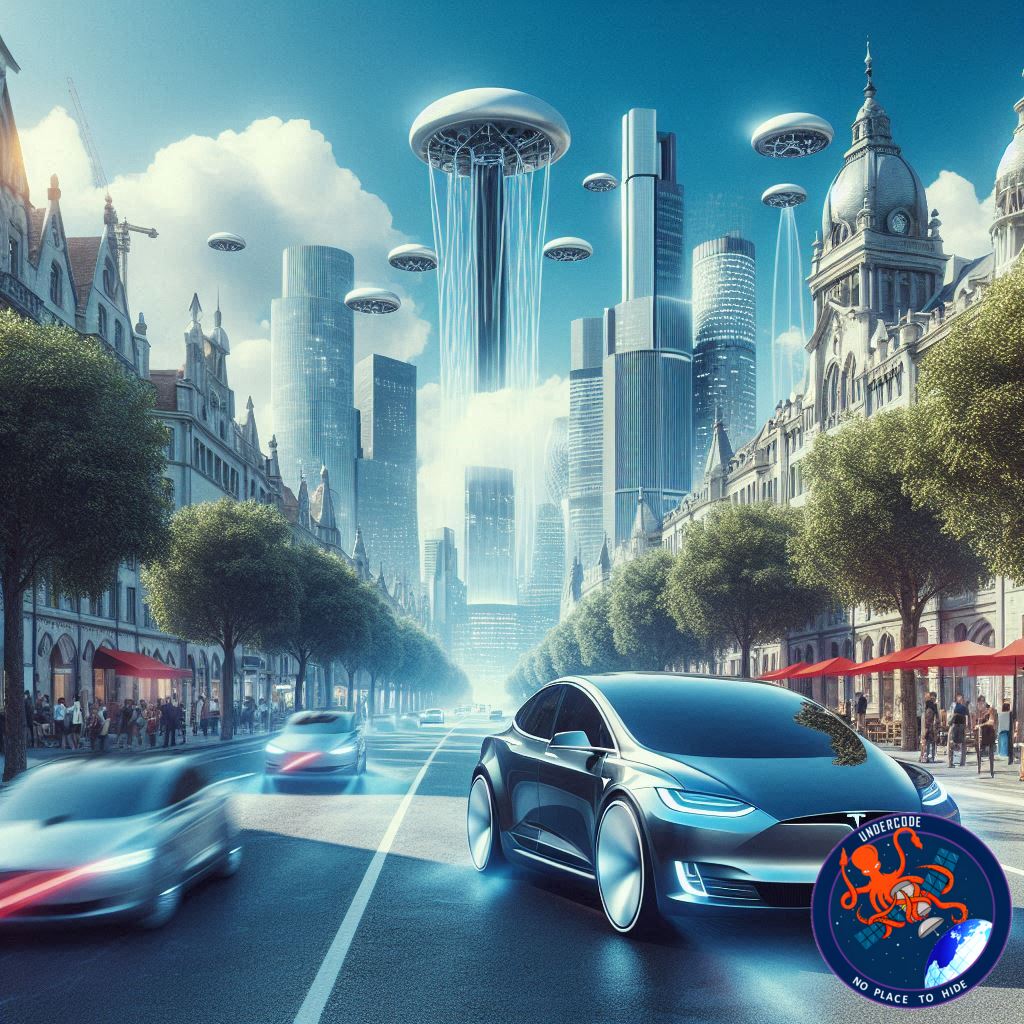
Tesla is no longer testing the future behind closed doors. It is placing it directly onto public roads, rural villages, and global infrastructure networks. From self-driving shuttles navigating narrow German countryside roads, to robotaxis roaming American cities without drivers, and satellites connecting millions across the planet, Tesla’s momentum has entered a decisive phase. These developments are not isolated announcements. Together, they form a wider signal: autonomous technology is moving from experimentation to lived reality.
What makes this shift notable is not just the technology itself, but where and how it is being deployed. Rural Europe, dense Chinese cities, and everyday American streets are now proving grounds. This is no longer a vision of tomorrow. It is happening quietly, steadily, and with growing confidence.
the Original Report
Tesla has launched Europe’s first public shuttle service using Full Self-Driving (Supervised) in the rural region of Eifelkreis Bitburg-Prüm, Germany. The project is designed to demonstrate how autonomous driving can improve daily life in areas with limited public transportation. Local officials, including Mayor Johannes Kuhl and District Administrator Andreas Kruppert, personally tested the system and praised its smooth, human-like driving behavior on narrow rural roads. Both described the experience as transformative, particularly for elderly residents who struggle with mobility.
The initiative supports the region’s existing “Citizen Bus” program, which provides on-demand transportation for residents unable to drive. According to officials, Tesla’s technology adds flexibility and independence to daily life, enabling easier access to essentials such as groceries, healthcare, and social engagement. Germany’s Ministry for Economic Affairs and Transport endorsed the project, calling it the first of its kind in Europe and a meaningful step toward future-ready rural mobility.
At the same time, Tesla is advancing its Robotaxi ambitions in China. A newly posted job listing in Shanghai seeks a Low Voltage Electrical Engineer to support the development of autonomous vehicles. The role focuses on circuit board design, suggesting active hardware preparation for Tesla’s Robotaxi platform. China’s regulatory environment and dense urban centers make it a strategic market, and interest surged when Tesla showcased its Cybercab at the China International Import Expo.
Meanwhile, in the United States, Tesla executives revealed major progress toward unsupervised autonomous driving. Elon Musk and AI Director Ashok Elluswamy shared experiences riding in Robotaxis with no safety drivers present. Videos and posts confirmed that the vehicles navigated real-world traffic autonomously. Musk indicated that fully unsupervised Robotaxi operations could soon begin in Austin, signaling a critical milestone in autonomy.
Beyond mobility, SpaceX’s Starlink continues its explosive growth. The satellite internet service surpassed 9 million active users across 155 countries, adding over one million subscribers in less than two months. With more than 9,000 satellites in orbit, Starlink has become SpaceX’s largest revenue driver and a cornerstone of global connectivity, especially in underserved regions.
What Undercode Say:
Tesla’s recent movements reveal a strategic pattern that goes far beyond individual product launches. The company is no longer selling future potential; it is embedding autonomy into daily life, quietly and systematically.
The European FSD pilot is especially revealing. Rural areas are often ignored in technological revolutions, yet Tesla chose them deliberately. Narrow roads, unpredictable driving conditions, and sparse infrastructure create the perfect stress test. Success there signals maturity. When local officials describe the system as feeling like an “experienced driver,” it suggests something deeper than software competence. It signals trust.
This trust matters. Autonomous technology does not scale through hype alone. It scales through acceptance. Rural communities tend to be skeptical of experimental technology, yet here they are embracing it because it solves a real problem: isolation. Mobility equals independence, especially for aging populations. Tesla’s approach reframes autonomy as a social service rather than a luxury feature.
China’s Robotaxi momentum tells a parallel story. The quiet job listing may seem minor, but hardware hiring signals commitment. Software can be iterated quickly, but hardware investment suggests long-term deployment. China’s regulatory environment, once considered restrictive, now appears cautiously supportive. That shift alone could unlock one of the largest autonomous vehicle markets in the world.
Meanwhile, Tesla’s unsupervised driving tests in the United States mark a psychological turning point. The absence of a safety driver changes everything. It transforms autonomy from a monitored experiment into an operational system. Musk’s confidence, reinforced by real-world testing, suggests Tesla believes it has crossed a threshold few thought possible this soon.
Starlink’s growth adds another layer to this narrative. Connectivity is the invisible backbone of autonomy. Vehicles that communicate, update, and learn in real time require reliable global networks. With millions of users already connected, Starlink is quietly building the digital infrastructure that autonomous systems depend on.
Taken together, these developments suggest Tesla is not chasing headlines. It is building an ecosystem. Transportation, connectivity, AI, and infrastructure are converging into a single operational vision. The result is not just technological progress but a restructuring of how people move, connect, and live.
This is why Tesla’s current phase feels different. It is no longer about prototypes or promises. It is about presence. Autonomous systems are no longer being introduced. They are being normalized.
Fact Checker Results
✅ Tesla has launched a supervised FSD shuttle service in rural Germany.
✅ Tesla is actively hiring in China for Robotaxi-related hardware roles.
❌ Full global unsupervised Robotaxi deployment has not yet officially launched.
Prediction
🚀 Tesla’s autonomy stack will become a public utility before it becomes a luxury feature.
🚗 Rural regions will adopt self-driving services faster than major cities due to lower complexity.
🌍 Starlink and Robotaxi integration will redefine how mobility and connectivity coexist worldwide.
🕵️📝✔️Let’s dive deep and fact‑check.
References:
Reported By: www.teslarati.com
Extra Source Hub (Possible Sources for article):
https://www.digitaltrends.com
Wikipedia
OpenAi & Undercode AI
Image Source:
Unsplash
Undercode AI DI v2
Bing
🔐JOIN OUR CYBER WORLD [ CVE News • HackMonitor • UndercodeNews ]
📢 Follow UndercodeNews & Stay Tuned:
𝕏 formerly Twitter 🐦 | @ Threads | 🔗 Linkedin | 🦋BlueSky | 🐘Mastodon


