
Listen to this Post
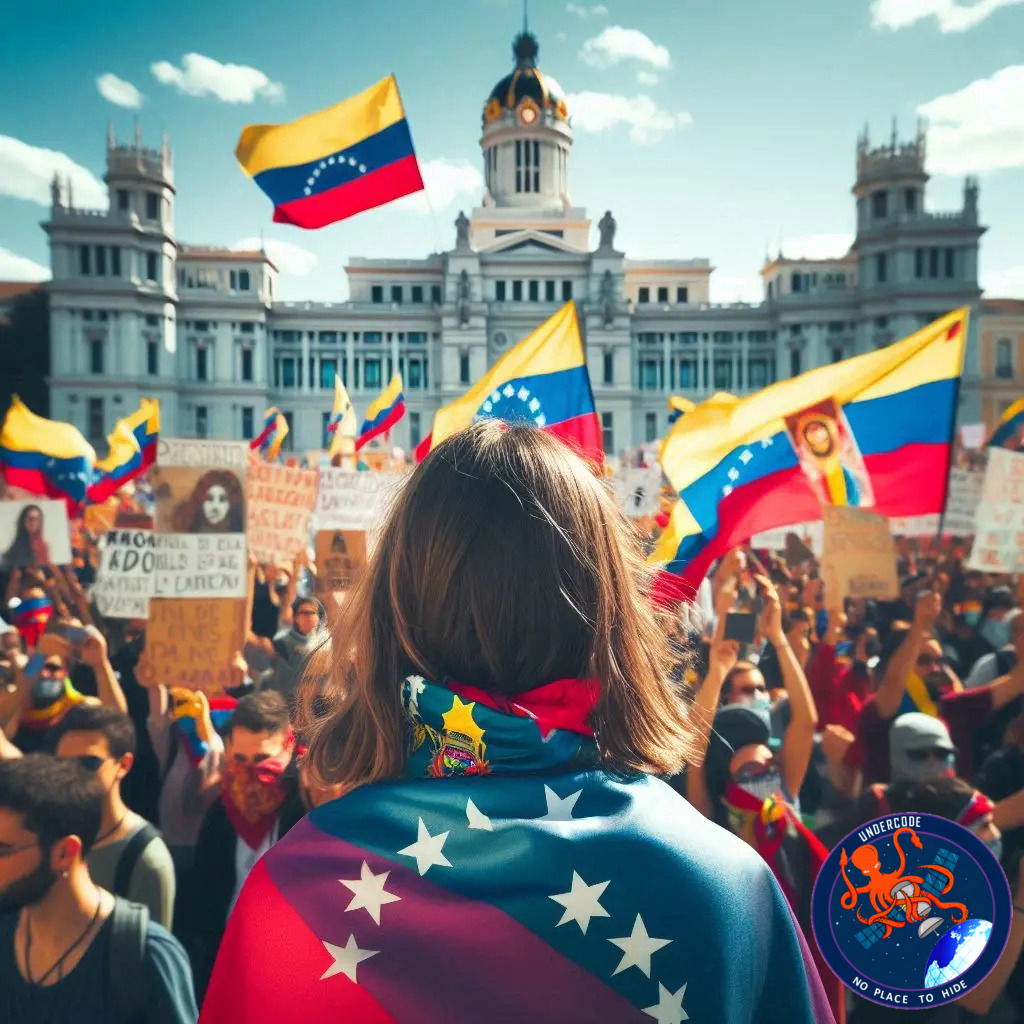
On Sunday, Spain became the focal point of another significant protest by the Venezuelan diaspora, as hundreds of people gathered in central Madrid for the second consecutive day. Demonstrators voiced their support for the recent U.S. operation targeting President Nicolás Maduro, while also expressing solidarity with Venezuela’s opposition leaders. Unlike the previous day, the atmosphere on Sunday was much more subdued and peaceful, with the square adorned with Venezuelan flags. The crowd engaged in an emotional rendition of the national anthem and danced, demonstrating both their pride and frustration.
Protesters rallied behind key figures like María Corina Machado and Edmundo González, figures who are viewed as leaders of the Venezuelan opposition. At the same time, they strongly opposed any political involvement of Delcy Rodríguez, a controversial figure associated with the Maduro regime. The protest followed a day of mixed demonstrations across Spain, with some groups in the morning expressing dissent over U.S. involvement in Caracas.
Spain is home to one of the largest Venezuelan communities in Europe, many of whom fled the economic and political crisis gripping their home country in recent years. Official statistics estimate the Venezuelan population in Spain at around 400,000, underscoring the significance of this diaspora in shaping the ongoing political discourse.
What Undercode Says:
The protests in Madrid serve as a powerful reminder of the growing tensions within Venezuela and the international community’s involvement. The Venezuelan diaspora, often displaced by the relentless economic and political turmoil in their home country, remains deeply divided over the future of Venezuela. While some align with the U.S. operation targeting Maduro, others see foreign intervention as exacerbating the problem. This split highlights the complexity of Venezuela’s situation: the opposition movement, while robust, does not present a united front, and the presence of figures like Delcy Rodríguez only deepens these divisions.
The role of the U.S. in Venezuela is contentious. While Washington has long been critical of Maduro, some argue that such interventions only serve to further destabilize an already fragile country. On the other hand, others view the U.S. as a crucial ally in the fight against Maduro’s authoritarian rule. This debate was clearly reflected in the protests across Spain, where multiple factions expressed support for different political leaders and policies.
In the context of the Venezuelan diaspora, the protests are not only a reflection of the political crisis back home but also an indication of the lasting impact of displacement. For many of these Venezuelans, their identity is shaped by both their heritage and the political realities of the country they left behind. As they try to navigate their future in a foreign land, the call for justice and political change is as loud as ever.
While the U.S. operation targeting Maduro is seen by some as a necessary step toward restoring democracy, it raises important questions about the role of foreign intervention in the internal affairs of sovereign nations. Furthermore, the prominence of figures like María Corina Machado suggests a desire for leadership that can unite the fractured opposition, while rejecting leaders such as Rodríguez signals a yearning for genuine political change, free from the influence of the Maduro regime.
Fact Checker Results:
✅ The number of Venezuelans in Spain is accurately estimated at around 400,000, as reported by official statistics.
✅ María Corina Machado and Edmundo González are well-known opposition figures who have long criticized the Maduro regime.
❌ There is no clear evidence to support claims that the protests were “divided,” as the coverage mainly highlights the dichotomy between pro-opposition and anti-U.S. sentiments.
Prediction:
As the political situation in Venezuela continues to evolve, the protests in Spain may become more frequent and intensify in the coming months. The growing dissatisfaction with the Maduro government and the increasing polarization within the Venezuelan diaspora could lead to more organized and large-scale demonstrations across Europe. Whether these movements can influence policy or contribute to meaningful change in Venezuela remains to be seen, but their impact on the diaspora’s political engagement is likely to continue to grow.
🕵️📝✔️Let’s dive deep and fact‑check.
References:
Reported By: www.euronews.com
Extra Source Hub (Possible Sources for article):
https://www.medium.com
Wikipedia
OpenAi & Undercode AI
Image Source:
Unsplash
Undercode AI DI v2
Bing
🔐JOIN OUR CYBER WORLD [ CVE News • HackMonitor • UndercodeNews ]
📢 Follow UndercodeNews & Stay Tuned:
𝕏 formerly Twitter 🐦 | @ Threads | 🔗 Linkedin | 🦋BlueSky | 🐘Mastodon


