
Listen to this Post
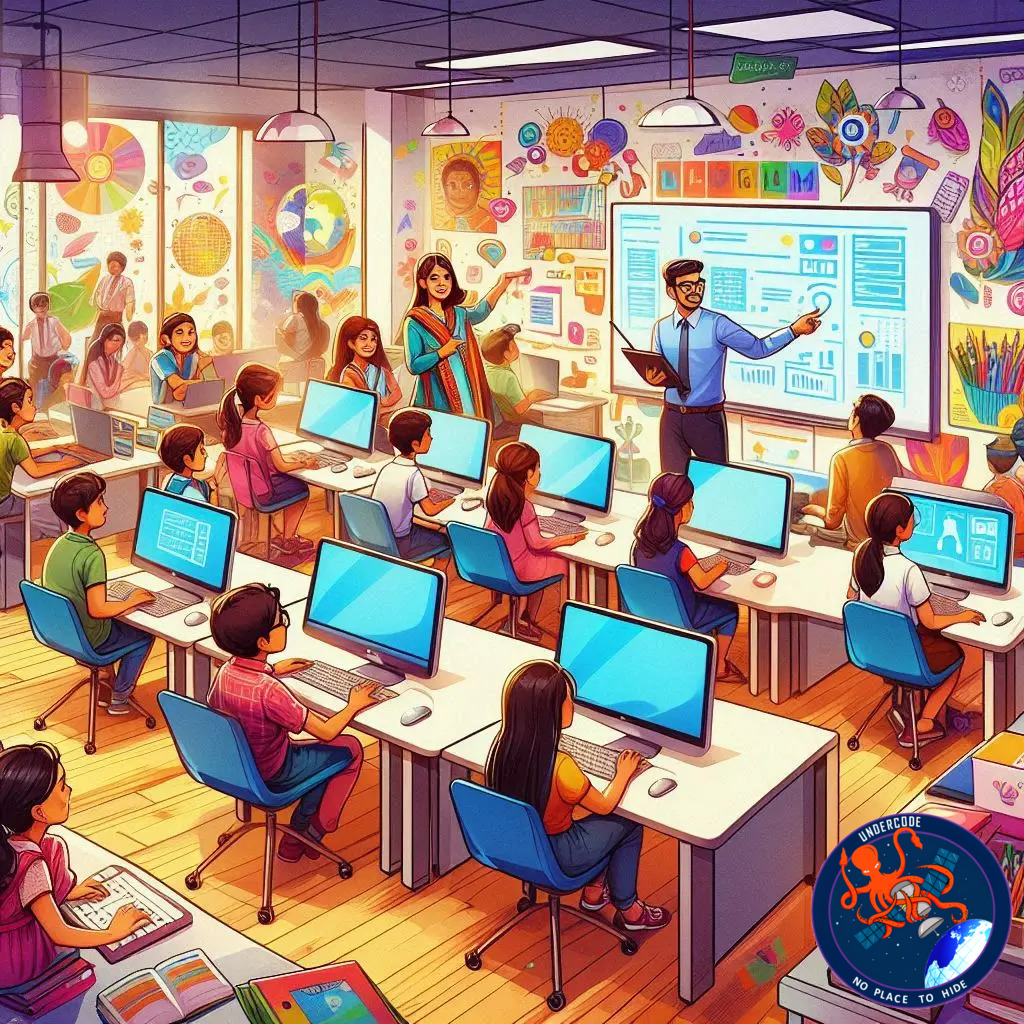
India’s education landscape is at a transformative juncture. Learning today is relentless, digital, and high-stakes, yet the tools designed to support it have not kept pace. While connectivity and online platforms have expanded rapidly, deep, sustained learning still relies on one fundamental device: the personal computer. The challenge is no longer just about digitisation; it is about capability—what kind of learning experiences devices are engineered to support, and whether they can truly meet the demands of modern education.
The Scale of the Challenge
India’s student population exceeds 248 million, making it one of the largest learning ecosystems globally. Despite this scale, personal computing access remains limited. Household PC penetration has nearly doubled since the pandemic, reaching approximately 13–15% in 2024. While this growth is notable, it highlights a persistent gap when compared to developed nations, where PCs are central to learning and skill development.
As education shifts toward self-driven, exam-focused preparation, the limitations of current infrastructure become increasingly visible. Serious learning—problem-solving, structured reasoning, and long-form study—requires more than access to content; it demands reliable, intelligent, and responsive tools that enable focus, continuity, and deep engagement. The PC, traditionally a passive endpoint, now must be reimagined as an active learning platform.
Pedagogy Meets Platform
It is within this context that Infinity Learn and Intel have joined forces—not as a conventional tech partnership, but as co-creators of a new model for PC-led education. The collaboration centers on the belief that the next phase of learning in India will depend on intelligence built into devices, not simply layered on top.
Intel’s AI-first PC architecture allows AI workloads to run locally, enabling fast, responsive learning interactions and reducing reliance on inconsistent internet connectivity. Infinity Learn contributes deep pedagogical expertise, especially in exam preparation, designing adaptive guidance that sustains learners through high-pressure, long-duration study cycles. Together, they merge technological infrastructure with educational insight, reframing the PC as a dynamic tool for focused, uninterrupted, and intelligent learning.
Building Intelligence Into Learning
The result is a PC-led learning experience that is immersive and continuous. AI running directly on Intel-enabled PCs allows learners to resolve doubts in real time, receive explanations tailored to their pace, and maintain focus without interruption. This design is critical as self-study increasingly dominates education outside classroom hours.
Central to this ecosystem is AINA, Infinity Learn’s conversational AI mentor. Operating on-device, AINA provides guided, voice-led interactions that support conceptual reasoning, performance tracking, and continuity during long study sessions. By embedding intelligence directly into the PC, learners gain adaptive guidance that respects the human realities of learning, where progress is gradual and non-linear. This transforms PCs into reliable, intelligent companions that enhance clarity, confidence, and consistency over time.
Seeing the Future of PC-Led Learning
Intel and Infinity Learn’s initiative offers a vision of education where PCs are designed as intelligent learning platforms, AI is embedded purposefully, and collaboration between technology leaders and education innovators sets a blueprint for scale. As India prepares students for an AI-driven world, the focus must expand beyond access to fostering intelligent advantage. The reinvention of the PC emerges as a pivotal step toward a more inclusive, resilient, and future-ready education ecosystem—one that does more than deliver content and actively participates in the learning journey.
What Undercode Say:
India’s education sector faces a structural paradox: exponential growth in digital access alongside uneven infrastructure quality. Mere access to online content is insufficient for developing higher-order skills or sustained learning habits. PCs, often undervalued in discussions about digital learning, are central to addressing this gap. Intel and Infinity Learn’s approach signals a shift from device-as-tool to device-as-partner in learning, embedding AI to simulate real-time teacher support.
From a pedagogical perspective, AI-enabled devices like AINA can reshape learning engagement. Long-form study requires continuity, feedback, and adaptiveness—areas where traditional online learning struggles due to network dependency or generic interfaces. Locally running AI can bridge these gaps, offering personalized, uninterrupted interactions. By shifting cognitive load management onto intelligent hardware, students are better positioned for critical thinking, problem-solving, and exam success.
Strategically, this collaboration reflects a global trend: education technology is moving from platform-driven content delivery to infrastructure-driven intelligence. It anticipates a future where adaptive, context-aware devices become fundamental to skill acquisition. Moreover, it sets a precedent for other emerging markets facing similar digital divides: local processing of AI can reduce reliance on inconsistent networks while delivering scalable, high-quality learning experiences.
The implications for educators are significant. Teachers can extend their reach beyond classrooms while maintaining pedagogical fidelity. Assessment and guidance can become more continuous and nuanced, with AI tracking learning patterns and providing actionable insights. For policymakers, the lesson is clear: investment in intelligent infrastructure—not merely devices—can democratize high-quality education, creating parity with global standards.
Economic considerations are also critical. AINA-like AI mentorship can reduce dependence on costly coaching institutes, improving affordability and access. It strengthens the ecosystem of self-directed learners, equipping students with tools necessary for AI-era skillsets. Socially, embedding intelligence in PCs can also address equity issues; rural and semi-urban learners gain comparable advantages to urban peers, narrowing systemic gaps.
Technologically, this model signals a future where device design and pedagogy co-evolve. AI is no longer an add-on; it is intrinsic to learning infrastructure. This integration ensures that learning is continuous, adaptive, and resilient against interruptions—whether connectivity issues or resource scarcity. By embedding intelligence at the hardware level, the collaboration demonstrates a shift from reactive to proactive learning support.
In essence, India’s education revolution may hinge not only on scaling connectivity but on rethinking the intelligence and role of the devices themselves. The convergence of AI, PC architecture, and pedagogy exemplifies a practical path forward, positioning technology as an active participant in learning rather than a passive conduit. This approach aligns with broader global trends toward AI-first infrastructure, marking India as a potential leader in scalable, intelligent education models.
Fact Checker Results:
✅ India has over 248 million school-going students, one of the largest learning populations globally.
✅ Household PC penetration in India is approximately 13–15% in 2024, up from pre-pandemic levels.
❌ Claims of universal access to AI-enabled PCs remain aspirational; deployment is still limited.
Prediction:
📊 AI-enabled PCs will likely redefine India’s exam-focused learning ecosystem over the next five years, enabling personalized, continuous learning.
📊 Rural and semi-urban regions may see accelerated adoption as locally processed AI reduces dependence on high-speed internet.
📊 By 2030, intelligent PCs could become central to India’s broader skill-development and digital economy strategy.
▶️ Related Video (96% Match):
🕵️📝✔️Let’s dive deep and fact‑check.
References:
Reported By: timesofindia.indiatimes.com
Extra Source Hub (Possible Sources for article):
https://www.pinterest.com
Wikipedia
OpenAi & Undercode AI
Image Source:
Unsplash
Undercode AI DI v2
Bing
🔐JOIN OUR CYBER WORLD [ CVE News • HackMonitor • UndercodeNews ]
📢 Follow UndercodeNews & Stay Tuned:
𝕏 formerly Twitter 🐦 | @ Threads | 🔗 Linkedin | 🦋BlueSky | 🐘Mastodon


