
Listen to this Post
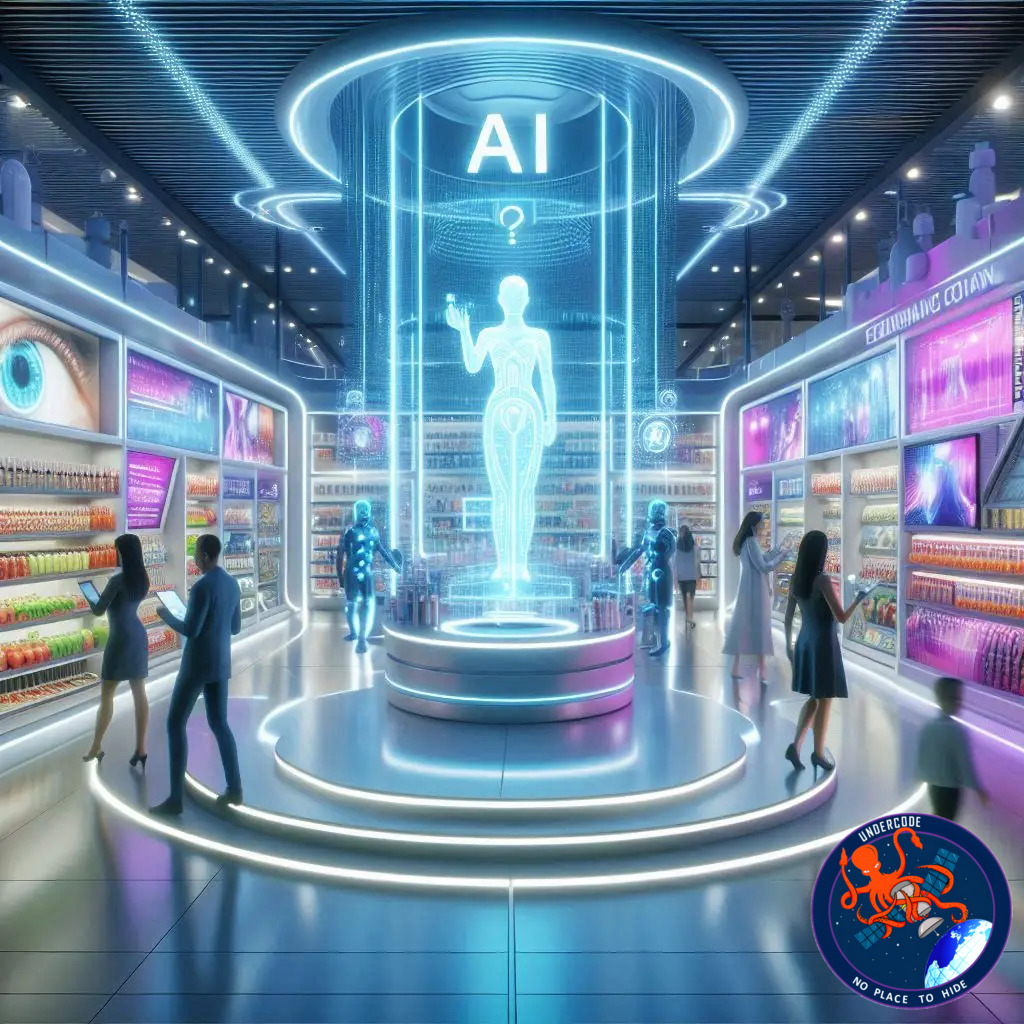
🎯 Introduction: Retail Enters Its AI-Driven Reality
Artificial intelligence is no longer a futuristic promise for retail and consumer packaged goods (CPG) companies. It has become a foundational layer shaping how brands understand customers, move products, manage supply chains, and compete in an increasingly volatile global market. What once lived in pilot programs and innovation labs is now deployed across production environments, driving real revenue gains and measurable cost reductions. NVIDIA’s third annual State of AI in Retail and Consumer Packaged Goods survey confirms a decisive shift, AI is no longer optional, and the industry is racing to scale it responsibly and profitably.
AI Moves From Strategy to Standard Practice
Retailers and CPG companies are rapidly embedding AI across their operations. From advanced customer segmentation and hyper-personalized marketing to precise demand forecasting and logistics optimization, AI is reshaping decision-making at every level. Intelligent digital shopping assistants are elevating customer engagement, while enriched product catalogs dynamically localize content across regions and languages. AI agents now automate workflows, accelerate internal operations, and reduce human bottlenecks, while physical AI systems bring intelligence directly into warehouses, stores, and fulfillment centers.
NVIDIA’s survey, based on hundreds of industry responses, highlights a clear maturation phase. A striking 91 percent of respondents report that their companies are either actively using AI or assessing it for near-term deployment. Even more telling, 90 percent plan to increase AI budgets in 2026, signaling strong confidence in long-term returns rather than short-term experimentation.
Revenue Growth and Cost Reduction Become the New Baseline
The financial impact of AI adoption is no longer theoretical. According to the survey, 89 percent of respondents say AI has contributed directly to increased annual revenue. For nearly one-third of those companies, revenue growth exceeded 10 percent, a meaningful jump in an industry known for tight margins. On the cost side, 95 percent report reductions in annual expenses, with 37 percent achieving cost savings of more than 10 percent.
Operationally, AI is delivering clear productivity gains. More than half of respondents cite improved employee productivity, while 52 percent point to increased operational efficiency. Customer service improvements were also significant, with 41 percent reporting better service quality driven by AI-powered insights and automation.
Open-Source AI Becomes a Strategic Advantage
Open-source software has emerged as a critical pillar of retail AI strategies. Nearly 79 percent of respondents say open-source models and frameworks are moderately to extremely important to their AI roadmap. Retailers are increasingly favoring flexible, interoperable ecosystems that allow them to adapt models to proprietary data while maintaining governance and compliance.
Industry leaders note that early AI initiatives often relied heavily on proprietary vendors, limiting control and customization. Open-source approaches reverse that dependency, giving retailers ownership over their data, freedom from vendor lock-in, and access to continuous innovation from global developer communities. This shift enables faster experimentation, easier integration with legacy systems, and scalable deployment across diverse use cases.
Agentic AI Emerges as the Next Competitive Frontier
One of the most notable developments in this year’s report is the rise of agentic AI. Nearly half of respondents say they are either using or evaluating AI agents within their organizations. Twenty percent already have agents active in production, while another 21 percent expect deployment within the next year.
Agentic AI goes beyond analytics. These systems can act autonomously on insights, making real-time decisions, executing tasks, and adapting strategies without constant human intervention. Retailers see the strongest early returns in areas where outcomes are measurable, including inventory optimization, dynamic pricing, vendor negotiations, and supply chain coordination.
Survey respondents identified three primary goals for deploying agentic AI: increasing process speed and efficiency, enhancing customer personalization, and improving decision-making through real-time data access. These agents are spreading across internal operations, employee support systems, and customer engagement platforms, where they can dynamically adjust messaging, recommend products, and guide purchasing decisions based on individual context.
AI Strengthens Supply Chain Resilience
Supply chains remain one of the most complex and fragile components of retail and CPG operations. Sixty-four percent of respondents report growing challenges year over year, driven by geopolitical instability, labor shortages, regulatory complexity, and rising consumer expectations for speed and transparency.
AI is increasingly seen as the stabilizing force. By optimizing inventory at the store and customer level rather than relying on broad regional forecasts, AI enables far more precise alignment between supply and demand. Retailers are using AI to incorporate a wider range of variables into demand forecasting, reducing out-of-stock events and improving fulfillment reliability.
More than half of respondents identify supply chain operational efficiency as their top AI-driven pressure valve. Meeting customer expectations follows closely, while traceability and transparency rank third, reflecting growing regulatory and consumer scrutiny.
Physical AI Expands Beyond Automation
Physical AI, including robotics and intelligent infrastructure, is gaining traction across the industry. Seventeen percent of respondents say they are already using or evaluating physical AI solutions. Rather than simply automating tasks, these systems enhance existing infrastructure, improving pricing accuracy, inventory management, and in-store presentation quality.
Early adopters demonstrate that when physical AI is integrated thoughtfully, it delivers flexibility and resilience, helping retailers adapt to workforce constraints and logistical complexity without sacrificing service quality or speed.
What Undercode Say:
The data paints a clear picture, retail AI has crossed the point of no return. What stands out is not just adoption, but discipline. The most successful companies are not chasing flashy AI demos. They are prioritizing high-ROI use cases that solve real profit-and-loss problems first, then scaling once value is proven. This marks a cultural shift from experimentation to accountability.
Open-source dominance is another defining signal. Retailers are asserting control over their AI destiny, choosing ecosystems that allow customization, transparency, and long-term flexibility. This mirrors what happened in cloud computing a decade ago, early adopters gained leverage, while late movers paid the price in rigidity and cost.
Agentic AI represents the next inflection point. While many organizations are still cautious, the momentum is undeniable. The first wave of disruption will not be customer-facing chatbots, but autonomous operational systems where ROI is immediate and measurable. Supply chains, pricing engines, and inventory management are becoming algorithmically managed environments, with humans shifting into supervisory and strategic roles.
Perhaps most importantly, AI is emerging as a resilience tool, not just a growth engine. In an era of constant disruption, retailers that can sense, predict, and adapt faster will outlast those relying on static planning cycles. AI is becoming the operating system of modern retail, invisible to consumers but decisive behind the scenes.
🔍 Fact Checker Results
✅ Survey data confirms widespread AI adoption across retail and CPG sectors.
✅ Financial impacts include measurable revenue growth and cost reductions.
❌ AI deployment remains uneven, with smaller retailers lagging behind leaders.
📊 Prediction
🚀 AI agents will become standard across retail operations by 2027.
📦 Supply chains will be the first area to see near-autonomous decision-making.
🤖 Physical AI adoption will accelerate as labor and logistics pressures intensify.
▶️ Related Video (80% Match):
🕵️📝✔️Let’s dive deep and fact‑check.
References:
Reported By: blogs.nvidia.com
Extra Source Hub (Possible Sources for article):
https://www.quora.com/topic/Technology
Wikipedia
OpenAi & Undercode AI
Image Source:
Unsplash
Undercode AI DI v2
Bing
🔐JOIN OUR CYBER WORLD [ CVE News • HackMonitor • UndercodeNews ]
📢 Follow UndercodeNews & Stay Tuned:
𝕏 formerly Twitter 🐦 | @ Threads | 🔗 Linkedin | 🦋BlueSky | 🐘Mastodon


