
Listen to this Post
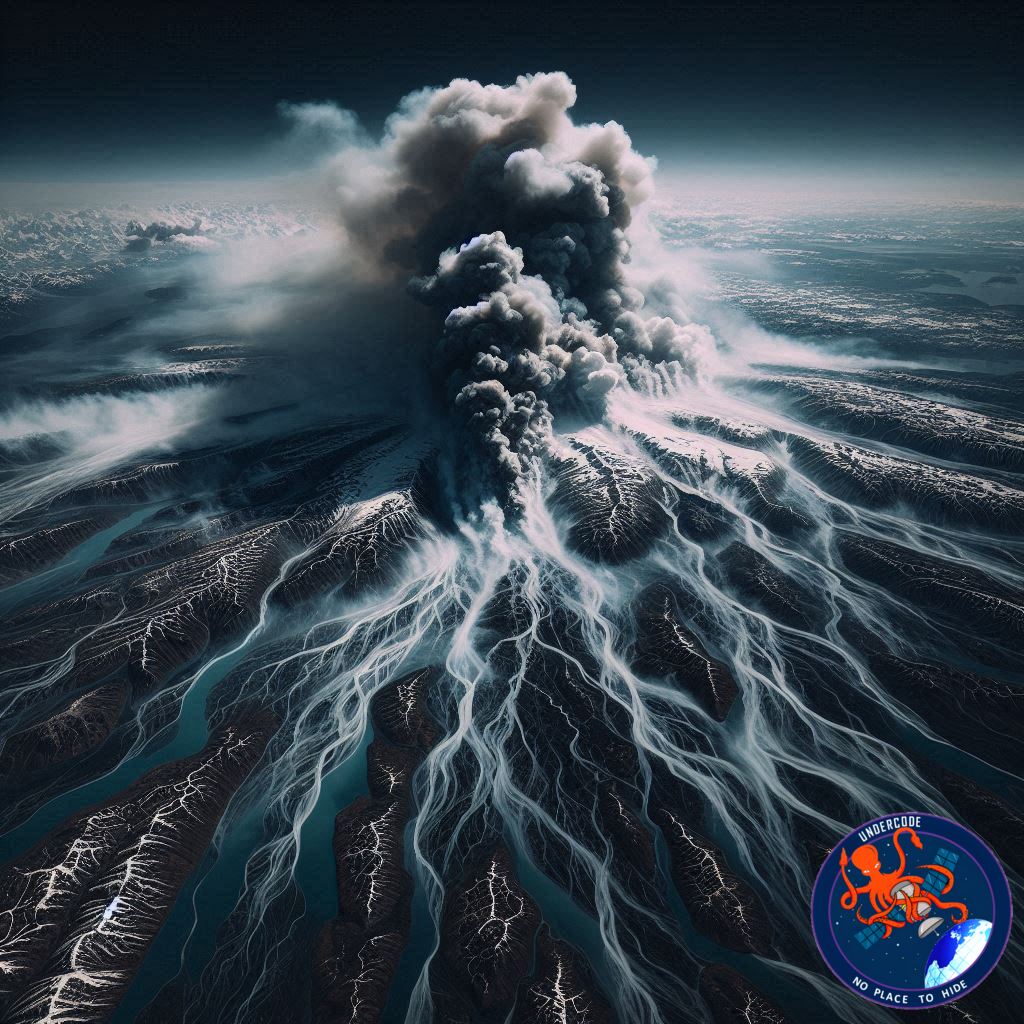 A Silent Shift Burning Across the Top of the World
For decades, the Arctic was viewed as a frozen frontier largely insulated from the kinds of destructive wildfires seen in temperate and tropical regions. That assumption is no longer valid. New satellite data reveal a profound and accelerating transformation: wildfires across the Arctic are increasing in number, spreading into new territories, and burning with an intensity once thought impossible so far north. What was once an occasional natural event is now becoming a defining feature of the Arctic climate story.
Satellite Eyes on a Changing Arctic
NASA’s MODIS sensors aboard the Aqua and Terra satellites have provided a long-term view of wildfire activity across the planet. When comparing data from 2002–2012 with records from 2012–2024, a stark pattern emerges. Fires detected north of 60 degrees latitude have surged, particularly across northern Eurasia. The visual contrast between earlier and later fire maps is striking, revealing a region entering an entirely new fire regime.
What the Fire Maps Really Show
The MODIS fire detection maps use circles of varying size to represent the frequency of fires. Small circles indicate relatively low activity, while the largest circles represent areas where more than 15,000 fires were detected. In the earlier period, fire activity appeared scattered and relatively balanced between North America and Eurasia. In the later period, Eurasia dominates the map, with massive clusters signaling persistent and widespread burning.
Eurasia Emerges as the Epicenter
Northern Eurasia has become the focal point of Arctic wildfire escalation. Vast stretches of boreal forest and tundra are now experiencing repeated fire seasons. These are not isolated events but recurring patterns that suggest a fundamental environmental shift. Scientists note that this region’s ecosystems, once protected by cold and moisture, are drying out faster and for longer periods each year.
Greenland’s Alarming Entry into the Fire Era
Perhaps the most unsettling signal is Greenland’s transition into this new fire regime. Historically associated with ice and snow, Greenland has begun experiencing larger and more frequent wildfires. While still relatively few in number, their emergence alone marks a dramatic departure from historical norms and underscores how deeply climate change is reshaping even the coldest environments.
Temperature Rise as the Primary Driver
Researchers overwhelmingly point to rising temperatures as the central cause behind these changes. The Arctic is warming nearly four times faster than the global average. Warmer air dries out vegetation, reduces snow cover duration, and lengthens the fire season. Once-frozen soils are thawing, exposing organic material that becomes fuel when conditions align.
Lightning Moves North
Fire needs ignition, and lightning is increasingly filling that role. Scientists have observed a poleward expansion of lightning activity, pushing storms into regions that historically saw little to none. This shift dramatically raises the likelihood of wildfires igniting in remote Arctic landscapes, where human firefighting infrastructure is minimal or nonexistent.
Fire Behavior Is Changing, Not Just Frequency
Counting fires tells only part of the story. According to NASA researchers, Arctic fires are now burning larger areas, reaching higher temperatures, and lasting longer than in previous decades. These fires are capable of consuming deeper layers of soil and peat, releasing enormous amounts of stored carbon into the atmosphere.
From Natural Cycle to Climate Feedback Loop
Fire has always existed in boreal and Arctic ecosystems, playing a role in renewal and nutrient cycling. However, the scale and intensity of today’s fires are pushing the system beyond balance. Instead of serving as a regenerative force, fires are becoming accelerants of climate change, releasing greenhouse gases that further warm the planet.
A Warning from the Scientific Community
The findings are detailed in a 2025 report by the Arctic Monitoring and Assessment Programme (AMAP), a working group of the Arctic Council. Scientists involved in the report emphasize that these trends are not anomalies but indicators of long-term transformation. The Arctic, once a climate stabilizer, is increasingly becoming a source of instability.
NASA’s Perspective from Above
Jessica McCarty, Deputy Earth Science Division Chief at NASA’s Ames Research Center and lead author of the report, notes that Arctic fires are beginning to resemble those seen in temperate and tropical zones. This comparison is significant. It signals that the Arctic is no longer operating under its historical environmental rules.
The Carbon Cost of Arctic Fires
One of the most dangerous consequences of Arctic wildfires is carbon release. Arctic soils contain vast amounts of organic carbon locked away for thousands of years. When fires burn hotter and deeper, that carbon is released rapidly, amplifying global warming and creating a feedback loop that makes future fires even more likely.
Impacts Beyond the Arctic Circle
The effects of Arctic wildfires do not stay in the Arctic. Smoke plumes can travel thousands of kilometers, degrading air quality across continents. Soot from fires can settle on ice and snow, reducing reflectivity and accelerating melt. These cascading effects connect Arctic fires directly to global climate systems.
A Region Poorly Equipped to Respond
Unlike many southern regions, the Arctic lacks extensive firefighting infrastructure. Remote locations, limited access, and harsh conditions make suppression efforts difficult or impossible. As fires grow more frequent and severe, the gap between risk and response capability widens dramatically.
Indigenous Communities on the Front Line
Many Arctic Indigenous communities are directly affected by this changing fire regime. Wildfires threaten traditional hunting grounds, disrupt wildlife migration, and damage cultural landscapes. These communities often observe environmental changes long before they appear in satellite data, offering critical insights into the pace and impact of Arctic transformation.
The Arctic as a Climate Barometer
Scientists increasingly view Arctic wildfires as a barometer of planetary health. When fire behavior shifts so dramatically in one of Earth’s coldest regions, it signals systemic imbalance. The Arctic is no longer merely responding to climate change; it is actively reshaping the global climate trajectory.
What Undercode Say:
Arctic Fires Signal a Tipping Point, Not a Trend
The surge in Arctic wildfires should not be interpreted as a temporary spike or a statistical anomaly. It represents a structural shift in Earth’s climate system. When regions historically defined by ice begin to burn at scale, it indicates that climate thresholds are being crossed, not approached.
Satellite Data Exposes What Ground Reports Miss
MODIS and FIRMS data provide an unfiltered view of what is happening across vast, inaccessible regions. These datasets eliminate ambiguity and confirm that Arctic fire activity is accelerating over decades, not years. The consistency across multiple satellite records strengthens the case that this is a long-term transformation.
Fire Intensity Matters More Than Fire Count
While rising fire numbers are alarming, the real danger lies in how these fires burn. Larger, hotter, and longer-lasting fires fundamentally alter soil chemistry, vegetation recovery, and carbon storage. This shifts Arctic ecosystems toward states that may not be reversible within human timescales.
Climate Feedback Loops Are Already Active
Arctic wildfires are no longer a downstream effect of climate change alone. They are now upstream drivers. Carbon emissions from burning permafrost and peat amplify warming, which in turn increases fire risk. This self-reinforcing loop is one of the most dangerous dynamics currently unfolding.
Policy and Monitoring Lag Behind Reality
Despite mounting evidence, global climate policy has yet to fully account for Arctic fire feedbacks. Emissions accounting often underestimates or excludes these fires, masking their true impact. Without integrating Arctic fire data into climate models, projections will remain incomplete and overly optimistic.
Fire Regimes Are Redefining the Arctic Identity
The Arctic has long been symbolized by ice, snow, and stability. Wildfire is now becoming part of that identity. This redefinition carries psychological, cultural, and geopolitical implications, especially as nations reassess Arctic resource access and environmental risk.
The Cost of Inaction Is Compounding
Every fire season that passes without meaningful mitigation increases the difficulty of future intervention. Once deep carbon reservoirs are released, they cannot be re-frozen. The window to prevent the Arctic from becoming a permanent carbon source is rapidly closing.
Fact Checker Results
Data Source Verification ✅
Satellite fire detection data from MODIS and FIRMS are widely used and scientifically validated.
Scientific Consensus Alignment ✅
The findings align with peer-reviewed climate research and AMAP’s 2025 assessment.
Attribution Accuracy ❌
While climate change is the dominant driver, regional land management factors receive limited coverage.
Prediction
🔥 Arctic wildfires will become a standard feature of future climate models, not an outlier.
🔥 Carbon emissions from northern fires will significantly alter global emissions baselines.
🔥 By the early 2030s, Arctic fire seasons may rival those of some temperate regions.
🕵️📝✔️Let’s dive deep and fact‑check.
References:
Reported By: science.nasa.gov
Extra Source Hub (Possible Sources for article):
https://www.quora.com
Wikipedia
OpenAi & Undercode AI
Image Source:
Unsplash
Undercode AI DI v2
Bing
🔐JOIN OUR CYBER WORLD [ CVE News • HackMonitor • UndercodeNews ]
📢 Follow UndercodeNews & Stay Tuned:
𝕏 formerly Twitter 🐦 | @ Threads | 🔗 Linkedin | 🦋BlueSky | 🐘Mastodon


