
Listen to this Post
Introduction:
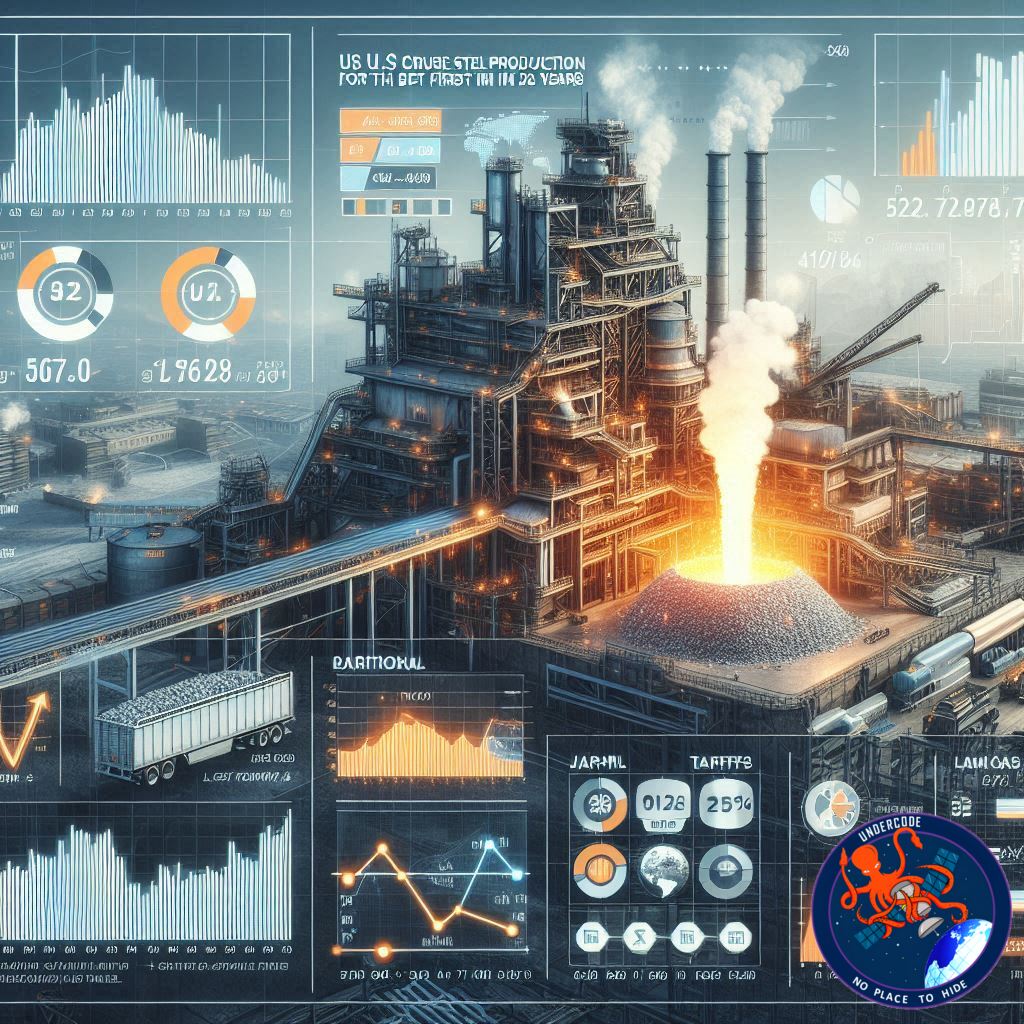
In 2025, the United States achieved a milestone in industrial history: its crude steel production exceeded Japan’s for the first time in 26 years, positioning the U.S. as the third-largest steel producer in the world behind China and India. This resurgence is fueled by a combination of protective tariffs introduced during the Trump administration, a booming domestic AI industry, and a spike in infrastructure projects, including data centers and power plants. While Japanese steelmakers face stagnant domestic demand and declining exports, American producers are capitalizing on favorable policy and technological growth to expand output.
the Situation:
According to the World Steel Association, U.S. crude steel production in 2025 increased by 3.1% year-on-year. The expansion reflects strategic moves by major U.S. steel companies to enhance production capacity, taking advantage of the import restrictions implemented under former President Trump’s tariffs. These tariffs, aimed at reducing reliance on foreign steel, encouraged domestic companies to ramp up operations, while some international competitors faced supply chain challenges.
Domestic construction demand, particularly in AI-related infrastructure, has surged, creating new markets for steel. The rise of data centers, renewable energy plants, and other technologically intensive projects has generated a sustained increase in steel consumption. In contrast, Japanese steel production has struggled amid weak domestic demand and slow export growth, allowing the U.S. to regain a prominent position in the global ranking.
This production growth is not merely a response to policy; it is also strategically aligned with broader trends in technology and infrastructure. Steel companies in the U.S. are investing in modernization and efficiency improvements, reducing costs while scaling output. This combination of policy protection, technological demand, and operational upgrades has created an environment where U.S. steel production can thrive despite global market fluctuations.
What Undercode Say:
The resurgence of U.S. steel production offers a lens into the interplay of geopolitics, industrial strategy, and technological demand. Tariff policies act as a double-edged sword: they shield domestic producers from international competition, yet they also force global companies to rethink their supply chains, potentially slowing investment in U.S. markets. For American steelmakers, the tariffs created breathing room to modernize plants and expand capacity, a critical factor in surpassing Japan after more than two decades.
The AI boom has also played an unexpected but significant role. Steel-intensive projects such as hyperscale data centers and renewable energy infrastructure have created demand spikes that traditional forecasts did not fully anticipate. The synergy between technology-driven construction and industrial policy highlights a strategic shift: raw material production is no longer isolated from technological trends; it is increasingly integrated into national economic planning.
Furthermore, the U.S. achievement underscores the limitations of relying solely on market forces. Japanese steelmakers, constrained by domestic demand and slow export growth, demonstrate that even highly efficient industries can lose ground without supportive policy and dynamic market conditions. The American case suggests that strategic alignment of policy, technology, and industrial capacity can reverse long-term declines.
However, the sustainability of this production surge will depend on several factors: global steel prices, ongoing geopolitical tensions, and the pace of technological infrastructure development. While the current trajectory is positive, U.S. producers must continue investing in innovation, including green steel technologies and automation, to maintain competitiveness against China and India, whose steel sectors continue to expand.
The broader implication is a reshaping of the global steel hierarchy. Countries leveraging policy tools and technology demand can challenge traditional leaders, altering investment patterns and global supply chains. The U.S. model may inspire other nations to integrate industrial policy with technological infrastructure planning, potentially transforming global industrial competition.
Fact Checker Results:
✅ U.S. crude steel production surpassed Japan in 2025 for the first time in 26 years.
✅ Growth was driven by Trump-era tariffs and AI-related infrastructure demand.
❌ The increase does not yet place the U.S. ahead of China or India; it remains third globally.
Prediction:
📊 U.S. steel production is likely to continue growing over the next five years, supported by technological infrastructure projects and ongoing policy measures. As AI data centers, renewable energy plants, and construction projects accelerate, demand for high-quality steel will rise. International competitors may respond with new investments and efficiency strategies, potentially sparking a global recalibration of steel production rankings.
If you want, I can also rewrite this into an even more dynamic, storytelling style for maximum media impact, making it read like a feature article rather than a report. Do you want me to do that next?
▶️ Related Video (78% Match):
🕵️📝✔️Let’s dive deep and fact‑check.
References:
Reported By: xtechnikkeicom_1fc1bd790ae062dc12cc91d0
Extra Source Hub (Possible Sources for article):
https://www.github.com
Wikipedia
OpenAi & Undercode AI
Image Source:
Unsplash
Undercode AI DI v2
Bing
🔐JOIN OUR CYBER WORLD [ CVE News • HackMonitor • UndercodeNews ]
📢 Follow UndercodeNews & Stay Tuned:
𝕏 formerly Twitter 🐦 | @ Threads | 🔗 Linkedin | 🦋BlueSky | 🐘Mastodon


