
Listen to this Post
Introduction: Samsung’s Second Chance in the AI Memory Race
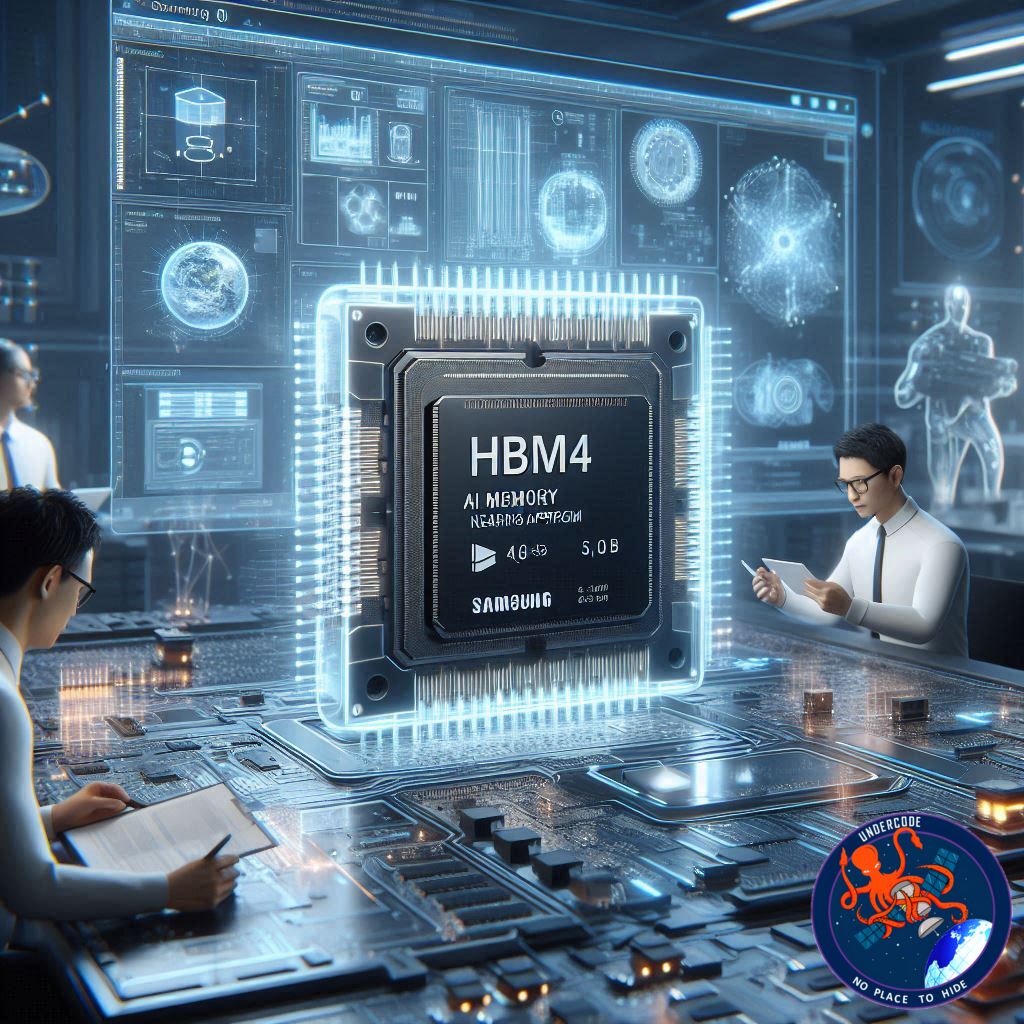
Samsung is quietly preparing what could be one of its most important semiconductor comebacks in years. After stumbling with earlier generations of high-bandwidth memory, the company now stands on the brink of securing Nvidia’s approval for its next-generation HBM4 chips. If successful, this move could reshape the competitive balance of the AI hardware market and restore Samsung’s credibility in a space it once dominated but temporarily lost.
the Original Report: From HBM3 Trouble to HBM4 Hope
Samsung’s journey with high-bandwidth memory has been anything but smooth. The company’s HBM3 and HBM3E chips, designed for AI accelerators, reportedly suffered from performance and reliability issues. These problems were serious enough that Samsung had to redesign its HBM3E products in order to meet Nvidia’s strict requirements. Even after those revisions, Samsung’s HBM3E chips were only approved for limited use, primarily in Nvidia AI accelerators sold in China, highlighting the company’s weakened position in the global AI supply chain.
According to a Bloomberg report, the situation is now changing with Samsung’s sixth-generation HBM4 chips. These chips were sent to Nvidia as early as September 2025 and have since progressed through multiple qualification stages. As of early 2026, they are reportedly in the final phase of Nvidia’s approval process. Mass production is expected to begin in February 2026, positioning Samsung to supply not only Nvidia but also other major AI accelerator developers such as AMD and Google.
HBM, or high-bandwidth memory, is a specialized memory technology that stacks multiple DRAM dies vertically to deliver massive bandwidth and high speeds. This makes it essential for AI workloads, where data must move quickly between memory and processors. However, this performance comes at a cost: HBM chips are among the most complex and expensive memory products to design and manufacture.
Despite being the world’s largest memory chip manufacturer for decades, Samsung underestimated the early importance of HBM. This strategic hesitation allowed competitors like SK Hynix and Micron to seize leadership in the HBM market. By the time Samsung ramped up its efforts during the HBM3 and HBM3E generations, the gap had already widened.
Learning from those missteps, Samsung invested heavily in HBM4 development. Some industry reports suggest that Samsung’s HBM4 chips may outperform rival offerings from SK Hynix and Micron. These chips are widely expected to power Nvidia’s next-generation flagship AI processor, codenamed Rubin, which is scheduled to launch later this year. If that happens, Samsung’s position in the AI memory ecosystem could be dramatically strengthened.
What Undercode Say: Samsung’s HBM4 Is About Survival, Not Just Performance
Samsung’s HBM4 push is less about incremental improvement and more about strategic survival. In the AI era, memory is no longer a supporting actor—it is a core performance driver. Nvidia’s GPUs and AI accelerators are only as powerful as the memory feeding them, and HBM has become a critical bottleneck. Failing here would mean long-term exclusion from the most lucrative segment of the semiconductor industry.
What makes HBM4 especially important is timing. Nvidia’s demand for HBM is exploding as AI models grow larger and more complex. SK Hynix currently enjoys a dominant position as Nvidia’s primary HBM supplier, giving it pricing power and long-term contracts. If Samsung can secure approval for HBM4 just as Nvidia ramps up production of its Rubin processors, it could re-enter the supply chain at scale rather than remaining a secondary or regional supplier.
There is also a reputational dimension. Samsung’s earlier HBM3 issues raised uncomfortable questions about its execution in advanced memory manufacturing. Approval of HBM4 would signal to the market that those problems are behind it and that Samsung can once again meet the extreme quality and consistency standards demanded by AI leaders.
However, success is not guaranteed. Even if HBM4 receives approval, Samsung will still face challenges in yield rates, production scalability, and cost control. HBM manufacturing is notoriously unforgiving, and competitors will not stand still. SK Hynix and Micron are already working on their own next-generation HBM solutions, meaning Samsung’s advantage—if it exists—could be short-lived.
Still, the broader implication is clear: the AI hardware race is no longer just about GPUs and accelerators. Memory suppliers now play a decisive role, and Samsung’s renewed focus on HBM4 suggests it has finally internalized that lesson. If execution matches ambition, HBM4 could mark the beginning of Samsung’s comeback in AI infrastructure.
🔍 Fact Checker Results
✅ Samsung’s HBM3 and HBM3E chips previously faced reported performance and approval issues.
✅ Bloomberg reported that Samsung’s HBM4 chips are in the final stage of Nvidia qualification.
❌ There is no official confirmation yet that HBM4 will definitively power Nvidia’s Rubin processor.
📊 Prediction
Samsung will secure limited initial approval for HBM4 in 2026, followed by gradual volume expansion as yields improve. If early deployments with Nvidia are successful, Samsung could reclaim a significant share of the AI memory market by 2027, but sustained leadership will depend on flawless execution and rapid iteration beyond HBM4.
🕵️📝✔️Let’s dive deep and fact‑check.
References:
Reported By: www.sammobile.com
Extra Source Hub (Possible Sources for article):
https://www.github.com
Wikipedia
OpenAi & Undercode AI
Image Source:
Unsplash
Undercode AI DI v2
Bing
🔐JOIN OUR CYBER WORLD [ CVE News • HackMonitor • UndercodeNews ]
📢 Follow UndercodeNews & Stay Tuned:
𝕏 formerly Twitter 🐦 | @ Threads | 🔗 Linkedin | 🦋BlueSky | 🐘Mastodon


