
Listen to this Post
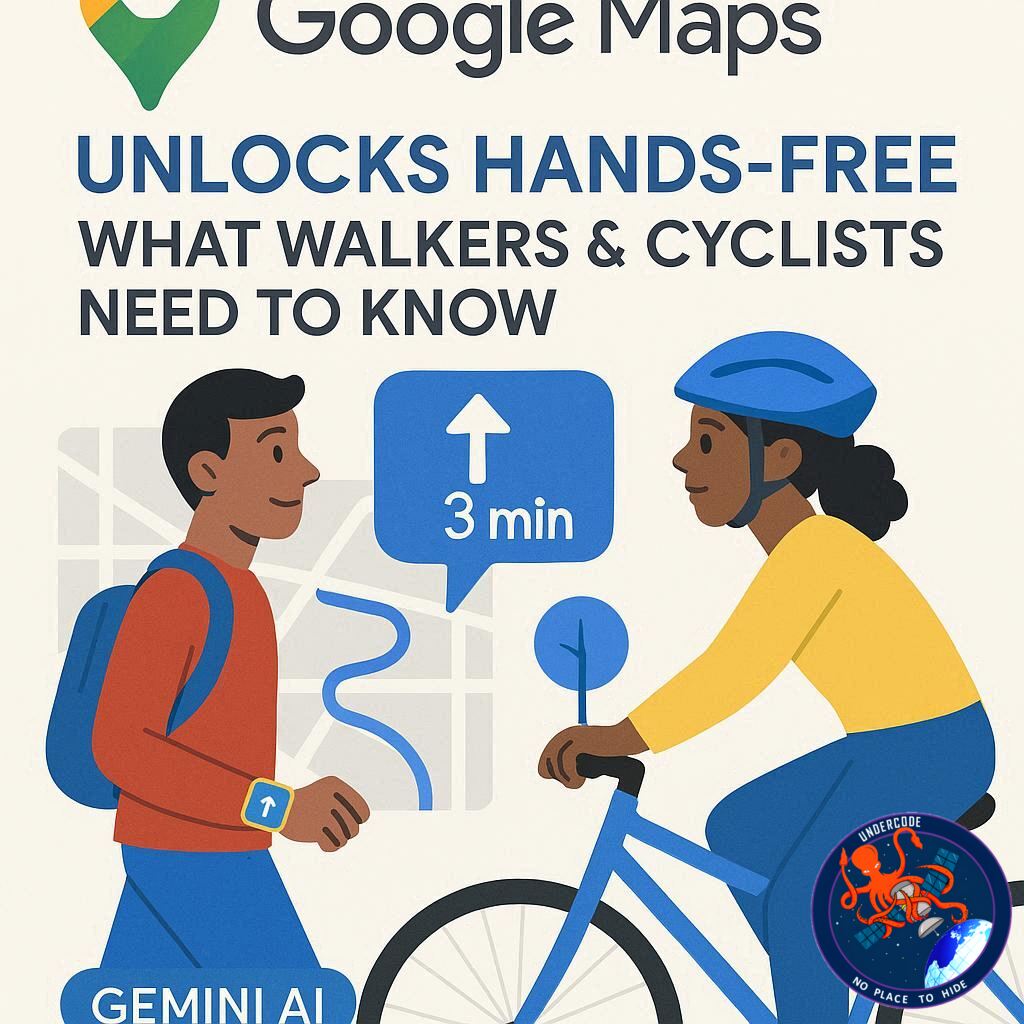 A Smarter Way to Navigate on Foot and Two Wheels
Google Maps is taking another major step toward hands-free, intelligent navigation. With its latest update, Google now allows users to interact with its Gemini AI assistant while walking or cycling. This enhancement builds on an earlier driving-focused feature and extends AI-powered voice assistance to pedestrians and cyclists, aiming to improve safety, convenience, and real-time decision-making during everyday travel.
Why This Update Matters Now
As smartphones become deeply embedded in daily movement, distractions caused by checking screens while walking or cycling have become a growing concern. Google’s new Gemini integration directly addresses this issue by enabling voice-based interactions that keep users moving without breaking focus. Instead of stopping to type or glance at a phone, users can now ask questions naturally and receive spoken responses in real time.
Gemini AI Moves Beyond Driving Navigation
Previously, Google allowed drivers to interact with Gemini AI during turn-by-turn navigation. This update expands that capability to walking and cycling modes. The shift reflects Google’s understanding that pedestrians and cyclists also rely heavily on Maps for navigation, discovery, and time management—and that they deserve the same level of intelligent assistance.
Summary of the Original
Hands-Free Gemini Comes to Walkers and Cyclists
Google has officially rolled out a significant update to Google Maps that enables users to interact with Gemini AI while walking or cycling. The feature allows hands-free voice interaction, removing the need to stop or manually operate a phone during navigation. It is designed to improve safety and convenience for people on the move.
How the Feature Works
Users can activate Gemini by opening Google Maps, starting navigation in walking or cycling mode, and tapping the Gemini icon at the top of the screen. Alternatively, they can simply say “Hey Google” to begin interacting with the assistant. Once activated, Gemini responds to spoken queries in real time.
Real-Life Use Cases While Walking
Pedestrians can ask Gemini questions such as finding nearby gyms, locating parking areas, or identifying points of interest along their route. These interactions happen without the need to touch the screen, making the experience smoother and safer, especially in busy urban environments.
Useful Commands for Cyclists
Cyclists can request estimated arrival times, ask for route-related information, or even instruct Gemini to send messages to contacts. The hands-free nature of the feature ensures that cyclists can keep both hands on the handlebars while staying informed.
Global Availability Across Platforms
The Gemini integration works globally on both iOS and Android devices in regions where Gemini support is enabled. While the update is already available on iPhones, Android users will receive it gradually as part of a phased rollout.
Focus on Safety and Reduced Distraction
Google emphasizes that this update is meant to reduce distractions caused by typing or screen interaction while walking or cycling. By relying on voice commands, users can remain focused on their surroundings, potentially lowering the risk of accidents.
Contextual and Real-Time Information
Beyond simple navigation, Gemini provides contextual insights pulled from Google Maps’ real-time data. Users can ask about restaurants, petrol pumps, EV charging stations, parking spots, and nearby attractions, receiving recommendations tailored to their current location.
Part of a Bigger Vision for Intelligent Navigation
This hands-free Gemini support is part of Google’s broader strategy to make Maps more interactive, conversational, and intelligent. The company has confirmed that the feature will continue expanding to more users and regions over time.
What Undercode Say:
Google Maps Is Quietly Becoming an AI Travel Companion
This update signals a deeper transformation of Google Maps from a navigation tool into a conversational travel assistant. By embedding Gemini directly into walking and cycling modes, Google is redefining how people interact with location-based services. Maps is no longer just about directions—it’s about continuous situational awareness.
Voice-First Navigation Reflects Real User Behavior
People already talk to their phones while driving, walking, or cycling. Google’s move aligns perfectly with natural human behavior. Instead of forcing users to adapt to screens, Gemini adapts to how people move and think in real-world environments.
Safety Is the Real Selling Point
While convenience is important, safety is the underlying driver of this update. Pedestrian accidents linked to phone distraction are rising globally. Cyclists face similar risks when glancing at screens mid-ride. Hands-free AI interaction reduces cognitive and physical distraction, which could have real-world safety benefits.
Gemini Gains Context Through Maps Data
The power of this feature lies in Gemini’s access to Google Maps’ vast, real-time data. The AI doesn’t just answer generic questions—it understands where you are, where you’re going, and what’s around you. This context-aware intelligence is what separates Gemini from traditional voice assistants.
A Subtle Push Toward Ambient Computing
Google has long talked about “ambient computing,” where technology fades into the background and responds when needed. This Maps update fits that vision perfectly. Users don’t need to stop, tap, or search—information flows naturally through voice.
Competitive Pressure on Apple and Others
By rolling this out globally across iOS and Android, Google puts pressure on competitors like Apple Maps and third-party navigation apps. AI-driven, hands-free interaction is quickly becoming a baseline expectation, not a luxury feature.
Cyclists Finally Get Equal Attention
Historically, navigation features have prioritized drivers. This update acknowledges cyclists as first-class users. Features like ETA updates and message sending without removing hands from handlebars show a more thoughtful approach to non-car navigation.
Incremental Rollout, Long-Term Impact
Although Android users will receive the update in phases, the long-term implications are clear. As Gemini becomes more capable, its role in Maps could expand into proactive alerts, smarter rerouting, and personalized recommendations based on habits.
The Line Between Search and Navigation Is Blurring
When users ask, “Is there a gym nearby?” during navigation, they’re no longer performing a traditional search. They’re engaging in a conversational query tied to physical movement. This blurring of search and navigation could reshape how local discovery works.
Data Accuracy Will Be Critical
The success of this feature depends heavily on the accuracy of real-time Maps data. Incorrect information about parking, charging stations, or routes could undermine trust. Google will need to ensure Gemini’s responses remain reliable and up to date.
A Glimpse Into the Future of Urban Mobility
This update hints at a future where AI assists seamlessly across all modes of transport—walking, cycling, driving, and eventually public transit. Google Maps, powered by Gemini, is positioning itself as the central intelligence layer for everyday mobility.
Fact Checker Results
Feature Availability Verification
Google has confirmed hands-free Gemini interaction for walking and cycling modes in supported regions. ✅
Platform Support Accuracy
The feature is available on iOS and rolling out gradually on Android devices. ✅
Safety and Function Claims
Hands-free voice interaction reduces the need for screen use but does not eliminate all distractions. ❌
Prediction
Gemini Will Become Proactive, Not Reactive 🔮
Future updates are likely to see Gemini offering suggestions without being asked, such as alerting users about nearby hazards or recommending stops along a route.
Walking and Cycling Analytics Will Improve 🚴♂️
Google may introduce AI-driven insights tailored specifically to pedestrians and cyclists, including pace optimization and smarter rerouting.
AI Navigation Will Set a New Industry Standard 🌍
Hands-free, conversational navigation will soon be expected across all major mapping platforms, with Google setting the pace.
🕵️📝✔️Let’s dive deep and fact‑check.
References:
Reported By: zeenews.india.com
Extra Source Hub (Possible Sources for article):
https://www.stackexchange.com
Wikipedia
OpenAi & Undercode AI
Image Source:
Unsplash
Undercode AI DI v2
Bing
🔐JOIN OUR CYBER WORLD [ CVE News • HackMonitor • UndercodeNews ]
📢 Follow UndercodeNews & Stay Tuned:
𝕏 formerly Twitter 🐦 | @ Threads | 🔗 Linkedin | 🦋BlueSky | 🐘Mastodon


