
Listen to this Post
A Sudden Shift in US Visa Scrutiny
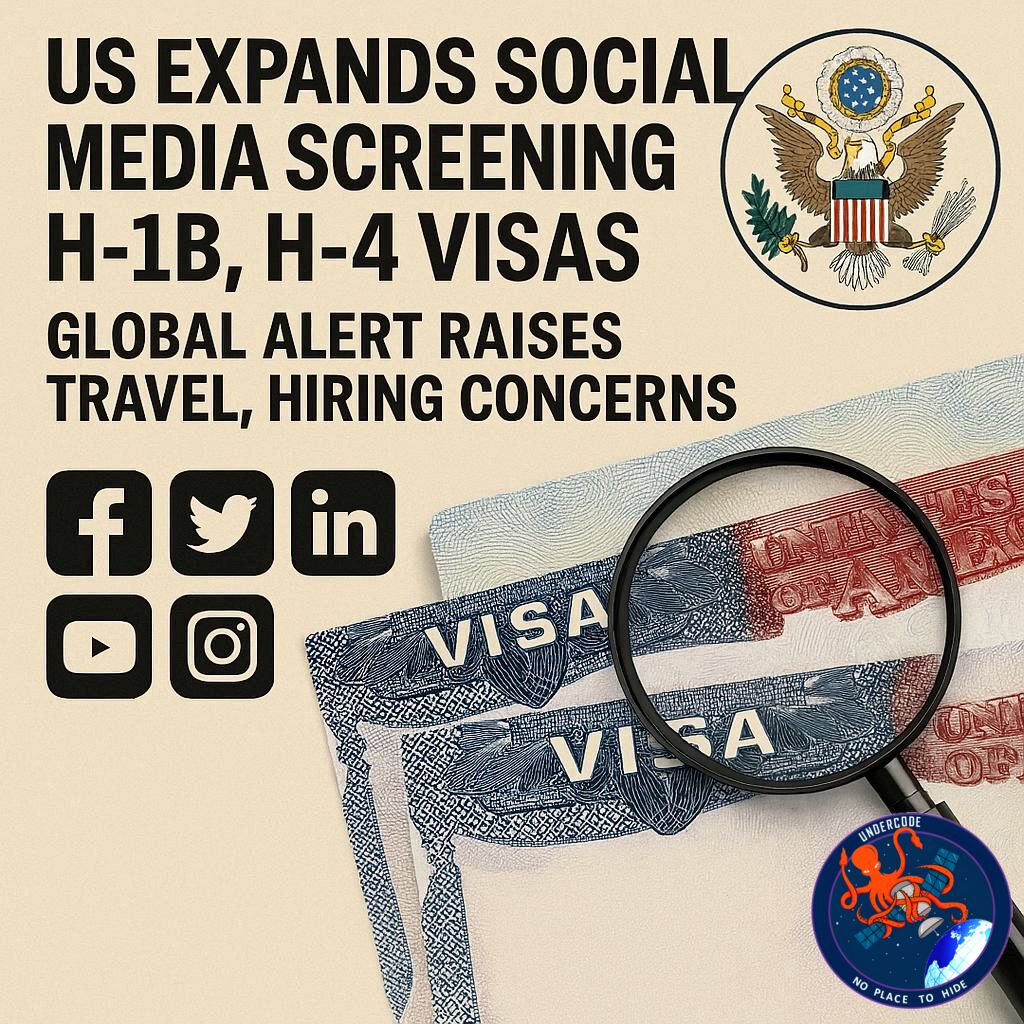
The United States has quietly but decisively tightened its visa screening framework, triggering uncertainty among thousands of skilled foreign workers and their families. A new Worldwide Alert issued by the US Embassy in India confirms that social media and online presence reviews are now a mandatory part of the H-1B and H-4 visa process. While officials frame the move as a safeguard against misuse, the timing and scale of the change have sent shockwaves through the global tech workforce, especially among Indian professionals who dominate the H-1B ecosystem.
the Original
The US Embassy in India has announced a Worldwide Alert affecting all H-1B and H-4 visa applicants, regardless of nationality. Effective from mid-December, the US Department of State has expanded its screening procedures to include comprehensive online presence reviews as part of standard visa vetting. This means consular officers are now examining social media profiles, public digital footprints, and other online identifiers to verify applicants’ backgrounds, intent, and compliance history.
According to the embassy, the policy is part of a broader global initiative aimed at addressing potential abuse of the H-1B program while preserving the ability of American companies to hire highly skilled foreign workers. Although embassies and consulates continue to accept and process visa applications, applicants are warned to expect longer processing times and are encouraged to apply as early as possible.
The announcement has already triggered immediate responses from major technology firms. Apple, Google, and Microsoft have reportedly issued internal advisories urging H-1B and H-4 visa holders to avoid international travel unless absolutely necessary. Apple’s immigration team warned employees about unpredictable delays in visa stamping and re-entry, recommending coordination with legal teams before any travel plans. Microsoft described the situation as rapidly evolving, citing appointment rescheduling issues and stamping delays linked to the new social media screening process. Employees both inside and outside the US were urged to return before their current visas expire to avoid being stranded abroad.
The full advisory from the US Embassy reiterates that the expanded vetting applies globally to applicants of all nationalities and emphasizes that the intent is regulatory oversight rather than a suspension of the visa program itself.
What Undercode Say:
The expansion of social media screening marks a structural shift rather than a temporary procedural tweak. For years, visa vetting focused on documentation, employer legitimacy, and compliance records. By integrating online presence reviews into standard screening, the US government is effectively redefining what constitutes an applicant’s background. Digital behavior, opinions, associations, and even historical posts now carry implicit weight in immigration outcomes.
This approach reflects a growing belief within US policy circles that traditional paperwork no longer captures the full risk profile of a visa applicant. In an era where professional identities, political views, and personal networks are publicly visible, immigration authorities see online data as an untapped layer of verification. The challenge is that social media is rarely neutral or contextual. Posts taken out of time or cultural context can easily be misinterpreted, especially when reviewed by overstretched consular staff under pressure to detect red flags.
For Indian professionals, the stakes are especially high. India accounts for the majority of H-1B approvals, and even minor delays can disrupt careers, payroll continuity, and family stability. The travel warnings issued by Apple, Google, and Microsoft are not overreactions. They signal corporate concern that the visa pipeline is becoming less predictable, even for employees at the most trusted firms in the world.
From a business standpoint, the policy introduces friction into a system already criticized for its rigidity. Extended processing times affect project timelines, offshore-onshore coordination, and executive planning. While the US insists it remains open to top-tier talent, the operational reality suggests higher uncertainty costs for both workers and employers.
Politically, the framing around “abuse of the H-1B program” continues to blur the line between enforcement and deterrence. The absence of clear definitions around what constitutes problematic online activity leaves applicants guessing and encourages self-censorship. Over time, this could discourage highly skilled professionals from choosing the US over competing destinations with clearer, faster immigration pathways.
In essence, this is not just a visa update. It is a signal that immigration control is moving deeper into the digital lives of applicants. Those who treat their online presence casually may now face consequences that extend far beyond social engagement, shaping their mobility, employment, and long-term migration prospects.
Fact Checker Results
✅ The US Department of State has expanded online presence reviews to all H-1B and H-4 applicants globally.
✅ Major tech companies have issued internal advisories warning of travel risks and visa delays.
❌ There is no official suspension of H-1B or H-4 visa processing at this time.
Prediction
📊 Visa processing times for H-1B and H-4 categories are likely to increase in the short term as consulates adapt to deeper digital vetting.
📊 Tech companies may further restrict international travel for visa-dependent employees to reduce re-entry risks.
📊 Global competition for skilled talent could intensify if professionals perceive US visa pathways as increasingly unpredictable.
▶️ Related Video (74% Match):
🕵️📝✔️Let’s dive deep and fact‑check.
References:
Reported By: timesofindia.indiatimes.com
Extra Source Hub (Possible Sources for article):
https://www.twitter.com
Wikipedia
OpenAi & Undercode AI
Image Source:
Unsplash
Undercode AI DI v2
Bing
🔐JOIN OUR CYBER WORLD [ CVE News • HackMonitor • UndercodeNews ]
📢 Follow UndercodeNews & Stay Tuned:
𝕏 formerly Twitter 🐦 | @ Threads | 🔗 Linkedin | 🦋BlueSky | 🐘Mastodon


