
Listen to this Post
Introduction: A Chilling Allegation From the Dark Web
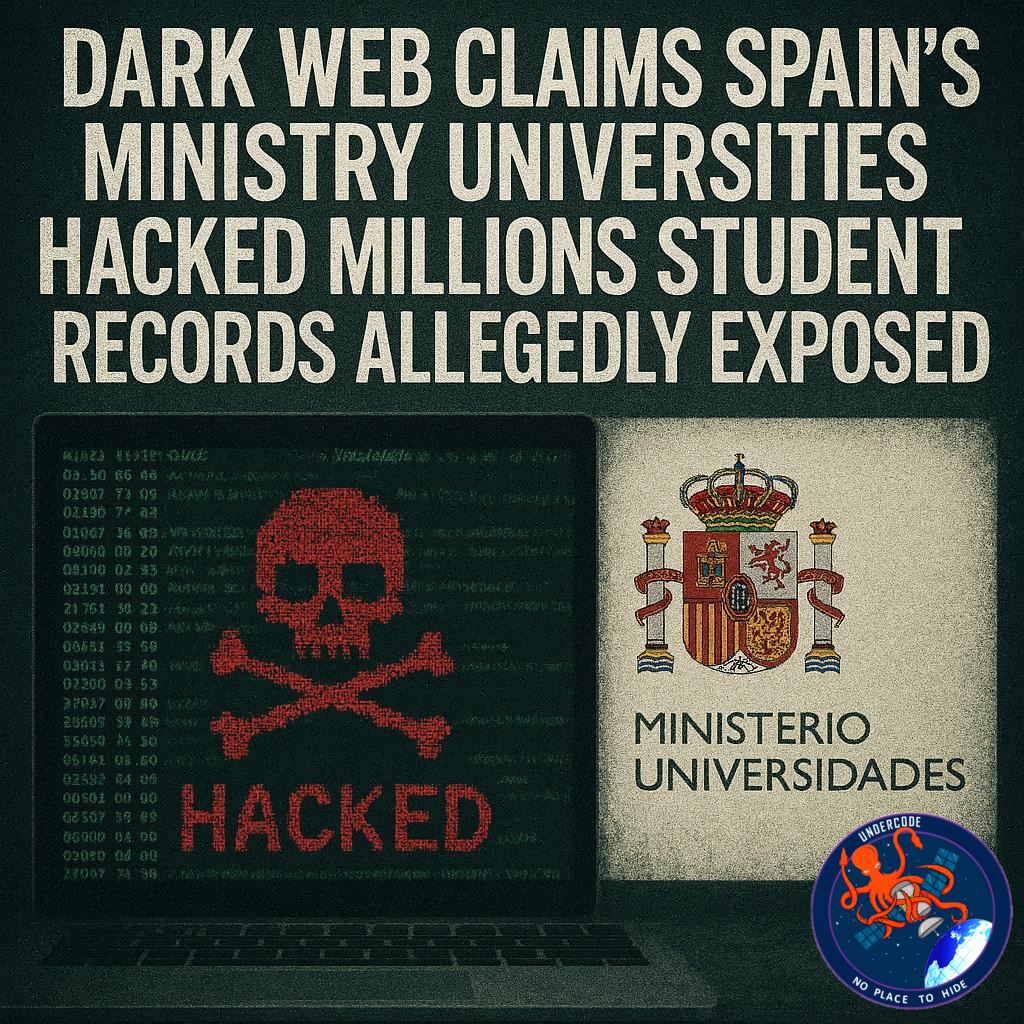
A new dark web leak has sent shockwaves through Spain’s academic and political landscape. According to claims circulating in underground forums and amplified by Dark Web Intelligence, Spain’s Ministry of Universities has allegedly suffered a serious cyber compromise. The attackers claim they obtained full administrative access, opening the door to some of the most sensitive personal and institutional data in the country. While official confirmation is still pending, the scope of the alleged breach — if verified — would mark one of the most damaging government-related data exposures Spain has faced in recent years.
the Original Report
The allegation emerged from dark web monitoring sources, stating that threat actors had successfully infiltrated systems belonging to Spain’s Ministry of Universities. According to the claims, the attackers obtained admin-level access, suggesting deep and persistent control rather than a limited intrusion.
The exposed data is said to include passport scans, national ID documents, banking information, and complete academic records. Such data would not only affect current university students, but also alumni, international applicants, researchers, and potentially ministry staff.
The claim was first highlighted by Dark Web Intelligence via social media, linking to a blog post that tracks illicit marketplace activity and breach disclosures. Shortly after the post gained traction, public reactions followed, including inquiries directed at Spanish officials and the Ministry itself asking for confirmation or denial.
As of the time of reporting, no official statement had been released by the Ministry of Universities or Spain’s government cybersecurity bodies. This silence has fueled speculation and concern, particularly given the sensitivity of the allegedly exposed documents.
The blog emphasizes that the breach remains unconfirmed, but warns that the type of data allegedly compromised aligns with high-value datasets commonly targeted by cybercriminals for fraud, identity theft, and extortion. The situation continues to evolve as journalists, researchers, and government agencies monitor for validation or refutation of the claims.
What Undercode Say:
If these claims prove accurate, this incident highlights a recurring and deeply troubling pattern in public-sector cybersecurity across Europe. Government ministries often act as data aggregation hubs, collecting identity documents, financial details, and long-term personal records in centralized systems that become extremely attractive targets.
Admin-level access is the most alarming aspect of this claim. It suggests either stolen credentials, severe misconfiguration, or prolonged lateral movement inside the network. This is not the profile of a quick smash-and-grab attack, but rather a strategic compromise with potential long-term persistence.
Academic records combined with national IDs and banking data form a near-perfect identity theft package. Such datasets can be reused for years, enabling everything from synthetic identities to targeted phishing campaigns against students and academics. International students may be especially vulnerable, as their data often spans multiple jurisdictions.
Another concern is reputational damage. Universities rely heavily on trust — trust from students, foreign institutions, and research partners. A breach at the ministry level could cascade into reduced confidence in Spain’s higher-education data infrastructure, affecting collaborations and funding opportunities.
The delayed or absent official response also follows a familiar playbook. Governments frequently wait for internal verification before speaking publicly, but in the age of real-time breach disclosures, silence can amplify panic and misinformation. Early acknowledgment, even without full confirmation, often helps control the narrative.
Finally, this case reinforces the growing importance of dark web intelligence monitoring. Whether or not the breach is ultimately confirmed, the fact that such claims can gain traction within hours shows how underground forums now shape public cybersecurity discourse just as much as official press releases.
Fact Checker Results 🔍
✅ The breach claim originates from dark web monitoring sources, not official government disclosures.
❌ No public confirmation has been issued by Spain’s Ministry of Universities at the time of writing.
⚠️ The data types listed are consistent with real ministry-level databases, but remain unverified.
Prediction 📊
If evidence supporting this breach emerges, Spain will likely face mandatory disclosure procedures, internal audits, and possible EU-level scrutiny under GDPR. Even if the claim is disproven, increased investment in government cybersecurity and access controls is almost inevitable, as public pressure around data protection continues to intensify.
🕵️📝✔️Let’s dive deep and fact‑check.
References:
Reported By: x.com
Extra Source Hub (Possible Sources for article):
https://www.twitter.com
Wikipedia
OpenAi & Undercode AI
Image Source:
Unsplash
Undercode AI DI v2
Bing
🔐JOIN OUR CYBER WORLD [ CVE News • HackMonitor • UndercodeNews ]
📢 Follow UndercodeNews & Stay Tuned:
𝕏 formerly Twitter 🐦 | @ Threads | 🔗 Linkedin | 🦋BlueSky | 🐘Mastodon


