
Listen to this Post
Introduction
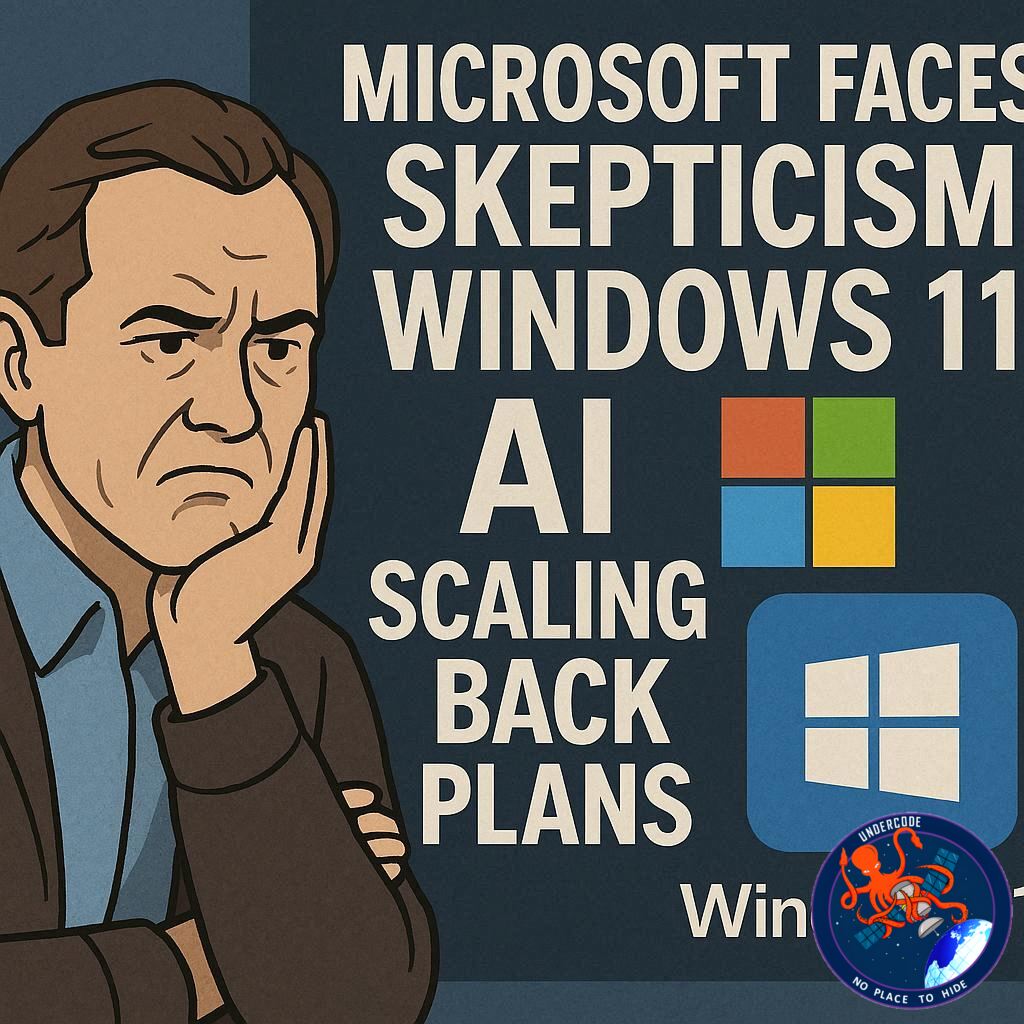
Microsoft has long championed AI integration as the next frontier for Windows 11, but a growing chorus of users is expressing doubt. Recent rumors suggest the software giant may be reconsidering how aggressively it pushes AI features into the operating system, signaling a potential pivot aimed at addressing user concerns. As enthusiasm clashes with frustration, the future of Windows 11’s AI strategy hangs in the balance.
the Rumor and User Reaction
According to Windows Central, Microsoft is reevaluating its AI strategy in Windows 11 following strong user backlash. The company is reportedly planning to reduce the number of Copilot buttons scattered across the interface and core apps like Notepad and Paint. This scaling back reflects a growing awareness that users perceive the AI push as intrusive and potentially detracting from the OS’s stability and performance.
The Copilot integration freeze extends to other default apps, suggesting Microsoft is temporarily halting new AI feature rollouts. Alongside this, the Recall feature, which uses frequent screenshots to enhance search capabilities, is under review. Microsoft reportedly acknowledges that Recall has underperformed in its current form and may undergo renaming or redesign rather than being fully scrapped.
Despite these adjustments, skepticism among users remains high. Online forums reflect a “wait and see” mentality, with many echoing the sentiment: “I’ll believe it when I see it.” The perception is that Microsoft has prioritized AI development over addressing fundamental OS issues, and that trust needs to be rebuilt before users can fully embrace these innovations.
While Microsoft’s vision of agentic AI platforms and semantic search remains intact, there appears to be a deliberate effort to tread more carefully, promising improvements to Windows 11’s performance and usability. If executed effectively, this could reconcile user frustration while maintaining the long-term AI roadmap.
What Undercode Say: Analysis of Microsoft’s AI Strategy and Windows 11 Challenges
Microsoft’s rumored pivot in Windows 11 reflects a deeper tension between innovation and user trust. AI integration has become a double-edged sword: while it promises enhanced productivity, smarter search, and natural language interactions, overzealous implementation has alienated users. Copilot buttons everywhere and underdeveloped AI features like Recall illustrate how ambition can undermine usability.
Windows 11, despite being marketed as modern and sleek, has faced repeated criticism over performance issues, bugs, and confusing UI changes. Introducing AI on top of these structural weaknesses amplifies frustration rather than alleviating it. Reducing Copilot visibility and freezing new AI functionality may help Microsoft address these core criticisms, but it’s a reactive rather than proactive approach.
The key challenge for Microsoft lies in execution. Users’ skepticism isn’t about AI itself but about the company’s ability to implement it thoughtfully. Rolling back excessive AI integration signals awareness, but the proof will lie in measurable improvements: faster OS performance, reduced bloat, and seamless AI utility rather than superficial add-ons.
Recall’s current struggles illustrate another critical point: AI features cannot be judged in isolation. A system like Windows 11 must integrate AI in ways that complement, rather than complicate, workflows. Microsoft’s potential renaming and redesign of Recall suggest the company recognizes the need for a more intuitive, user-friendly approach.
Moreover, trust in AI within the operating system is inherently tied to brand credibility. Persistent OS instability undermines confidence in autonomous AI agents, making it harder for users to embrace features like semantic search or agentic AI platforms. Microsoft’s task, therefore, is twofold: first, stabilize Windows 11’s foundation, and second, deploy AI in ways that feel purposeful and nonintrusive.
The current situation also exposes a broader trend in tech: user pushback can influence corporate strategy. Microsoft’s responsiveness, even if partly PR-driven, highlights the growing weight of public perception in shaping product development. If the company follows through, Windows 11 could emerge as a more balanced OS, blending AI capability with solid performance. Failure to act decisively, however, risks further erosion of trust and market confidence.
Ultimately, Microsoft is at a crossroads. It can either double down on AI and risk alienating users or recalibrate its strategy to emphasize stability and meaningful innovation. The rumored pullback suggests the latter path, but the execution timeline and effectiveness will determine whether Windows 11 regains credibility or becomes another cautionary tale in tech overreach. Users’ cautious optimism—captured in the prevailing “I’ll believe it when I see it” sentiment—serves as a reminder that promises alone are insufficient; only tangible results will restore confidence.
Fact Checker Results
✅ Microsoft is reportedly reevaluating AI in Windows 11 and scaling back Copilot features.
✅ Recall feature under review, with possible renaming or redesign.
❌ No official confirmation yet on permanent removal of AI features; rumors remain unverified.
Prediction
📊 If Microsoft delivers meaningful OS improvements alongside a measured AI rollout, Windows 11 could see renewed user trust and engagement. Conversely, continued overloading with AI without fixing core issues may intensify user skepticism and slow adoption of AI-driven features. Gradual, thoughtful integration seems the most plausible path forward.
▶️ Related Video (88% Match):
🕵️📝✔️Let’s dive deep and fact‑check.
References:
Reported By: www.techradar.com
Extra Source Hub (Possible Sources for article):
https://www.quora.com
Wikipedia
OpenAi & Undercode AI
Image Source:
Unsplash
Undercode AI DI v2
Bing
🔐JOIN OUR CYBER WORLD [ CVE News • HackMonitor • UndercodeNews ]
📢 Follow UndercodeNews & Stay Tuned:
𝕏 formerly Twitter 🐦 | @ Threads | 🔗 Linkedin | 🦋BlueSky | 🐘Mastodon


