
Listen to this Post
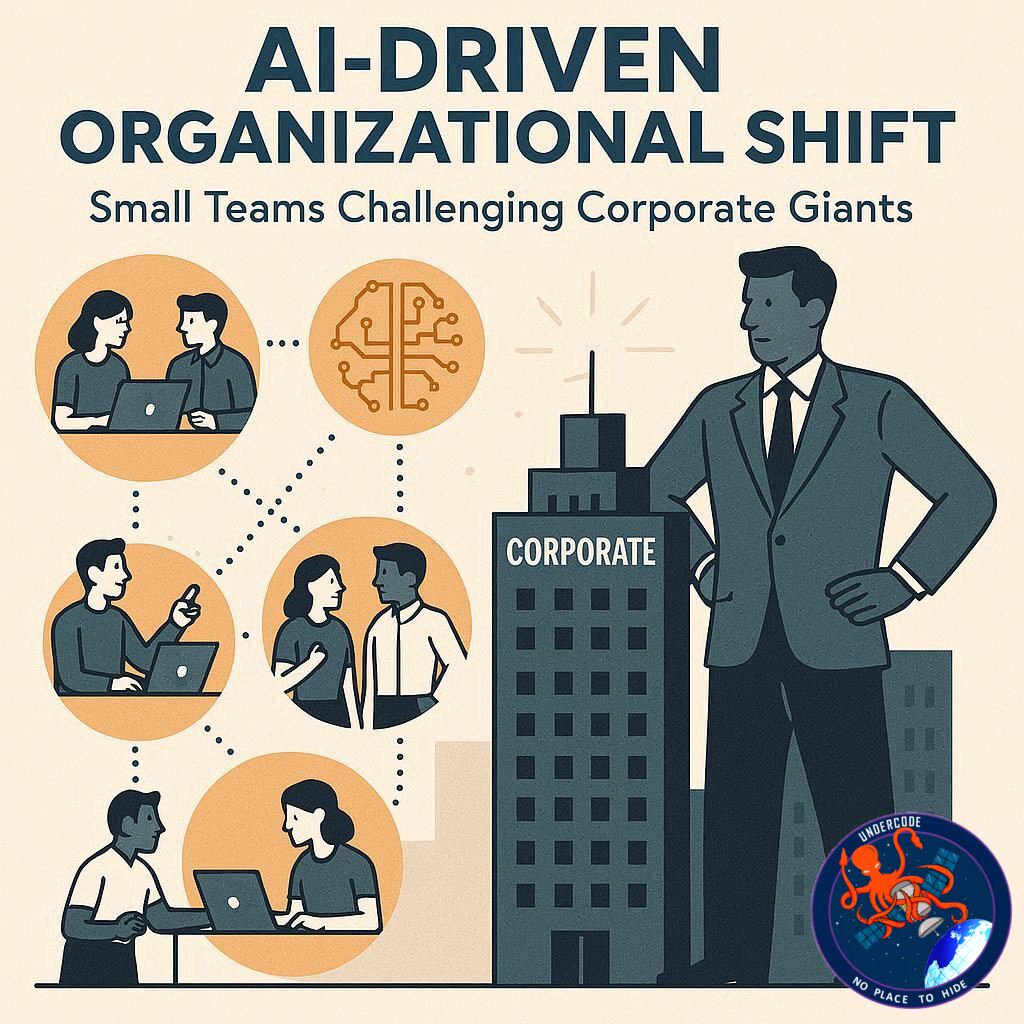
🎯 Introduction: The Quiet Workforce Revolution Powered by AI
Artificial intelligence is no longer just a productivity tool, it is reshaping the very structure of modern organizations. As AI systems mature, long-standing assumptions about team size, hierarchy, and operational scale are being challenged. Silicon Valley leaders are now openly questioning whether large workforces are still necessary in an era where intelligent systems can multiply human capability. At the center of this debate is LinkedIn cofounder Reid Hoffman, whose recent insights suggest that AI is accelerating a fundamental redesign of how companies are built, scaled, and sustained.
📌 Small Teams, Outsized Impact in the AI Era
Reid Hoffman argues that AI has shifted the competitive balance between small and large organizations. According to him, a team of 15 people equipped with advanced AI tools can rival the output of a 150-person workforce operating without them. This is not merely about automation but about amplification. AI enables compact teams to execute complex workflows, analyze patterns, and deliver results that previously demanded layers of management and coordination.
📌 Shared Context as a Strategic Advantage
Hoffman highlights that small teams naturally operate with tighter shared context. Everyone understands the mission, constraints, and goals. Large organizations struggle to replicate this clarity due to fragmentation and bureaucracy. AI strengthens this advantage by capturing institutional knowledge, identifying patterns within that shared context, and making insights instantly accessible to the entire team.
📌 The Rise of AI-Native Thinking
Instead of asking which AI tool can solve a predefined problem, AI-native startups reverse the question. They envision the ideal solution for their specific situation and build it from scratch, even if the first version is imperfect. This mindset prioritizes adaptability and precision over polished, generic products, allowing startups to move faster and innovate more freely.
📌 From Cost Barrier to Rapid Prototyping
Hoffman illustrates this shift with a real-world example from his own workflow. Using a combination of Codex and Claude Code, an AI translation agent was developed to translate a podcast into French. What was once an expensive and operationally heavy initiative became a quick prototype. The same system could then scale to support translation into 68 additional languages, demonstrating how AI collapses both cost and complexity.
📌 Translation as a Business Multiplier
This experience mirrors similar outcomes reported by other content creators. Podcast host Steven Bartlett described AI-powered translation as transformative for his business. Initially viewed as a costly experiment, it quickly became one of the most impactful strategic decisions, dramatically expanding global reach without proportional increases in staffing or overhead.
📌 AI and the Redefinition of Human Roles
The broader implication is clear. AI is not just assisting workers, it is redefining roles entirely. Business leaders increasingly acknowledge that AI can replace certain tasks traditionally handled by full teams. Meta CEO Mark Zuckerberg has publicly stated that AI now enables individuals to perform the work of entire groups, signaling a shift toward leaner, AI-augmented operations.
🧠 What Undercode Say:
The narrative emerging from Hoffman and other industry leaders signals a structural reset rather than a temporary productivity boost. AI is compressing organizational gravity. The center of value creation is moving away from headcount and toward decision velocity, system design, and contextual intelligence.
Small teams benefit disproportionately because AI thrives in environments with clean feedback loops and unified goals. When context is fragmented, AI systems struggle to optimize effectively. This explains why startups, not enterprises, are often the first to unlock AI’s full potential.
The rise of AI-native thinking also exposes a weakness in legacy organizations. Many companies treat AI as a bolt-on feature instead of a foundational layer. This limits impact. True leverage comes when AI is embedded into workflows from day one, shaping how problems are framed and solved.
Translation is a powerful example because it combines creativity, language nuance, and scale. AI’s success here foreshadows similar disruption in areas like customer support, market research, software development, and internal analytics. These are not marginal gains but structural efficiencies.
However, this shift also raises strategic risks. Overreliance on AI without human oversight can introduce blind spots, bias, and operational fragility. The future belongs to teams that understand AI as a collaborator, not a replacement. Mastery will depend on how well humans define objectives, validate outputs, and adapt systems over time.
Ultimately, workforce size will become a secondary metric. Competitive advantage will hinge on how intelligently organizations integrate AI into their core logic. The companies that win will not be the biggest, but the most context-aware and execution-focused.
🔍 Fact Checker Results
✅ Reid Hoffman did state that small AI-equipped teams can compete with much larger ones.
✅ AI translation workflows using Codex and Claude Code were accurately described.
❌ No verified claim suggests AI fully replaces strategic human decision-making.
📊 Prediction
🚀 AI-native startups will increasingly outperform larger firms in niche markets.
📉 Traditional middle-management layers will shrink as AI absorbs coordination tasks.
🌍 Multilingual content and services will become standard, not premium, offerings.
▶️ Related Video (88% Match):
🕵️📝✔️Let’s dive deep and fact‑check.
References:
Reported By: timesofindia.indiatimes.com
Extra Source Hub (Possible Sources for article):
https://www.medium.com
Wikipedia
OpenAi & Undercode AI
Image Source:
Unsplash
Undercode AI DI v2
Bing
🔐JOIN OUR CYBER WORLD [ CVE News • HackMonitor • UndercodeNews ]
📢 Follow UndercodeNews & Stay Tuned:
𝕏 formerly Twitter 🐦 | @ Threads | 🔗 Linkedin | 🦋BlueSky | 🐘Mastodon


