
Listen to this Post
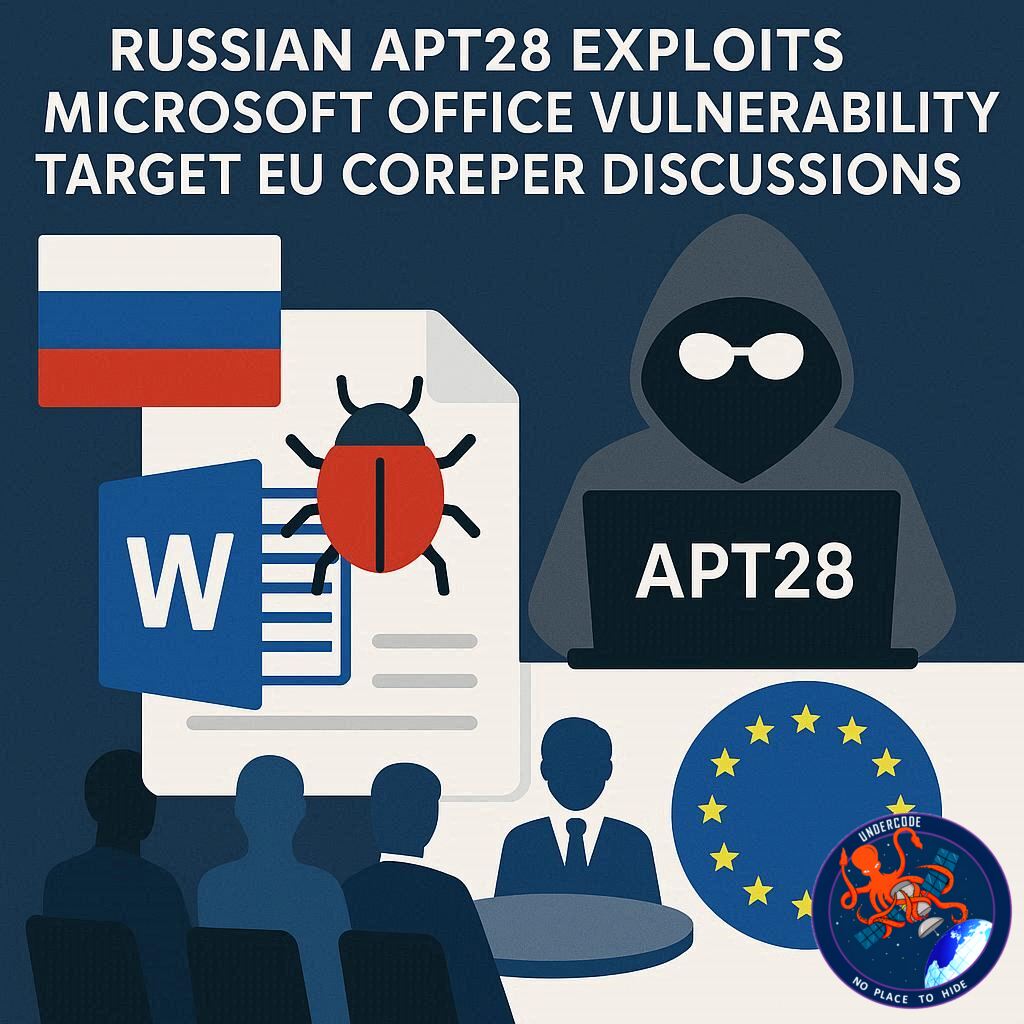
In a recent escalation of cyber espionage activity, the Russian-linked Advanced Persistent Threat group APT28 has been observed exploiting a critical Microsoft Office vulnerability, CVE-2026-21509, to target sensitive EU operations. Security researchers report that the group is distributing malicious DOC files disguised as documents related to EU COREPER (Committee of Permanent Representatives) consultations, aiming to trick officials into executing malware on their systems. This sophisticated attack highlights ongoing tensions in cyber conflict spheres, particularly against European institutions engaged in strategic decision-making.
The malicious documents are not simple phishing tools—they deploy the COVENANT loader, a highly versatile malware framework, using a complex chain of attacks. Analysts observed that APT28 employs techniques such as WebDAV-based payload delivery and COM hijacking, methods that allow the malware to persist and evade detection on compromised systems. By combining social engineering with technical sophistication, this campaign exemplifies modern state-linked cyber intrusion strategies.
APT28’s targeting of EU COREPER consultations suggests a deliberate focus on gaining intelligence regarding policy decisions, sanctions, and international negotiations. The group’s use of Microsoft Office, a ubiquitous productivity tool in governmental offices, ensures a broad attack surface. The attack chain indicates multiple layers of obfuscation, from the initial lure document to the eventual execution of the COVENANT loader, showcasing the group’s emphasis on stealth and persistence.
Cybersecurity professionals warn that the sophistication of APT28’s approach, including abuse of legitimate protocols like WebDAV and system components like COM objects, makes these attacks difficult to detect with conventional endpoint protection. Organizations handling sensitive EU-related information are urged to patch affected Office versions immediately, apply strict email filtering for unsolicited DOC files, and monitor network activity for signs of WebDAV exploitation or unusual COM interactions.
This incident underscores the ongoing trend of geopolitical cyber operations, where advanced threat actors exploit software vulnerabilities to gain strategic advantage. With global tensions influencing targeting decisions, institutions in Europe and beyond must maintain heightened vigilance.
What Undercode Says:
APT28’s Strategic Targeting
APT28’s choice of EU COREPER-themed documents is no coincidence. By framing malware within administrative discussions that are highly relevant to EU policy-making, the attackers increase the likelihood of engagement. This demonstrates a clear understanding of political intelligence operations and the value of human factors in cyber attacks.
CVE-2026-21509 Exploitation Complexity
CVE-2026-21509 enables remote code execution within Microsoft Office. APT28’s attack leverages this vulnerability not as a standalone exploit but as part of a multi-step chain that includes loader deployment, WebDAV exfiltration, and COM hijacking. The multi-layered nature of the attack complicates detection and remediation, highlighting the need for advanced threat hunting capabilities.
Implications for EU Security
Successful exploitation could give APT28 access to sensitive EU deliberations, potentially influencing or preempting policy decisions. This represents not just a cybersecurity risk but a national security concern, emphasizing the intersection of digital and geopolitical threats.
Tactics, Techniques, and Procedures (TTPs)
By combining social engineering with technical sophistication, APT28’s TTPs continue to evolve. Observing and mapping these techniques allows defenders to anticipate future campaigns. The use of COM hijacking, in particular, demonstrates a pivot toward persistence mechanisms that survive standard detection routines.
Malware Payload Analysis
The COVENANT loader deployed in this campaign is modular, capable of downloading additional payloads and establishing long-term access. Analysts should assume that initial infections are just the first stage of potential multi-year campaigns.
Organizational Preparedness
EU institutions should conduct targeted threat modeling exercises, enhance logging for Office processes, and apply behavioral analytics to identify anomalous activity. Patch management and endpoint hardening remain critical first lines of defense.
Global Cybersecurity Context
APT28’s operations are part of a larger pattern of Russian-linked cyber campaigns targeting governmental and military organizations worldwide. Understanding their strategic priorities can inform defensive postures across allied nations.
Human Factor Risks
Even with robust technical defenses, human engagement with malicious documents remains a critical vulnerability. Awareness training and simulated phishing campaigns can mitigate this risk, though no measure is entirely foolproof.
Policy and Legal Implications
Such attacks may influence EU cybersecurity policies, pushing for stricter regulations on software supply chain integrity, cross-border intelligence sharing, and digital risk management frameworks.
Future Attack Projections
Given the adaptability of APT28, defenders should anticipate continued refinement of their malware delivery mechanisms, including potential shifts toward AI-assisted social engineering or cloud-based document attacks.
🔍 Fact Checker Results:
✅ APT28 is widely recognized as a Russian-linked cyber espionage group.
✅ CVE-2026-21509 is a valid Microsoft Office vulnerability enabling remote code execution.
❌ No public confirmation yet of successful breaches of EU COREPER systems; attack observed at the malware distribution stage.
📊 Prediction:
APT28 is likely to expand targeting of EU and NATO institutions, leveraging not just Microsoft Office but other common collaboration tools. Future campaigns may employ even more sophisticated persistence methods, potentially integrating AI-driven spear-phishing. EU cybersecurity teams should anticipate ongoing campaigns for intelligence gathering, requiring proactive threat intelligence sharing, patching, and behavioral monitoring.
If you want, I can also create a visual attack chain diagram showing how APT28 uses WebDAV and COM hijacking to deploy COVENANT for this attack, which could make the article even more engaging. Do you want me to do that?
🕵️📝✔️Let’s dive deep and fact‑check.
References:
Reported By: x.com
Extra Source Hub (Possible Sources for article):
https://www.pinterest.com
Wikipedia
OpenAi & Undercode AI
Image Source:
Unsplash
Undercode AI DI v2
Bing
🔐JOIN OUR CYBER WORLD [ CVE News • HackMonitor • UndercodeNews ]
📢 Follow UndercodeNews & Stay Tuned:
𝕏 formerly Twitter 🐦 | @ Threads | 🔗 Linkedin | 🦋BlueSky | 🐘Mastodon


