
Listen to this Post
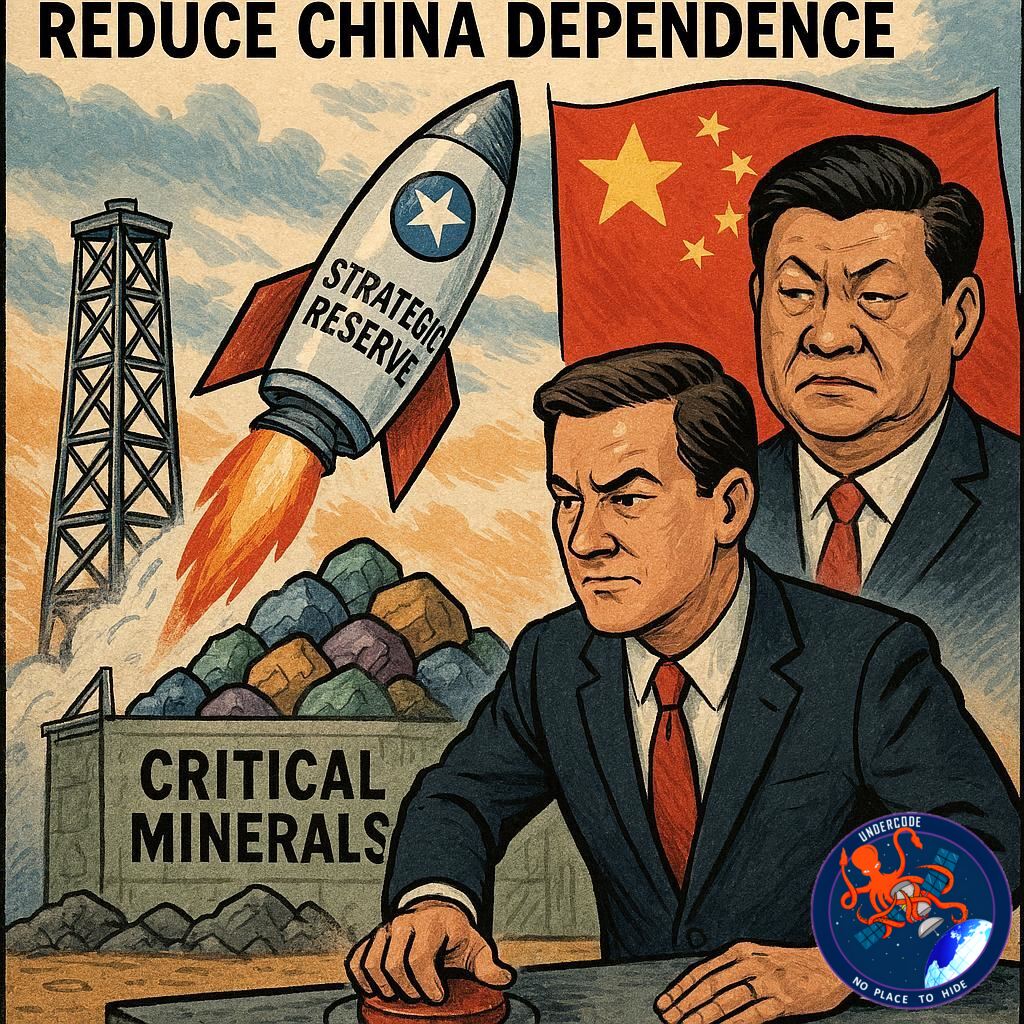
The Trump administration has unveiled a bold plan to create a strategic reserve of critical minerals in the United States, signaling a new push to reduce reliance on China and shield domestic industries from global supply disruptions. This initiative, dubbed Project Vault, aims to ensure that American manufacturers have stable access to essential raw materials while boosting domestic production and processing. With the rising importance of clean energy technologies, electric vehicles, and high-tech manufacturing, securing a reliable supply of these minerals has become a top priority for U.S. policymakers.
At its core, Project Vault is a public-private effort backed by the Export-Import Bank of the U.S., which is offering up to $10 billion in loans—the largest in the bank’s history—to create this reserve. Combined with $1.67 billion in private investment, the project seeks to store essential raw materials across the country. Participating companies, which may include Boeing, GE Vernova, battery maker Clarios, and commodity traders like Mercuria Americas, can make purchase commitments at a set price, pay upfront fees, and then receive prioritized access to needed materials. Other interested parties reportedly include GM, Stellantis, and tech giant Google, reflecting the cross-industry importance of a secure supply chain.
The goal is straightforward: protect domestic manufacturers from price shocks, supply chain bottlenecks, and geopolitical risks. Companies pay carrying costs for the materials stored, and taxpayers could see returns from the program. GM CEO Mary Barra, along with other industry leaders, met with President Trump to discuss the initiative, signaling high-level engagement and bipartisan interest in reducing China’s dominance in critical minerals.
However, analysts note that the ultimate impact of Project Vault will depend heavily on commercial uptake. TD Cowen analysts highlight that pricing will determine participation and, by extension, how much leverage the U.S. gains against Chinese supply chains. Without tariffs on Chinese minerals or supplier restrictions, any advantage may be modest if global prices adjust.
Beyond Project Vault, the administration is also exploring stakes in domestic rare-earth and lithium companies, including MP Materials, USA Rare Earth, and Lithium Americas. This approach has sparked questions from senior Democrats regarding investment terms and safeguards. Meanwhile, House Republicans are pushing legislation to fast-track high-priority hardrock mining projects and cement executive orders that ease domestic mineral production. To cap it off, the U.S. State Department is convening a multilateral critical minerals summit this week to coordinate global strategies.
What Undercode Say:
Project Vault represents a calculated move to bolster U.S. industrial sovereignty in critical raw materials. By combining public financing with private-sector involvement, the initiative could serve as a template for strategic reserves in other high-risk supply chains. Its structure—purchase commitments, upfront fees, and storage carrying costs—aligns incentives between government oversight and private enterprise, potentially avoiding the inefficiencies of a purely state-run stockpile.
The involvement of major manufacturers like Boeing and GM underscores the initiative’s relevance to both defense and commercial sectors, while the inclusion of commodity traders suggests a sophisticated approach to global sourcing and risk management. Yet, its success hinges on commercial uptake and pricing dynamics. If market conditions fail to incentivize participation, Project Vault could struggle to maintain sufficient inventory levels, limiting its strategic impact.
Politically, the initiative is rare in that it draws bipartisan support. Republicans are motivated by domestic mining expansion and economic independence, while Democrats focus on securing clean-energy supply chains. However, the strategy of taking stakes in domestic mineral companies may encounter regulatory hurdles and scrutiny from lawmakers concerned about government involvement in private enterprise.
Economically, Project Vault could influence global mineral markets, especially if U.S. demand reduces dependency on China. Over time, this could encourage diversification of supply chains, stimulate domestic mining investments, and potentially drive down prices in key sectors. Yet, the project’s scale—$10 billion in loans—is modest relative to the global critical minerals market, meaning its effects will likely be incremental rather than transformative.
Strategically, the project signals that the U.S. is serious about resource security as a national priority. With rare-earths and lithium being central to both defense applications and renewable energy, having a domestic buffer protects against geopolitical shocks and strengthens industrial resilience. The upcoming multilateral summit could further solidify alliances and encourage partners to adopt similar measures, amplifying the initiative’s long-term impact.
Fact Checker Results:
✅ Loan Size: Ex-Im Bank confirms $10B, largest in history.
✅ Private Investment: $1.67B verified by White House and Bloomberg.
❌ Exact Company Participation: Only initial indications; full commitment details remain unconfirmed.
Prediction:
⚡ Strategic Impact: Project Vault could gradually reduce U.S. reliance on China for critical minerals over the next 5–10 years.
🔋 Clean-Energy Boost: Bipartisan interest may accelerate domestic battery and EV supply chains.
🌍 Global Influence: Multilateral engagement could pressure other nations to diversify mineral sourcing, creating a more resilient international market.
If you want, I can also create a visual diagram of Project Vault’s structure and key stakeholders to make this article even more engaging for readers. Do you want me to do that?
🕵️📝✔️Let’s dive deep and fact‑check.
References:
Reported By: axioscom_1770127518
Extra Source Hub (Possible Sources for article):
https://www.github.com
Wikipedia
OpenAi & Undercode AI
Image Source:
Unsplash
Undercode AI DI v2
Bing
🔐JOIN OUR CYBER WORLD [ CVE News • HackMonitor • UndercodeNews ]
📢 Follow UndercodeNews & Stay Tuned:
𝕏 formerly Twitter 🐦 | @ Threads | 🔗 Linkedin | 🦋BlueSky | 🐘Mastodon


