
Listen to this Post
 Introduction: Apple’s Foldable Moment Is About More Than Just the Screen
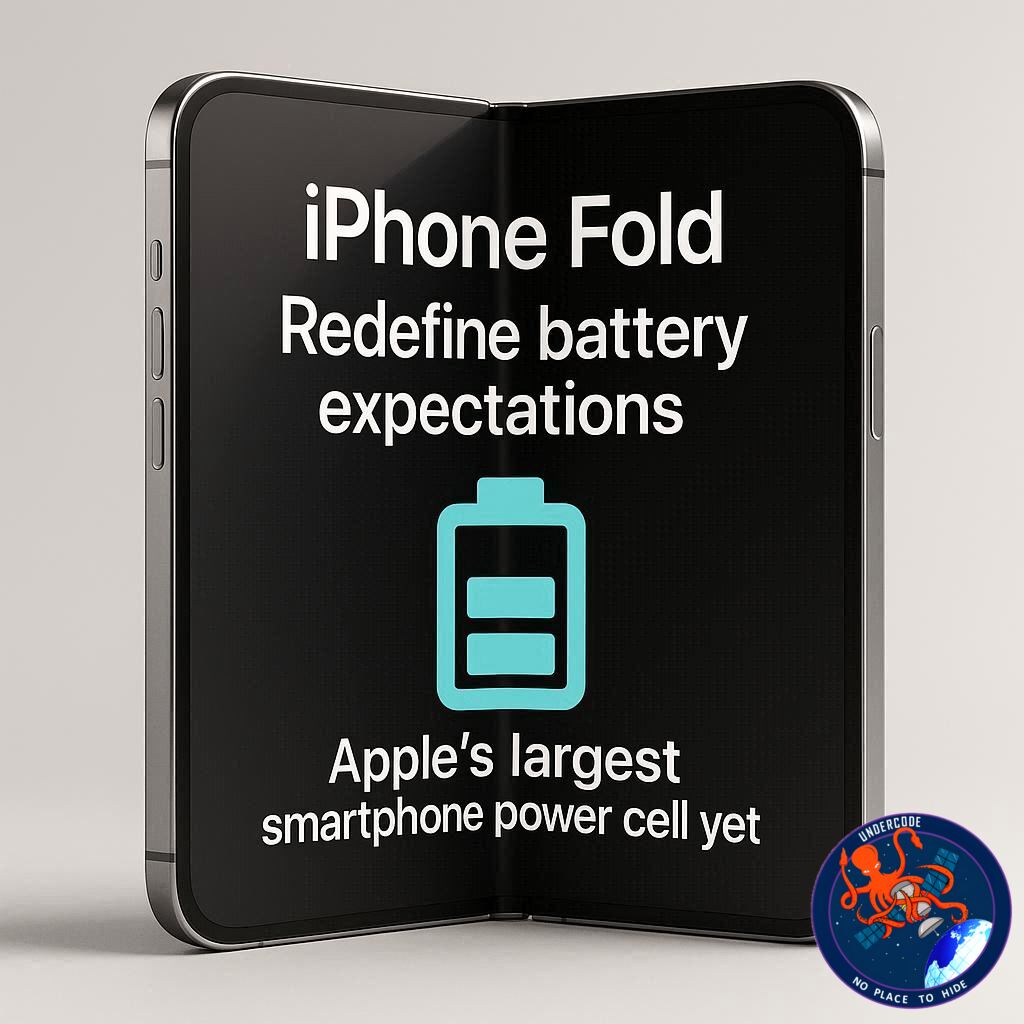
Apple’s long-rumored entry into the foldable smartphone market is beginning to look less like an experiment and more like a statement. While foldable phones have often been criticized for mediocre battery life and questionable durability, early reports suggest Apple is aiming to challenge those weaknesses head-on. The upcoming iPhone Fold is now rumored to feature the largest battery ever placed inside an Apple smartphone, signaling a potential shift in the company’s long-standing hardware philosophy. If these reports hold true, Apple may be preparing to redefine endurance expectations in the foldable category.
Summary: iPhone Fold Battery Rumors Point to a Major Apple Shift
Biggest Battery Ever in an iPhone
Reports indicate that Apple’s first foldable iPhone could include a 5,500 mAh battery, the largest battery capacity ever used in an Apple smartphone.
Source of the Information
The latest details come from GSM Arena, which has narrowed previous estimates and now points to a precise 5,500 mAh figure.
Comparison With Current iPhones
For context, Apple’s current battery capacity record is held by the eSIM-only iPhone 17 Pro Max, making the foldable’s battery nearly 10 percent larger.
Earlier Battery Estimates
Earlier rumors placed the battery size somewhere between 5,400 mAh and 5,800 mAh, but recent updates suggest Apple has settled near the middle of that range.
A Change in Apple’s Usual Strategy
Historically, Apple has focused on software efficiency and silicon optimization rather than large battery cells, making this rumored capacity a notable departure.
iOS Optimization Still Matters
Combined with iOS power management, the larger battery could deliver significantly longer real-world endurance than many current foldable smartphones.
A New Hardware Category for Apple
Beyond the battery, the iPhone Fold is expected to represent a new hardware direction for Apple, both in form factor and internal design.
Inner Display Size Details
When unfolded, the device is rumored to feature a 7.8-inch inner display, placing it closer to a compact tablet.
Cover Display for Daily Use
A 5.5-inch outer screen is expected to handle everyday smartphone tasks when the device is folded.
Tablet-Like Versatility
This dual-screen approach could allow the iPhone Fold to bridge the gap between iPhone and iPad usage scenarios.
Camera System Expectations
Camera upgrades are also rumored, with a dual rear camera system featuring two 48-megapixel sensors.
Front Cameras for Both Modes
The device may include two 18-megapixel front-facing cameras designed to work in both folded and unfolded modes.
Focus on User Experience
This camera configuration suggests Apple is prioritizing consistent photo and video quality regardless of how the device is used.
Next-Generation Apple Silicon
Powering the iPhone Fold is expected to be Apple’s A20 Pro chipset, continuing Apple’s dominance in mobile performance.
Memory Upgrade
The device is rumored to include 12GB of RAM, aligning it with high-end flagship standards.
Performance Positioning
If accurate, this combination would make the iPhone Fold one of the most powerful mobile devices Apple has ever produced.
Competitive Implications
A foldable with strong battery life, high performance, and optimized software could pose serious competition to existing Android foldables.
Durability Questions Remain
While specs look promising, durability and hinge reliability remain unanswered questions.
Market Timing
Apple is expected to enter the foldable market later than competitors, but with a more refined product.
Strategic Patience
This delay aligns with Apple’s history of waiting until technology matures before adopting new form factors.
Focus on Practical Benefits
The emphasis on battery life suggests Apple understands one of the biggest pain points of foldable phones.
Real-World Usage Gains
Longer endurance could make foldables more viable for productivity and media consumption.
Power Efficiency Advantage
Apple’s tight hardware-software integration may amplify the benefits of the larger battery.
Potential for Multi-Day Use
Under light usage, the iPhone Fold could potentially stretch beyond a single day of battery life.
Broader Ecosystem Impact
A foldable iPhone could influence app design across the iOS ecosystem.
Developer Opportunities
Larger screens may encourage more advanced multitasking and tablet-style apps.
Premium Market Focus
The iPhone Fold is expected to target the premium segment with a high price point.
Consumer Expectations
Apple users may expect both innovation and reliability from this first-generation foldable.
A Defining Product Launch
If successful, the iPhone Fold could mark a new era for Apple’s mobile lineup.
What Undercode Say: Apple’s Battery-First Foldable Strategy Explained
Battery Size as a Strategic Signal
Apple choosing a 5,500 mAh battery is not just about numbers; it’s a strategic signal that endurance will be a core selling point.
Learning From Android Foldables
Early Android foldables often sacrificed battery life for thinness, something Apple appears determined to avoid.
Apple’s Confidence in Optimization
With iOS and Apple silicon working in tandem, Apple can extract more real-world usage from the same capacity.
Foldables Need More Power
Larger displays and multitasking demand significantly more energy, making battery size critical.
Breaking Apple’s Own Norms
Apple has historically avoided battery capacity marketing, making this rumored jump especially noteworthy.
Balancing Weight and Usability
A larger battery increases weight, suggesting Apple is prioritizing usability over extreme thinness.
iPad Influence on Design
The unfolded 7.8-inch display hints at iPad-like use cases influencing the device’s design philosophy.
Productivity Over Gimmicks
Apple seems focused on making the foldable genuinely useful rather than a novelty.
Camera Consistency Matters
Dual front cameras suggest Apple wants consistent selfie and video call quality in all modes.
Video Calls as a Core Use Case
This aligns with Apple’s emphasis on FaceTime and content creation.
Performance Headroom
The A20 Pro and 12GB RAM combination provides headroom for future iOS features.
Longevity Focus
Apple likely intends the iPhone Fold to remain powerful for years, justifying its premium price.
Software Will Carry the Hardware
Apple’s real advantage will come from how iOS adapts to folding displays.
Multitasking Potential
Split-screen apps and floating windows could finally reach their full potential on iOS.
Battery Life Enables New Behaviors
Longer battery life encourages heavier multitasking and media consumption.
Foldables Need Trust
Battery anxiety has plagued foldables, and Apple appears ready to address it directly.
Apple’s Late Entry Advantage
Entering the market later allows Apple to avoid early mistakes competitors made.
Hinge Durability Is Still Key
Battery size alone won’t matter if durability issues emerge.
Power Efficiency as Differentiation
Apple may outperform competitors with smaller batteries through better efficiency.
Thermal Management Matters
A larger battery also helps manage thermal load during heavy tasks.
A Device for Power Users
The iPhone Fold appears designed for users who want both phone and tablet capabilities.
Ecosystem Lock-In Strengthens
A successful foldable strengthens Apple’s ecosystem stickiness.
Price Will Be a Barrier
This device is unlikely to be accessible to average consumers.
Early Adopters Lead the Way
Apple will likely target loyal users willing to pay a premium.
Market Validation
A successful launch could validate foldables as a mainstream category.
Influence on Future iPhones
Battery improvements here could trickle down to standard iPhones.
A New Design Language
The iPhone Fold may introduce design cues for future Apple devices.
Apple’s Calculated Risk
This is a high-stakes product with high expectations.
Battery as the Foundation
Everything about this device seems to rest on reliable, long-lasting power.
Apple’s Quiet Confidence
Rather than flashy claims, Apple appears focused on fundamentals.
Endurance Over Hype
If battery life delivers, the iPhone Fold could redefine foldable expectations.
A Potential Category Leader
Apple may not be first, but it could become the benchmark.
Foldables Done the Apple Way
This device reflects Apple’s methodical, user-first approach.
A Test of Apple’s Vision
The iPhone Fold will test whether Apple can reshape an already crowded market.
Fact Checker Results
Battery Capacity Claim
✅ Multiple reports consistently cite a 5,500 mAh battery figure.
Hardware Specifications
❌ Camera and RAM details remain unconfirmed by Apple.
Performance Expectations
✅ A20 Pro chipset aligns with Apple’s established silicon roadmap.
Prediction
Battery as a Selling Point 🔋
Apple will heavily emphasize real-world battery life rather than raw capacity numbers.
Foldable Market Impact 📱
The iPhone Fold could pressure competitors to prioritize endurance over thinness.
Long-Term Influence 🚀
If successful, Apple’s battery-first approach may reshape foldable phone design industry-wide.
🕵️📝✔️Let’s dive deep and fact‑check.
References:
Reported By: www.deccanchronicle.com
Extra Source Hub (Possible Sources for article):
https://www.instagram.com
Wikipedia
OpenAi & Undercode AI
Image Source:
Unsplash
Undercode AI DI v2
Bing
🔐JOIN OUR CYBER WORLD [ CVE News • HackMonitor • UndercodeNews ]
📢 Follow UndercodeNews & Stay Tuned:
𝕏 formerly Twitter 🐦 | @ Threads | 🔗 Linkedin | 🦋BlueSky | 🐘Mastodon


