
Listen to this Post
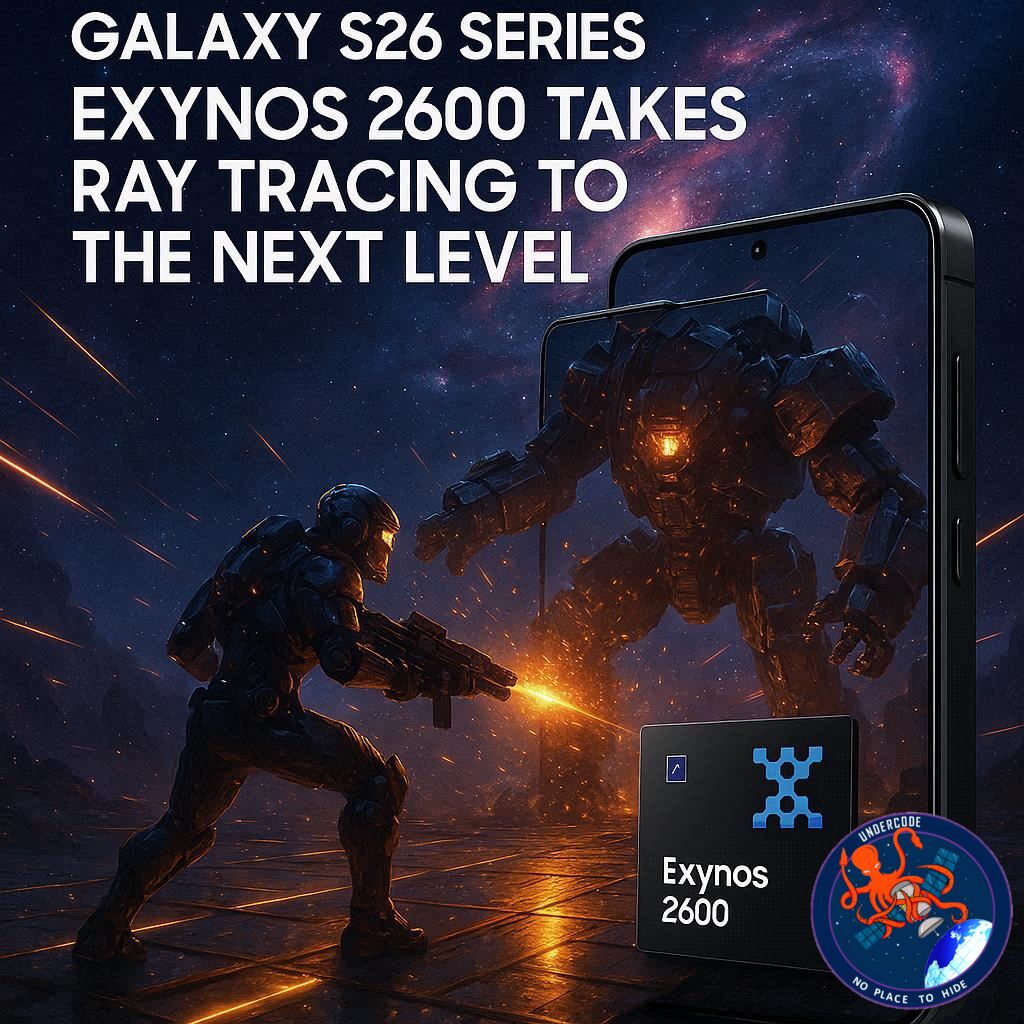
Samsung is set to shake up the smartphone world once again with its upcoming Galaxy S26 series, promising groundbreaking performance, particularly in gaming and graphics-intensive applications. Central to this leap is the newly announced Exynos 2600, a 2nm marvel from Samsung Foundry, which could redefine expectations for ray tracing and GPU performance on mobile devices. Early benchmarks hint that Samsung might finally have an edge over rivals like Qualcomm’s Snapdragon 8 Elite Gen 5 and MediaTek’s Dimensity 9500 chips, giving gamers and power users plenty of reason to take notice.
Exynos 2600 Benchmark Breakthroughs
Recent test results from Basemark’s In Vitro leaderboard reveal that the base Galaxy S26 with the Exynos 2600 chip achieved a stunning 8,262 points in ray tracing performance. In comparison, the Snapdragon 8 Elite Gen 5-powered Honor Magic 8 Pro scored 7,527 points, while the MediaTek Dimensity 9500 in the Vivo X300 Pro reached 7,057 points. These early figures suggest that Samsung’s new chip could be around 9–10% faster than Snapdragon and roughly 16% ahead of MediaTek in ray tracing-heavy tasks.
The 2nm Revolution: Exynos 2600’s Architecture
The Exynos 2600 stands out as the world’s first 2nm mobile processor, manufactured using Samsung Foundry’s advanced SF2 GAA process. Its 10-core CPU leverages Arm’s latest C1 series cores, including the high-performance C1 Ultra prime core, capable of clock speeds up to 3.8GHz.
On the graphics side, Samsung’s Xclipse 960 GPU, built on AMD’s RDNA architecture, is claimed to deliver 50% better ray tracing performance than its predecessor, the Xclipse 950 in the Exynos 2500. Samsung emphasizes that the GPU was developed entirely in-house, signaling a significant push for self-reliance in mobile graphics technology.
Real-World Performance: Beyond Benchmarks
While early benchmark scores are impressive, the real measure of success will be in actual gaming and app performance. Samsung has historically produced Exynos chips that excel in ray tracing compared to Snapdragon equivalents, but real-world efficiency, thermal management, and battery consumption will ultimately define the user experience.
For users, this could mean smoother gameplay in graphically intensive titles, enhanced AR/VR performance, and longer device longevity before throttling becomes noticeable. Early reports, however, advise cautious optimism until official reviews and hands-on testing of the Galaxy S26 and S26+ are published.
Pricing, Availability, and Market Implications
The Galaxy S26 and S26+ are expected to be globally available with the Exynos 2600, while the Galaxy S26 Ultra may feature Snapdragon 8 Elite Gen 5 for Galaxy. If Samsung’s chip maintains its lead in ray tracing performance, it could shift consumer perception, challenging Qualcomm’s dominance in flagship devices and pushing competitors to accelerate their next-generation GPU and CPU offerings.
What Undercode Says:
Exynos 2600: A Technical Leap Forward
Samsung is making a bold statement with the Exynos 2600. Its 2nm process node and advanced CPU/GPU combo place it ahead of many contemporary competitors, at least in early synthetic benchmarks. The move toward in-house GPU development is a strategic play, reducing dependency on third-party architectures and allowing Samsung to tailor performance specifically for its Galaxy lineup.
Benchmark Scores vs. Real-World Experience
Although the Exynos 2600 shows stellar ray tracing numbers, synthetic benchmarks don’t always translate to everyday usability. Factors like thermal throttling, energy efficiency, and software optimization will influence how these devices perform in gaming and multitasking scenarios. Early adopters may notice remarkable performance improvements in highly demanding 3D games, but casual users might not feel the full advantage.
Competitive Edge Over Snapdragon and MediaTek
The 9–10% edge over Snapdragon in ray tracing could translate into faster rendering in graphics-heavy apps, while the 16% lead over MediaTek could make the Galaxy S26 series more appealing to enthusiasts. Samsung’s investment in cutting-edge semiconductor technology is a calculated risk, aiming to reclaim some prestige lost in recent years when Exynos variants lagged behind Snapdragon models in real-world performance.
Market Strategy and Long-Term Impact
Samsung’s dual-strategy—using Exynos in most regions and Snapdragon in Ultra variants—ensures broad global appeal while testing the limits of its new silicon. If Exynos 2600 performs consistently, Samsung could pivot toward wider adoption, potentially phasing out reliance on Snapdragon for future flagship devices, reshaping the competitive landscape in mobile processors.
Consumer Considerations
For buyers, the choice of processor may influence device selection, gaming experience, and resale value. Enthusiasts should watch for real-world benchmarks, battery longevity reports, and thermal performance before committing to a Galaxy S26 purchase solely based on the chip’s early promise.
Fact Checker Results 🔍
✅ Exynos 2600 is indeed the first 2nm mobile chip and uses Samsung Foundry’s SF2 process.
✅ Xclipse 960 GPU is based on AMD RDNA architecture and designed by Samsung.
❌ Early ray tracing benchmarks do not guarantee identical performance in real-world usage.
Prediction 📊
Samsung’s Exynos 2600 may narrow the performance gap between Exynos and Snapdragon, potentially making the Galaxy S26 series the first Exynos-powered phones widely recognized for superior graphics performance. If Samsung maintains efficiency alongside raw power, the company could redefine flagship expectations, forcing Qualcomm and MediaTek to accelerate their next-gen GPU roadmap. Early adoption in gaming-focused regions may drive strong pre-order numbers, with tech enthusiasts particularly drawn to the Ultra variant for its Snapdragon chip.
If you want, I can also create a comparison table showing Exynos 2600 vs Snapdragon 8 Elite Gen 5 vs MediaTek Dimensity 9500, highlighting ray tracing, CPU, GPU, and power efficiency scores for extra clarity. Do you want me to do that?
🕵️📝✔️Let’s dive deep and fact‑check.
References:
Reported By: www.sammobile.com
Extra Source Hub (Possible Sources for article):
https://www.facebook.com
Wikipedia
OpenAi & Undercode AI
Image Source:
Unsplash
Undercode AI DI v2
Bing
🔐JOIN OUR CYBER WORLD [ CVE News • HackMonitor • UndercodeNews ]
📢 Follow UndercodeNews & Stay Tuned:
𝕏 formerly Twitter 🐦 | @ Threads | 🔗 Linkedin | 🦋BlueSky | 🐘Mastodon


