
Listen to this Post
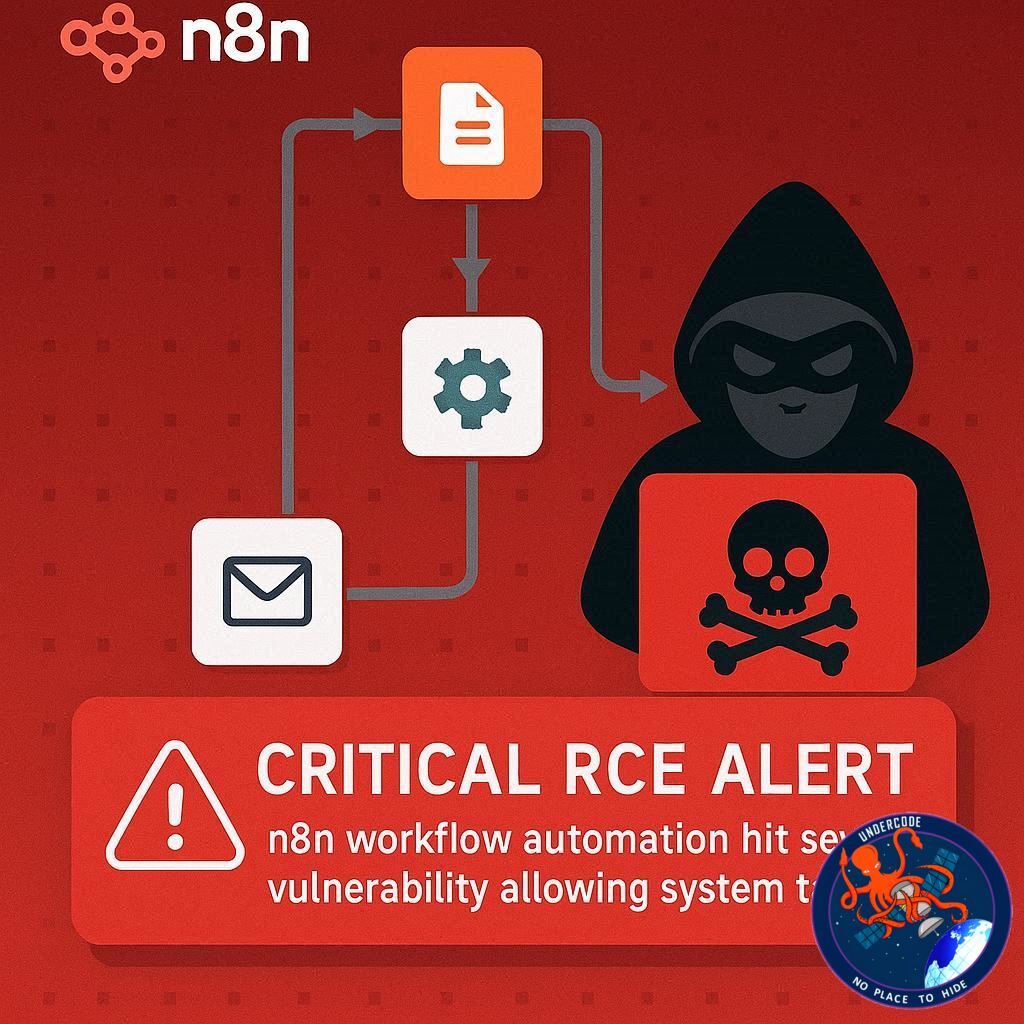
The popular workflow automation platform n8n has been rocked by a critical security flaw that could let attackers execute arbitrary system commands on affected servers. Tracked as CVE-2026-25049 with a high CVSS score of 9.4, the vulnerability stems from insufficient input sanitization—despite previous fixes for CVE-2025-68613, a similar high-severity flaw patched in December 2025. This new issue exposes serious risks for organizations relying on n8n to manage workflows, APIs, and cloud integrations, especially when public webhooks are involved.
the Vulnerability
The flaw occurs in n8n’s expression evaluation system, where an authenticated user with permission to create or modify workflows could craft expressions that trigger unintended system command execution on the host machine. The vulnerability affects n8n versions prior to 1.123.17 and 2.5.2, both of which have been patched.
The discovery was credited to at least ten researchers, including Fatih Çelik, Cris Staicu, Eilon Cohen, and Sandeep Kamble. These experts highlighted how simple misuse of JavaScript destructuring in workflow webhooks could allow an attacker to execute system-level commands remotely. Notably, if a workflow exposes a public webhook with no authentication, it becomes a direct entry point for exploitation.
The potential impact is alarming. Successful attacks could allow adversaries to compromise servers, steal credentials, exfiltrate sensitive data, install persistent backdoors, and gain access to internal systems. Webhook-enabled workflows are particularly vulnerable since attackers can insert remote code execution payloads, making them accessible to anyone on the internet once activated.
Reports also show that attackers could steal API keys, cloud credentials, database passwords, OAuth tokens, and even manipulate AI-driven workflows. Endor Labs emphasized that the root cause lies in a mismatch between TypeScript’s compile-time checks and JavaScript’s runtime behavior, allowing malicious runtime values to bypass the platform’s sanitization.
Until users can apply the official patches, mitigations include:
Limiting workflow creation and editing to trusted personnel
Deploying n8n in hardened environments with restricted OS privileges and network access
The advisory reinforces a crucial security lesson: compile-time type checks are not enough. Runtime validation and layered sanitization are essential to prevent exploitation of untrusted input.
What Undercode Says: Analyzing the Implications
Escalation from Past Vulnerabilities
This latest flaw underscores how security patches are not a one-time fix. Even after CVE-2025-68613 was addressed, new exploits emerged due to incomplete sanitization. This highlights a recurring challenge in workflow automation platforms: dynamic code evaluation introduces high-risk attack surfaces.
Webhooks as the Weakest Link
Publicly accessible webhooks transform simple flaws into catastrophic ones. A single line of malicious JavaScript can compromise an entire workflow, making it essential for organizations to treat webhooks as internet-facing services and implement strict authentication and access controls.
Risk to Enterprise Cloud and AI Operations
Beyond traditional server compromise, n8n workflows are often connected to cloud infrastructure, APIs, and AI pipelines. Attackers exploiting this flaw could pivot into cloud accounts, hijack AI workflows, or exfiltrate sensitive operational data, amplifying the damage far beyond the local server.
TypeScript vs. Runtime Behavior
The vulnerability highlights a subtle but critical issue: TypeScript ensures type safety only at compile-time, not runtime. Malicious input can bypass expected type checks entirely, demonstrating that relying solely on static analysis leaves runtime environments exposed.
Security Best Practices Moving Forward
The n8n incident reinforces the importance of:
Layered security: combining compile-time checks, runtime validation, and strict permission controls
Restricted execution environments: deploying workflows with minimal OS privileges
Proactive threat modeling: anticipating how seemingly minor features (like expression evaluation) could be weaponized
Broader Industry Implications
This flaw serves as a warning for the automation ecosystem. Tools that allow dynamic workflow scripting are inherently attractive targets. Enterprises must balance convenience with rigorous security governance, including audit trails, input sanitization, and regular penetration testing.
Community and Research Collaboration
Acknowledging multiple security researchers illustrates the value of collaborative security discovery. Open reporting channels and recognition incentivize the identification of flaws before they become widely exploited.
Potential Attack Scenarios
An attacker could:
Create a workflow with a public webhook
Insert a destructured JavaScript payload
Execute commands remotely, exfiltrating credentials or installing persistent access
Escalate to connected cloud services or AI pipelines
This sequence could take minutes to execute once the workflow is exposed, underscoring the urgency of patching.
🔍 Fact Checker Results
✅ CVE-2026-25049 is officially acknowledged by n8n as a critical flaw.
✅ Versions affected are <1.123.17 and <2.5.2, with fixes deployed in the stated releases.
❌ The vulnerability is not theoretical—multiple security firms have demonstrated real-world exploitation potential.
📊 Prediction
If exploited at scale, this vulnerability could trigger a wave of targeted attacks on organizations using n8n, particularly those with public-facing webhooks or cloud-integrated workflows. Enterprises slow to patch may face credential theft, system compromise, and AI workflow manipulation, potentially leading to data breaches and operational disruption. Future automation platforms will likely adopt stricter runtime validation standards and sandboxed workflow execution to mitigate similar threats.
If you want, I can also create a visual diagram showing the exploit flow and affected components in n8n, making it easier for teams to understand the risk. Do you want me to do that?
🕵️📝✔️Let’s dive deep and fact‑check.
References:
Reported By: thehackernews.com
Extra Source Hub (Possible Sources for article):
https://www.stackexchange.com
Wikipedia
OpenAi & Undercode AI
Image Source:
Unsplash
Undercode AI DI v2
Bing
🔐JOIN OUR CYBER WORLD [ CVE News • HackMonitor • UndercodeNews ]
📢 Follow UndercodeNews & Stay Tuned:
𝕏 formerly Twitter 🐦 | @ Threads | 🔗 Linkedin | 🦋BlueSky | 🐘Mastodon


