
Listen to this Post
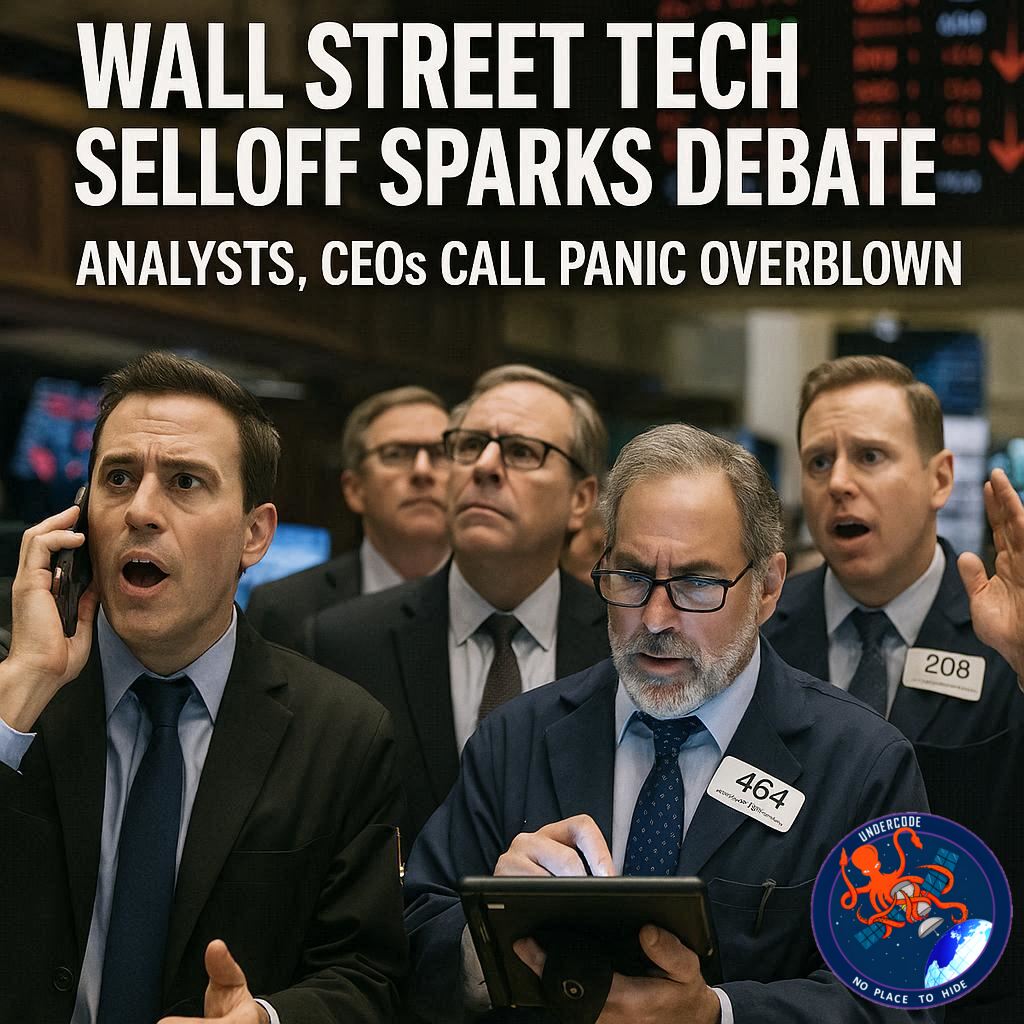
The recent sharp sell-off in technology stocks following the launch of Anthropic’s new AI tool has rattled investors, igniting fears about the future of the tech sector. Headlines warned of AI-driven disruption wiping out software companies, yet some of the biggest names in finance and technology urge calm, framing the downturn as an overreaction rather than a market apocalypse. While investors scramble to re-evaluate their positions, prominent analysts and CEOs suggest that the market is misreading the situation, emphasizing the enduring value of software and AI as complementary forces rather than adversaries.
Market Reaction: Software Stocks in Turmoil
Wall Street has seen a steep decline in technology equities, with investors questioning the long-term prospects of companies connected to software. CNBC host and market commentator Jim Cramer highlighted the severity of the panic, noting on X (formerly Twitter) that “everything software must be thrown away, anything remotely connected to software is suspect.” However, he also pointed out that non-tech clients — banks, industrial firms, and consumer goods companies — remain relatively unaffected, suggesting a sector-specific overreaction rather than a systemic threat.
JPMorgan Analysts: Panic Is Overblown
Stephen Parker, co-head of global investment strategy at JPMorgan, argued that the sell-off reflects a healthy market rotation rather than an existential threat to tech. Investors are pivoting toward sectors offering more immediate returns, rather than abandoning tech entirely. His colleague, Toby Ogg, warned that software companies now face extreme scrutiny, where even strong earnings are insufficient unless AI can be convincingly shown as a sustainable growth driver rather than a potential long-term risk.
Google’s Perspective: AI as an Enabler
Google CEO Sundar Pichai weighed in during the company’s earnings call, framing AI tools like Google’s Gemini not as replacements but as enablers. Pichai emphasized that firms embracing AI have opportunities to enhance existing products and services, reinforcing the idea that AI complements human-driven innovation rather than displacing it wholesale.
Nvidia CEO Pushes Back on Investor Fear
Jensen Huang of Nvidia echoed similar sentiments, describing the notion of software obsolescence as “illogical.” He argued that AI breakthroughs rely on tools rather than discarding them, meaning existing software infrastructure will continue to play a crucial role in AI-driven advancements. Huang’s comments suggest that fears of AI-induced disruption in professional services and data management are exaggerated.
Market Analysts Urge Caution, Not Panic
Overall, the narrative emerging from Wall Street’s leading analysts and tech executives is one of measured optimism. While short-term volatility is undeniable, the consensus among industry leaders is that AI will act as a growth multiplier, not a destroyer, for the software sector. Investors are advised to focus on fundamentals and long-term potential rather than reacting impulsively to headline-driven fear.
What Undercode Say:
The current tech stock turbulence reflects a classic psychological phenomenon in financial markets: fear-driven selling amplified by AI hype. While headlines may suggest existential risk, a deeper examination shows that the market is responding more to uncertainty than to actual financial deterioration. The remarks by JPMorgan analysts, combined with Pichai’s and Huang’s insights, indicate that AI tools are reinforcing rather than replacing core software capabilities.
Historically, the market tends to overreact to technological disruptions in their early phases. Similar patterns were observed during the dot-com bubble, cloud computing adoption, and even early AI integrations in consumer products. Panic selling, in such scenarios, often creates a buying opportunity for investors who understand the structural resilience of the sector.
AI, contrary to popular belief, does not automatically render existing software obsolete. Instead, it acts as an augmentation layer, increasing efficiency, scalability, and functionality. Companies that effectively integrate AI into their workflows are likely to achieve exponential growth in user engagement, operational efficiency, and revenue. Therefore, the current sell-off should be interpreted as a temporary mispricing of assets rather than a permanent structural decline.
Moreover, the tech sector’s fundamentals remain strong. Cloud adoption, enterprise software growth, and data monetization strategies continue to provide robust tailwinds. Investors should differentiate between hype-driven volatility and genuine market risk. AI is better seen as a tool adoption curve rather than a sector-wide threat.
Nvidia’s Huang’s point about tool usage underscores a critical strategic insight: the value of software lies in its flexibility and adaptability. AI cannot function in isolation; it relies on underlying codebases, algorithms, and system architecture. Any firm attempting to reinvent tools entirely risks inefficiency, whereas those leveraging AI as an augmentative force are positioned for success.
Meanwhile, JPMorgan’s framing of this as a rotation rather than a collapse suggests that capital is shifting toward sectors perceived as safer or more immediately profitable. Savvy investors can exploit this rotation, identifying software and AI companies undervalued due to short-term fear rather than structural weakness.
The cultural perception of AI as a disruptor may be skewing rational judgment. By framing AI as a collaborative tool, companies can reduce market anxiety and highlight the sustainable growth opportunities AI enables. This nuanced understanding differentiates leaders from laggards in technology adoption.
Ultimately, the tech sell-off presents both a cautionary tale and a strategic opportunity. Short-term volatility is expected, but the trajectory of AI integration suggests enduring growth for software companies that can demonstrate tangible benefits. Market participants who look beyond the noise and focus on technological fundamentals will likely reap disproportionate rewards in the next phase of digital transformation.
Fact Checker Results:
✅ JPMorgan analysts characterize the sell-off as overblown and a rotation, not a collapse.
✅ Google and Nvidia CEOs confirm AI is a complement, not a replacement, for software.
❌ The notion that software will be entirely displaced by AI is exaggerated.
Prediction:
📊 Over the next 12–18 months, AI integration will drive selective outperformance in software and data companies.
📊 Investor sentiment may oscillate with headlines, but firms leveraging AI as an augmentation tool will show stable earnings growth.
📊 Volatility in tech stocks will create strategic buying opportunities for informed, long-term investors.
🕵️📝✔️Let’s dive deep and fact‑check.
References:
Reported By: timesofindia.indiatimes.com
Extra Source Hub (Possible Sources for article):
https://www.reddit.com/r/AskReddit
Wikipedia
OpenAi & Undercode AI
Image Source:
Unsplash
Undercode AI DI v2
Bing
🔐JOIN OUR CYBER WORLD [ CVE News • HackMonitor • UndercodeNews ]
📢 Follow UndercodeNews & Stay Tuned:
𝕏 formerly Twitter 🐦 | @ Threads | 🔗 Linkedin | 🦋BlueSky | 🐘Mastodon


