
Listen to this Post
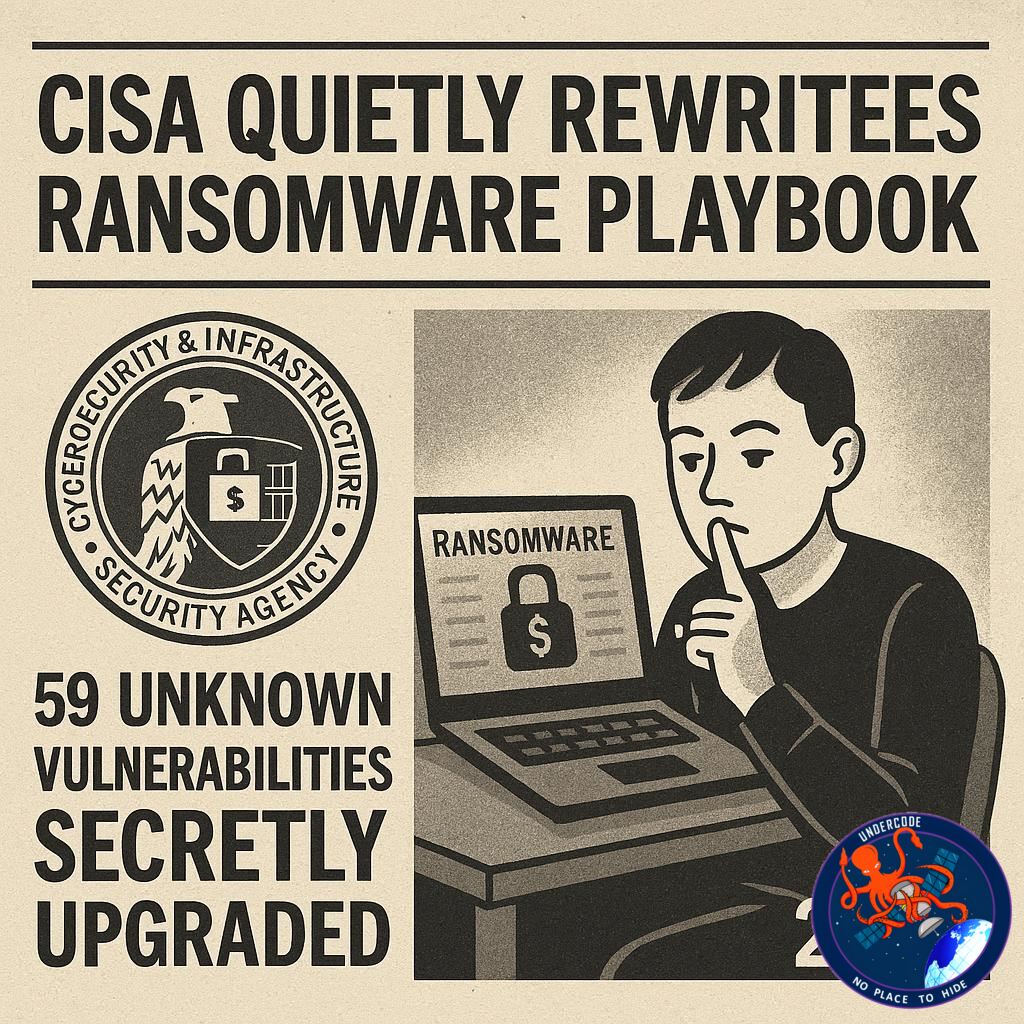
Introduction: A Silent Shift in U.S. Cybersecurity Transparency
In early 2026, a short post from a threat-monitoring account ignited serious concern across the cybersecurity community. The U.S. Cybersecurity and Infrastructure Security Agency (CISA) quietly updated dozens of software vulnerabilities, reclassifying them from “unknown exploitation status” to “known ransomware exploitation” — without issuing public alerts. The revelation raises uncomfortable questions about transparency, disclosure practices, and how much critical risk information is being withheld from the organizations most likely to be targeted.
the Original Report
According to cybersecurity researcher Glenn Thorpe, CISA updated 59 vulnerabilities throughout 2025, silently changing their status to “known ransomware exploited”. These changes were not accompanied by public advisories, emergency directives, or alert bulletins. Many of the affected vulnerabilities reportedly impact Microsoft products and widely deployed network appliances, which are commonly used across government, enterprise, and critical infrastructure environments.
Thorpe has been tracking these classification changes through hourly updates, effectively creating an external audit of CISA’s Known Exploited Vulnerabilities (KEV) catalog. His findings suggest a recurring pattern: vulnerabilities are initially listed as having “unknown” exploitation status, only to later be flipped to “known exploited by ransomware” long after attackers may have already abused them in the wild.
The lack of public communication means that many organizations relying on CISA alerts as a prioritization signal may have delayed patching or mitigation. For defenders, the issue is not merely the existence of ransomware exploitation — which is increasingly common — but the timing and visibility of that knowledge. When exploitation status is updated silently, defenders lose critical context needed to assess urgency and real-world risk.
The report also highlights that these changes were discovered not through official channels, but via independent monitoring. This has intensified criticism that CISA’s vulnerability communication process may be lagging behind the pace of modern ransomware operations, where speed and early warning are decisive.
What Undercode Say:
The Strategic Risk of Silent Vulnerability Reclassification
The most troubling aspect of this situation is not the number — 59 vulnerabilities in a single year — but the absence of proactive disclosure. In today’s threat landscape, ransomware groups move faster than patch cycles, and defenders depend heavily on trusted signals like CISA’s KEV catalog to decide what gets immediate attention.
Why “Unknown” vs “Known Exploited” Actually Matters
Labeling a vulnerability as “unknown exploitation” often places it lower in patching priority, especially in large enterprises managing thousands of CVEs. When that label later changes — without alerting stakeholders — it creates a false sense of historical safety. Organizations may believe they avoided risk when, in reality, they were exposed during peak exploitation windows.
Microsoft and Network Appliances: High-Impact Targets
The fact that many of the updated vulnerabilities affect Microsoft products and network appliances significantly raises the stakes. These platforms sit at the heart of enterprise environments. A single exploited flaw in an edge device or identity service can lead to domain-wide compromise, making delayed awareness especially dangerous.
The Growing Gap Between Intelligence and Communication
CISA likely had credible intelligence confirming ransomware exploitation earlier than the public updates suggest. The delay — or silence — implies a widening gap between what government agencies know and what they communicate. In ransomware defense, even a few weeks of delay can translate into widespread breaches.
Researchers as De Facto Oversight
Glenn Thorpe’s hourly tracking underscores a larger trend: independent researchers increasingly act as watchdogs over institutional cybersecurity processes. While this strengthens accountability, it also exposes a systemic weakness — critical threat intelligence should not rely on third-party monitoring to reach defenders.
Operational Consequences for Security Teams
For SOC teams and CISOs, this practice complicates risk modeling. Historical vulnerability data becomes unreliable, and retrospective analysis may underestimate past exposure. Over time, this erodes confidence in official vulnerability catalogs as real-time defensive tools.
A Transparency Problem, Not Just a Process Issue
This is less about bureaucratic delay and more about transparency philosophy. If exploitation status changes are treated as routine metadata updates rather than urgent threat signals, defenders are structurally disadvantaged against ransomware actors who already operate with asymmetric speed and secrecy.
🔍 Fact Checker Results
✅ CISA did update multiple vulnerabilities from “unknown” to “known ransomware exploited” during 2025.
✅ Independent researchers, not official alerts, identified and tracked these changes.
❌ No evidence suggests all affected organizations were directly notified at the time of reclassification.
📊 Prediction
Over the next year, pressure will likely mount on CISA to automate public alerts whenever exploitation status changes, especially for ransomware-linked vulnerabilities. If no reforms follow, enterprises may increasingly rely on independent threat intelligence feeds over official government catalogs — reshaping how vulnerability trust and prioritization work across the cybersecurity ecosystem.
🕵️📝✔️Let’s dive deep and fact‑check.
References:
Reported By: x.com
Extra Source Hub (Possible Sources for article):
https://www.quora.com
Wikipedia
OpenAi & Undercode AI
Image Source:
Unsplash
Undercode AI DI v2
Bing
🔐JOIN OUR CYBER WORLD [ CVE News • HackMonitor • UndercodeNews ]
📢 Follow UndercodeNews & Stay Tuned:
𝕏 formerly Twitter 🐦 | @ Threads | 🔗 Linkedin | 🦋BlueSky | 🐘Mastodon


