
Listen to this Post
Introduction: A Safe Haven That Isn’t Acting Safe
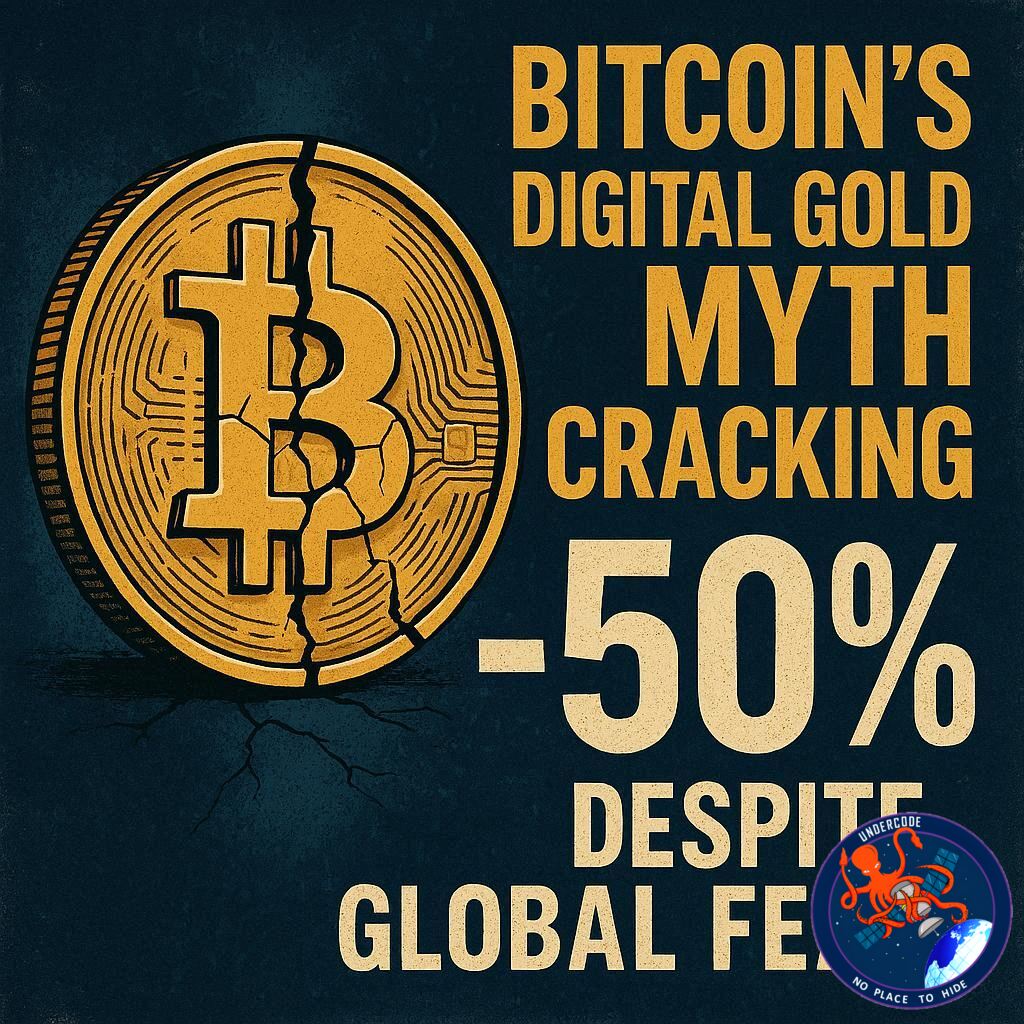
Bitcoin is behaving in a way that has left even seasoned crypto investors scratching their heads. At a moment when global uncertainty, geopolitical tension, and market anxiety should theoretically push money into alternative stores of value, the world’s most famous cryptocurrency is doing the opposite. Instead of rallying, bitcoin has plunged sharply, raising uncomfortable questions about whether its long-promised role as “digital gold” was ever real to begin with.
Market Shock: Bitcoin Falls Below a Psychological Line
Bitcoin has now lost roughly half of its value from its October peak, sliding below $63,000 USD for the first time in 16 months. While such violent swings are not unusual in crypto markets, the timing of this downturn is what makes it remarkable. Historically, fear-driven environments tend to favor assets that promise safety or insulation from systemic risk. Bitcoin, however, is failing that test.
the Original A Four-Month Slump Defies Expectations
The recent bitcoin crash, while dramatic, is not unprecedented in crypto history. The asset is infamous for volatility, and past cycles have seen even deeper collapses. What stands out this time is the context. Bitcoin’s four-month slump is unfolding during a period when it seemingly had every macroeconomic advantage. For years, crypto advocates have pitched bitcoin as “digital gold,” a modern safe haven designed to protect wealth during turbulent times.
Yet turbulence is everywhere, and bitcoin is still sinking. Global geopolitics have intensified, with U.S. President Donald Trump threatening military action against Iran following the removal of Venezuela’s leader. At the same time, Washington has clashed with European and Canadian allies over Greenland, while new tariff threats loom over South Korea. These developments have added significant stress to global markets.
Technology has also become a source of fear rather than optimism. Rapid advances in artificial intelligence, particularly Anthropic’s Claude performing high-level legal tasks, have rattled investors and triggered sell-offs in software and tech stocks. Traditional fear indicators reflect this anxiety. CNN’s Fear and Greed Index remains firmly in “fear” territory, and the VIX volatility index recently spiked to levels not seen since a post-shutdown market panic tied to confusing economic data and Nvidia earnings.
All this fear has fueled a historic surge in gold, the classic safe haven asset. Gold prices have exploded past $5,500 USD per troy ounce, reinforcing its reputation as a tangible, reliable store of value in times of crisis. Bitcoin, by contrast, has failed to follow. It is down roughly 20% year-to-date, even as uncertainty dominates headlines.
Some analysts believe bitcoin’s weakness is indirectly affecting other markets. Michael Burry, famous for predicting the 2008 financial crisis, suggested that extreme volatility in gold and silver may be driven by bitcoin investors selling precious metals to offset losses in crypto. Bitcoin has also erased its entire so-called “Trump bump,” a rally sparked after Trump’s 2024 election victory when he publicly embraced digital assets and promised to roll back crypto regulations.
At the heart of this downturn is a growing skepticism that bitcoin truly functions as digital gold. Rather than serving as a refuge, it has been swept up in “risk-off” sentiment, with investors selling instead of buying. The widening gap between gold’s 24% rise since October and bitcoin’s 50% collapse has reinforced the idea that crypto behaves more like a speculative tech asset than a safe haven.
Policy signals have not helped. Treasury Secretary Scott Bessent testified that the U.S. Treasury has no authority to stabilize crypto markets, removing any illusion of government backstopping. Meanwhile, bitcoin ETFs have failed to attract the institutional inflows many bulls expected, leading to declining volumes and sharper reactions from retail traders.
Still, history offers a note of optimism. Bitcoin has survived multiple brutal crashes before, including the Mt. Gox collapse in 2014, the 2018 ICO bust that wiped out 74% of its value, and the regulatory and scandal-driven crashes of 2021 and 2022. In every case, bitcoin eventually recovered within roughly 18 months.
What Undercode Say: Why This Crash Matters More Than the Others
The Digital Gold Narrative Is Being Stress-Tested
Bitcoin’s biggest selling point to mainstream investors has always been its comparison to gold. This crash is the most serious stress test that narrative has ever faced. When fear dominates markets and capital flees risk, gold rises. Bitcoin falling at the same time is not a coincidence; it is evidence that markets still treat crypto as a speculative asset, not a shelter.
Risk-Off Means Crypto-Off, Not Crypto-On
Despite ideological arguments, bitcoin continues to trade in lockstep with risk assets. When investors de-risk portfolios, crypto is among the first things sold. This behavior undermines years of marketing that framed bitcoin as an uncorrelated hedge against chaos. In practice, it behaves more like high-beta tech than monetary insurance.
Institutional Money Is Hesitating
The underwhelming performance of bitcoin ETFs is a critical signal. Institutions were expected to bring stability, liquidity, and legitimacy. Instead, inflows have slowed, suggesting that large players are either unconvinced by current prices or waiting for clearer regulatory and macro signals before committing capital.
Politics Gave Bitcoin a Sugar High, Not a Foundation
The post-election rally tied to Trump’s pro-crypto rhetoric now looks like a classic sentiment-driven spike. Policy promises created optimism, but optimism alone does not sustain markets. With no concrete regulatory overhaul yet delivered, the “Trump bump” has fully evaporated.
Gold’s Rally Is a Damaging Comparison
Gold crossing $5,500 USD is more than a headline; it is a direct rebuke to bitcoin’s safe-haven claim. Investors are choosing physical scarcity, historical trust, and tangibility over digital scarcity. That choice sends a loud signal about where confidence truly lies during uncertainty.
Regulatory Reality Is Setting In
Scott Bessent’s testimony clarified a hard truth: crypto markets are on their own. There is no lender of last resort, no stabilization mechanism, and no implied safety net. For risk-averse capital, that reality matters more than ideology.
Retail Traders Are Amplifying Volatility
Lower institutional participation has shifted market dynamics back toward retail traders. This environment magnifies emotional reactions, accelerates sell-offs, and deepens drawdowns. Without steady institutional volume, bitcoin becomes more fragile during panic.
History Suggests Survival, Not Immunity
Bitcoin’s past recoveries prove resilience, not invincibility. Each crash has left lasting scars and reshaped narratives. The question is no longer whether bitcoin can recover, but what story it will tell afterward: digital gold, or digital speculation.
Fact Checker Results 🔍
✅ Bitcoin has fallen roughly 50% from its October peak, aligning with historical volatility patterns.
✅ Gold prices exceeding $5,500 USD per troy ounce confirm a strong safe-haven rotation.
❌ The idea that bitcoin is already a proven safe haven is not supported by current market behavior.
Prediction 📊
Bitcoin is likely to remain volatile and range-bound in the short term as confidence in the digital gold thesis erodes. If macro fear persists, capital will continue favoring traditional safe havens over crypto. A recovery is possible, but the next rally will likely depend less on narratives and more on tangible adoption, regulation clarity, and renewed institutional trust.
🕵️📝✔️Let’s dive deep and fact‑check.
References:
Reported By: edition.cnn.com
Extra Source Hub (Possible Sources for article):
https://www.instagram.com
Wikipedia
OpenAi & Undercode AI
Image Source:
Unsplash
Undercode AI DI v2
Bing
🔐JOIN OUR CYBER WORLD [ CVE News • HackMonitor • UndercodeNews ]
📢 Follow UndercodeNews & Stay Tuned:
𝕏 formerly Twitter 🐦 | @ Threads | 🔗 Linkedin | 🦋BlueSky | 🐘Mastodon


