
Listen to this Post
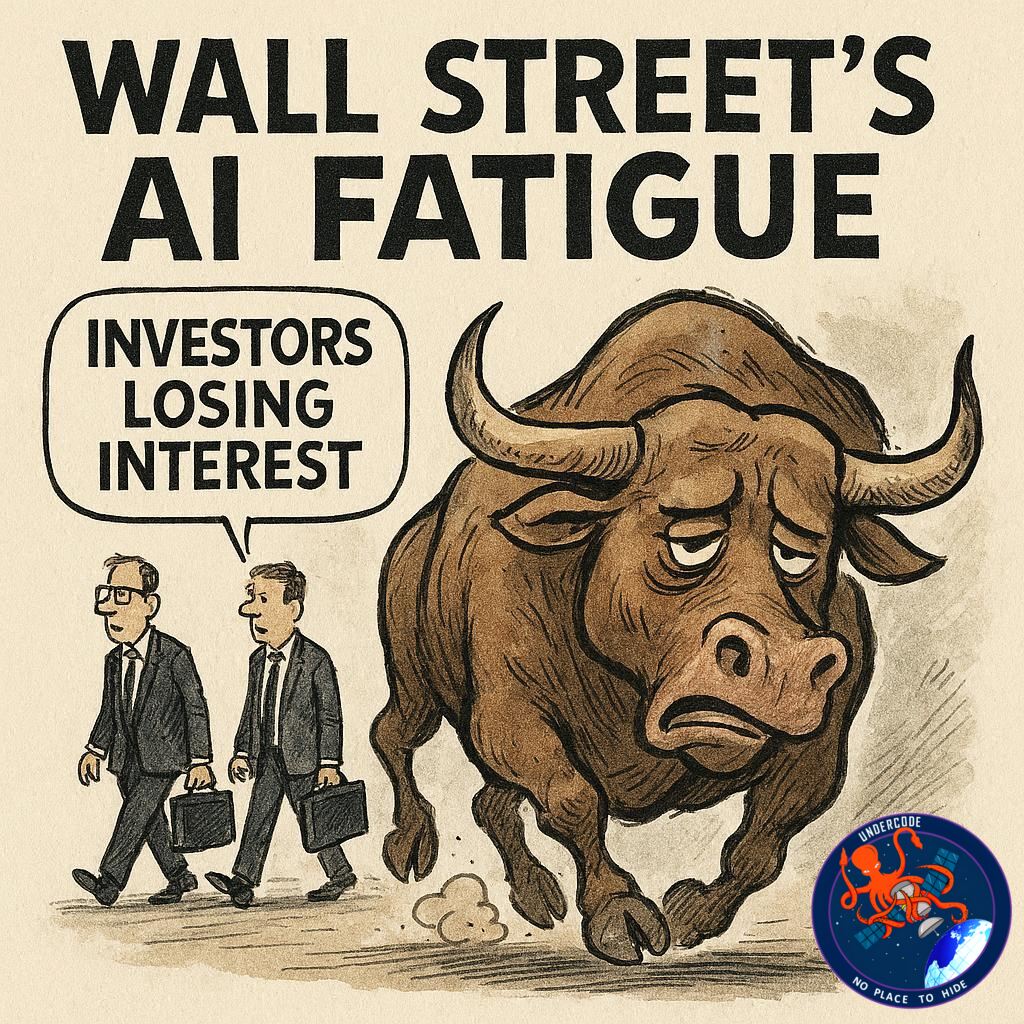
Introduction: When a Winning Story Starts to Feel Old
For nearly three years, artificial intelligence has been the most powerful story on Wall Street. It helped propel stocks to repeated double-digit gains and turned Big Tech into the undisputed engine of the bull market. But even the strongest narratives eventually wear thin. Today, investors are showing signs of boredom with AI, not because the technology has failed, but because belief alone is no longer enough. Markets now want proof, profits, and something new to get excited about.
The AI Narrative That Carried the Market
The recent bull market was built on a simple but powerful idea: AI would transform everything. From enterprise software to consumer products, investors believed artificial intelligence would unlock productivity gains, reshape industries, and justify ever-higher valuations. That conviction became self-reinforcing, lifting tech stocks and rewarding anyone willing to buy into the future.
Why Belief Mattered More Than Fundamentals
For a long stretch, AI did not need to show immediate returns. The promise of eventual dominance was enough. Companies spent aggressively on infrastructure, talent, and data centers, while investors accepted near-term losses in exchange for long-term vision. As long as confidence remained strong, stocks followed.
Signs of Investor Fatigue Are Emerging
That confidence is now showing cracks. Venture capitalist Paul Kedrosky describes the moment succinctly: late in technology cycles, investors say the names feel “tired.” In market language, that translates to boredom. When investors stop feeling excitement, even strong companies can struggle to hold attention.
Big Tech Is No Longer Immune
The Technology Select Sector SPDR Fund (XLK), a popular ETF tracking major tech stocks, is already down more than 4% this year. While not a collapse, it signals that enthusiasm is cooling. The same companies that once felt unstoppable are now being questioned.
Spending Keeps Rising, Returns Stay Unclear
One of the biggest challenges is cost. AI leaders continue to pour money into massive buildouts, betting that scale will eventually pay off. JPMorgan estimates that AI-related data center investments could exceed $5 trillion, a figure equivalent to roughly one-sixth of the entire U.S. GDP. That number alone is enough to make investors pause.
The Problem With Expensive Promises
For several years, the idea of a “shiny future” justified nearly any level of spending. But markets eventually demand visibility into returns. When profits remain distant and capital expenditures keep climbing, belief starts to weaken. Investors are asking a harder question: when does the payoff actually arrive?
Even AI Needs a Clearer Story
Interestingly, the fatigue is not limited to tech stocks broadly. Even within AI itself, investors are becoming more selective. They want clearer, more tangible use cases instead of abstract potential.
From Software AI to Physical AI
Bank of America recently told clients that “AI has left the chat,” while physical AI is now in focus. This includes robotics, autonomous vehicles, drones, and machines that interact with the real world. The shift reflects a desire for visible outcomes rather than invisible algorithms.
Seeing Is Believing for Investors
Physical AI feels easier to understand. A robot on a factory floor or a self-driving vehicle on the road provides visual confirmation that progress is real. Compared to cloud-based software models that promise efficiency gains, physical AI offers something investors can point to and believe in.
Software Stocks Face a Contradiction
There is an irony at play. If AI is expected to replace traditional software, then software stocks should logically fall while AI leaders rise. Instead, investors are selling broadly, highlighting how emotional and inconsistent markets can be in the short term.
Market Behavior Is Not Always Logical
As Mark Malek of Siebert Financial notes, not every sell-off sends a clear signal. Some are simply stress tests. Investors reassess positions, rebalance risk, and rotate capital without making a definitive judgment on the long-term future.
Rotation Is Already Underway
The recent tech pullback has been accompanied by a rotation into cheaper areas of the market. This is exactly what skeptics of an AI bubble hoped to see: capital moving away from crowded trades and toward undervalued sectors.
Why This Rotation Matters
Rotations often happen late in cycles, not because growth stories disappear, but because expectations become too high. When prices reflect perfection, even small disappointments can trigger selling.
The Magnificent Seven Lose Some Shine
Mega-cap tech companies, often referred to as the Magnificent Seven, have dominated investor attention. But dominance creates concentration risk. As new opportunities emerge, these giants may lose incremental capital to fresher stories.
Investors Are Hunting for New Names
Kedrosky points out that investors are “desperate for new names.” This hunger is likely to be satisfied soon, as major AI competitors prepare to go public to raise capital for their ambitious plans.
IPOs Could Change the AI Landscape
New AI IPOs promise excitement, novelty, and the illusion of early access. These offerings could pull attention and money away from established giants, further draining momentum from Big Tech.
Shiny New Toys Often Steal the Spotlight
History shows that markets love novelty. Even when fundamentals are uncertain, new listings can command premium valuations simply because they offer something different.
The Risk of Fragmented Enthusiasm
As attention spreads across multiple AI players, no single company may benefit as strongly as before. The AI narrative becomes diluted, making it harder for the entire sector to rise together.
The Core Issue: A Narrative Without a Sequel
At its heart, Wall Street’s problem is simple. The AI story delivered incredible gains, but it lacks a compelling next chapter. Without a fresh catalyst, enthusiasm fades, even if the technology continues to improve.
Why Markets Need Stories
Markets are driven by expectations, not just earnings. A strong narrative helps investors tolerate uncertainty. When that story becomes repetitive, patience runs out.
AI Is Not Dead, Just Demanding Proof
It is important to separate fatigue from failure. AI is still advancing rapidly. What has changed is the burden of proof. Investors now want measurable impact, not just confident forecasts.
The Transition From Faith to Fundamentals
This phase marks a transition. The early days of belief-driven investing are giving way to scrutiny. Companies that can show real productivity gains, cost reductions, or revenue growth will stand out.
Winners and Losers Will Diverge
Not all AI companies will suffer equally. Those with clear business models and visible demand may thrive, while others relying on hype could struggle.
The Market Is Resetting Expectations
Rather than a collapse, this moment looks more like a reset. Valuations, timelines, and assumptions are being recalibrated to reflect reality.
Why This Is Healthy for the Long Term
Excess enthusiasm often leads to bubbles. A cooling period can strengthen the sector by forcing discipline, efficiency, and focus.
Patience Will Be Tested
Investors accustomed to rapid gains may find the next phase uncomfortable. AI’s future may be slower, messier, and less dramatic than the initial surge suggested.
The Spark Needs a New Source
Without a new catalyst, AI alone may no longer be enough to drive the entire market higher. Something else must reignite excitement.
What Undercode Say:
A Market That Has Outgrown Its First AI Story
The current fatigue does not signal the end of AI dominance, but rather the end of its honeymoon phase. For years, investors rewarded vision over verification. That phase is now closing.
Capital Intensity Is Becoming the Central Risk
The staggering cost of AI infrastructure is impossible to ignore. Spending $5 trillion on data centers is not inherently bad, but it demands extraordinary returns. If those returns are delayed, valuations will compress.
Physical AI Reflects a Shift Toward Tangibility
The growing interest in robotics and autonomous systems suggests investors want evidence they can observe. This is less about abandoning AI and more about redefining what progress looks like.
IPOs Will Reshape Sentiment, Not Solve It
New public listings will temporarily restore excitement, but they will not fix the underlying issue. If these companies also struggle to demonstrate profitability, fatigue will spread faster.
Rotation Signals Maturity, Not Collapse
Market rotations often mark maturity, not failure. Capital moving into cheaper sectors suggests investors are becoming selective rather than fearful.
The Magnificent Seven Face a New Challenge
Their challenge is no longer innovation, but justification. Growth must be defended quarter by quarter, not assumed.
The Narrative Must Evolve
AI’s next chapter must be about outcomes. Productivity metrics, enterprise adoption, and real-world deployment will matter more than model size or theoretical capability.
This Phase Will Separate Builders From Promoters
Companies focused on substance will survive. Those reliant on storytelling alone will struggle.
Long-Term Investors May Benefit
For patient investors, this period offers clarity. Prices may become more rational, reducing downside risk over time.
AI Remains Central, Just Less Magical
The magic is fading, but the importance remains. AI is becoming infrastructure, not a fantasy.
Fact Checker Results
Market Performance Context
The XLK ETF’s year-to-date decline aligns with reported market data. ✅
Infrastructure Spending Estimates
JPMorgan’s $5 trillion estimate reflects widely cited projections. ✅
Investor Sentiment Quotes
Statements from Paul Kedrosky and Mark Malek accurately reflect published commentary. ✅
Prediction
📉 Short-term volatility in AI and Big Tech stocks is likely to continue as investors reassess valuations.
🤖 Physical AI sectors such as robotics and automation may attract increasing capital flows.
📈 Over the long term, AI leaders that prove real-world profitability could emerge stronger after this reset.
🕵️📝✔️Let’s dive deep and fact‑check.
References:
Reported By: axioscom_1770379645
Extra Source Hub (Possible Sources for article):
https://www.reddit.com/r/AskReddit
Wikipedia
OpenAi & Undercode AI
Image Source:
Unsplash
Undercode AI DI v2
Bing
🔐JOIN OUR CYBER WORLD [ CVE News • HackMonitor • UndercodeNews ]
📢 Follow UndercodeNews & Stay Tuned:
𝕏 formerly Twitter 🐦 | @ Threads | 🔗 Linkedin | 🦋BlueSky | 🐘Mastodon


