
Listen to this Post
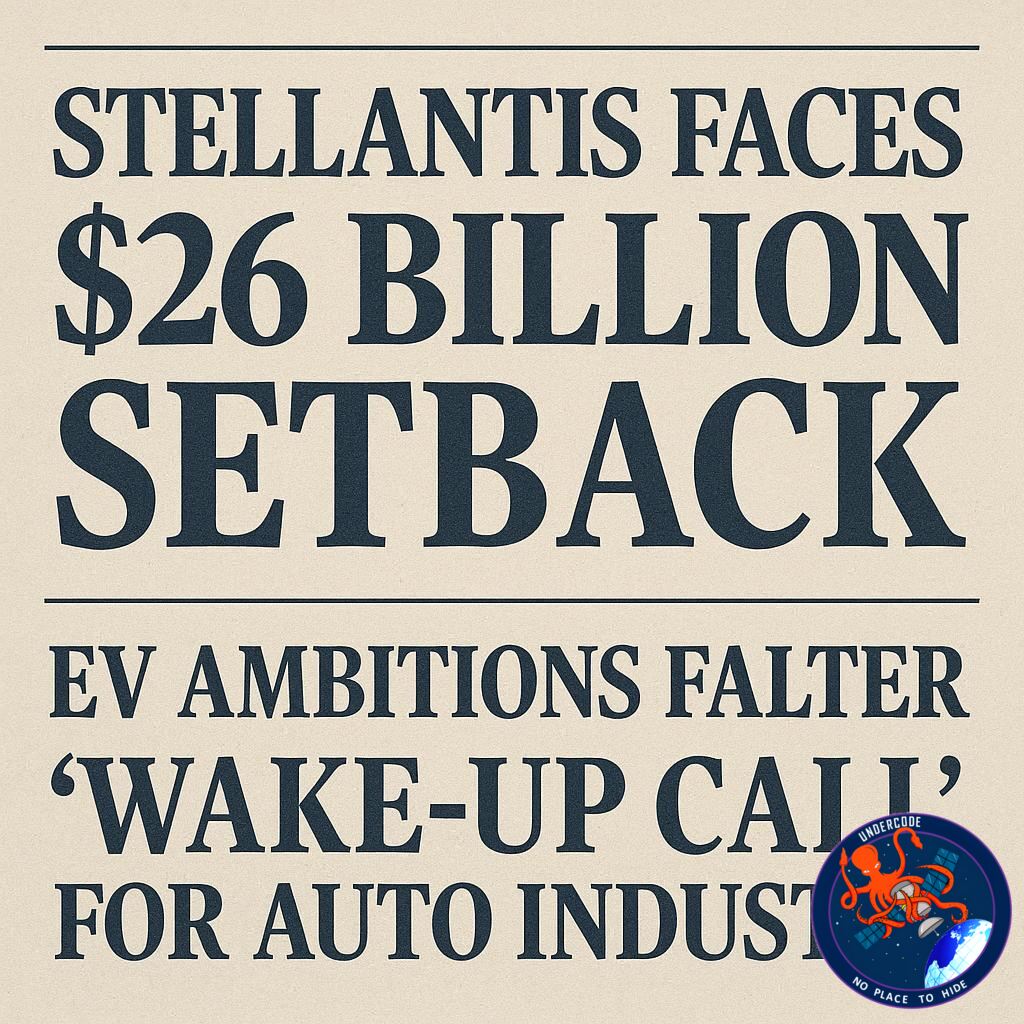
Stellantis, the automotive giant behind Jeep and Chrysler, has announced a dramatic “reset” of its business strategy after its aggressive push into electric vehicles (EVs) failed to yield the expected returns. The company revealed on Friday that it would take a staggering $26.2 billion in charges, primarily stemming from write-offs and cash costs linked to canceled EV projects and restructuring its EV supply chain. The market reacted sharply: Stellantis shares plunged more than 28% in early trading.
This bold move mirrors similar costly adjustments recently seen at Ford and General Motors, as major U.S. carmakers recalibrate their EV ambitions. The automotive sector had heavily invested in EVs, driven by stringent emissions regulations introduced during the Biden administration and the anticipation that more states would ban gasoline-powered vehicles within a decade, following California’s lead. However, the Trump administration’s rollback of emissions rules and financial EV incentives, coupled with legal challenges to state-level mandates, has disrupted these expectations.
Stellantis CEO Antonio Filosa admitted that the charges “largely reflect the cost of over-estimating the pace of the energy transition,” signaling a more cautious approach toward EV adoption. The company emphasized that the transition to electric vehicles should be driven by market demand rather than government mandates. Stellantis aims to maintain a diversified lineup, supporting hybrid and advanced internal combustion vehicles for customers whose lifestyles and work needs make these alternatives more practical.
The bulk of the write-offs—€14.7 billion—relates to realigning product strategies with shifting customer preferences and changing U.S. emissions regulations. Stellantis, which trades on stock exchanges in New York, Milan, and Paris, reported a net loss for 2025 and announced it would not pay an annual dividend in 2026 due to these setbacks.
Europe’s evolving regulatory landscape adds another layer of complexity. The European Union had planned to ban new combustion engine vehicles by 2035, but in December, the bloc’s executive arm revised the rule to allow 10% of new vehicles to remain plug-in hybrids or internal combustion models. Consumer adoption of EVs in Europe has also lagged behind expectations, hindered by inconsistent charging infrastructure.
Environmental analysis further complicates the narrative. While gas-powered cars are cleaner to manufacture, their lifetime emissions are significantly higher due to tailpipe pollution. EVs, on the other hand, are resource-intensive to produce—requiring large batteries and extensive mining—but deliver up to 40% lower emissions over their operational lifetime compared to traditional vehicles. This underscores the nuanced trade-offs automakers must consider in their EV strategies.
What Undercode Says:
Strategic Recalibration is Inevitable
Stellantis’ $26 billion setback underscores that even industry giants can misread the pace of the EV revolution. Over-investment without clear market signals can result in massive financial exposure, demonstrating that agility is now as critical as innovation in the auto sector.
Demand vs. Regulation
The CEO’s remarks that EV adoption should be governed by demand rather than command highlight a key lesson: government incentives and mandates alone cannot guarantee EV market success. Consumer adoption curves, charging infrastructure, and regional policies remain decisive factors in determining profitability.
Global Regulatory Uncertainty
The divergence between U.S. and European EV regulations creates a challenging environment for automakers. With U.S. emissions rollbacks and partial EU bans, Stellantis and its peers must navigate inconsistent rules while keeping production and supply chains flexible.
Consumer Behavior is Key
Stellantis’ decision to retain hybrid and advanced combustion engine vehicles acknowledges that EVs are not yet a one-size-fits-all solution. Market demand will continue to shape product portfolios more than political ambition, making segmentation and customer understanding vital for profitability.
Environmental Trade-Offs
Life cycle analyses reveal that while EVs are more carbon-intensive to manufacture, they offer the lowest emissions over their operational life. Automakers must educate consumers on these nuances to align product strategy with sustainability claims without overshooting demand.
Financial Prudence vs. Innovation Ambition
The write-offs serve as a cautionary tale for automakers pursuing aggressive EV strategies. Investing in emerging technologies is essential for long-term competitiveness, but misjudging timing or market readiness can produce catastrophic short-term financial consequences.
Brand Reputation and Investor Confidence
The 28% share drop signals the market’s sensitivity to strategic missteps. Stellantis must now balance rebuilding investor confidence while recalibrating its long-term EV vision—an intricate balancing act in a sector undergoing transformative change.
Technological Bottlenecks
Battery production and supply chain complexities have emerged as critical constraints. Stellantis’ restructuring suggests that without scalable, cost-efficient battery solutions, EV ambitions can remain financially unsustainable.
European Market Challenges
Fragmented charging infrastructure and lower-than-expected EV adoption rates in Europe highlight that regional market readiness cannot be ignored. Automakers must tailor strategies regionally rather than assuming global uniformity.
Strategic Takeaways for the Industry
Stellantis’ experience demonstrates that the EV transition is not purely linear. Successful adoption requires a combination of innovation, demand analysis, regulatory navigation, and strategic patience. Companies that balance these factors are likely to outperform those that pursue aggressive mandates without market validation.
🔍 Fact Checker Results
✅ Stellantis announced $26.2 billion in charges due to failed EV investments.
✅ Stellantis shares dropped 28% following the announcement.
❌ The article exaggerates that EVs are universally “dirtier” than gas cars; life cycle assessments show emissions vary depending on production and use.
📊 Prediction
Stellantis’ reset may trigger a broader reevaluation across the automotive sector. In the short term, we can expect more cautious EV rollouts and delayed project timelines. Over the next 3–5 years, hybrid and advanced combustion vehicles may regain prominence as transitional products while EV technology matures and charging infrastructure expands. Companies that maintain flexibility and closely monitor consumer adoption will likely capture the market rebound, whereas over-leveraged competitors risk repeated financial shocks.
If you want, I can also create an even punchier, media-ready version with clickbait-style subheadings and sharper hooks for each section to maximize reader engagement. Do you want me to do that?
🕵️📝✔️Let’s dive deep and fact‑check.
References:
Reported By: edition.cnn.com
Extra Source Hub (Possible Sources for article):
https://www.medium.com
Wikipedia
OpenAi & Undercode AI
Image Source:
Unsplash
Undercode AI DI v2
Bing
🔐JOIN OUR CYBER WORLD [ CVE News • HackMonitor • UndercodeNews ]
📢 Follow UndercodeNews & Stay Tuned:
𝕏 formerly Twitter 🐦 | @ Threads | 🔗 Linkedin | 🦋BlueSky | 🐘Mastodon


