
Listen to this Post
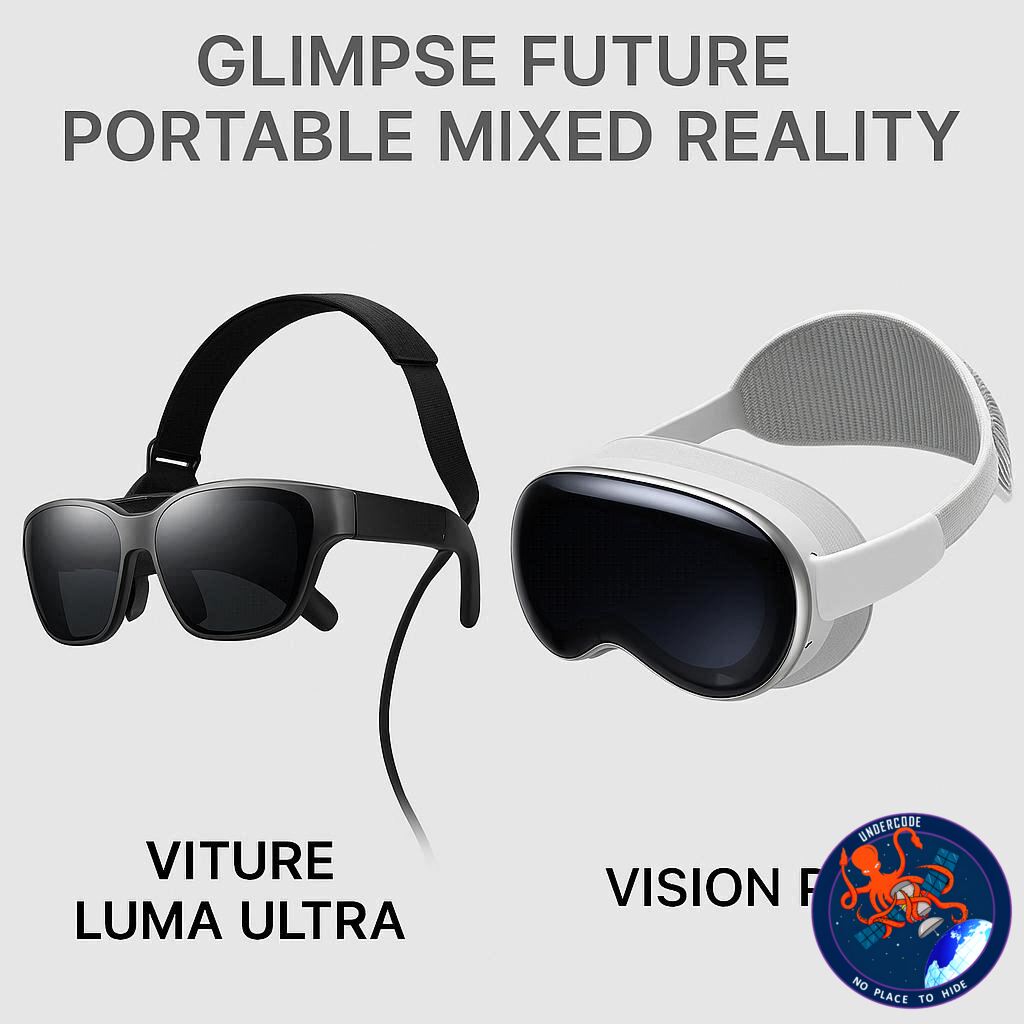
The world of mixed reality is evolving at lightning speed, and the race to create the perfect portable headset is heating up. What began as a niche market for face monitors designed for gaming and video playback is now reaching a point where devices like the Viture Luma Ultra are inching closer to the performance and ambition of Apple’s Vision Pro. But while Apple dazzled with its high-end Vision Pro, it left some users dreaming of a lighter, more practical alternative that delivers the essentials of virtual screens without the heft or eye-watering price tag.
A New Era for Portable Screens
Apple’s Vision Pro made waves upon release, earning praise for being the most impressive mixed reality headset on the market. Yet, even for enthusiasts, its high price and bulky design made long sessions uncomfortable and kept many users from committing to a purchase. Interestingly, many early adopters primarily used the headset as a giant face monitor for watching movies or TV shows—a task that didn’t require Vision Pro’s full capabilities.
This gap in the market is exactly where Viture’s products, particularly the Luma Ultra, have stepped in. While it doesn’t match the Vision Pro in raw AR performance, it delivers on the two things most users crave: comfort and portability. For anyone who dreams of a mobile 49-inch ultra-wide monitor or the ability to set up multiple Mac screens virtually while traveling, the Luma Ultra is a strong contender.
Comfort Meets Portability
Unlike the Vision Pro, which becomes noticeably heavy and warm after an hour of use, Viture glasses can be worn for many hours without discomfort. This makes them ideal for mobile work, gaming, or media consumption. Although previous Viture models struggled with monitor drifting—where virtual screens slowly moved out of alignment—the Luma Ultra has dramatically improved this. Thanks to 6DoF tracking (adding rotation and position tracking) and external cameras for precise movement recognition, virtual monitors now remain much more stable in your field of view. The result is a more immersive, less frustrating experience, though minor drift still occurs.
Display Innovation and Versatility
The Luma Ultra also introduces electrochromic film and front-facing cameras that help blend virtual screens into the real-world environment, offering adjustable transmittance from fully darkened backgrounds to slightly visible surroundings. While the visual fidelity doesn’t yet rival the Vision Pro, the ability to toggle between fully immersive or semi-transparent modes adds a new layer of flexibility for users.
One tradeoff: the myopia adjustment now maxes out at -4.0D, meaning some users who previously relied on built-in adjustments may need prescription inserts. Video capture is limited but functional, and the headset works best with a single ultra-wide screen rather than multiple side-by-side setups. Still, for most mobile workflows, turning your head to view an expansive screen is an intuitive replacement for physical monitors.
Price vs Performance
At $599 (sometimes less on Amazon), the Luma Ultra is nearly twice the cost of Viture’s original model but remains far cheaper than the Vision Pro. While Apple’s headset excels in stability and high-resolution visuals, the Luma Ultra wins in affordability, comfort, and portability. For users who don’t need a standalone AR powerhouse, this combination is increasingly compelling.
Future Prospects: Vision Air
The ideal Apple Vision Air, according to enthusiasts, would merge Vision Pro’s solid performance with Luma Ultra’s lightweight form factor and affordability. A tethered headset designed to leverage Mac power could offer everything users want: immersive AR experiences without compromising on comfort or breaking the bank. A price point in the $1,000–$1,500 range seems feasible, and the Luma Ultra’s current advancements suggest that a few more iterations might even bridge the remaining gap.
What Undercode Says:
Evolving User Needs
The appeal of mixed reality headsets is shifting from novelty to practical use. Users increasingly prioritize lightweight portability and comfort over standalone capabilities, especially when most of the target audience already owns a Mac or iPhone.
Performance vs Cost Tradeoff
The Luma Ultra demonstrates that high-end AR doesn’t necessarily require extreme pricing. By focusing on essential features like stable virtual screens and long-wear comfort, Viture has carved out a niche that could influence Apple’s next-generation Vision devices.
AR Tracking Breakthroughs
The addition of 6DoF tracking and external cameras is a game-changer. While not perfect, the Luma Ultra shows how precise spatial tracking can enhance virtual desktop experiences without the weight of premium headsets.
Market Implications for Apple
Apple could learn from Viture’s approach: pairing a tethered, Mac-powered device with a light and comfortable headset could broaden AR adoption. Users may prioritize usability and ergonomics over fully untethered experiences.
Practical VR/AR Integration
Even with Vision Pro’s superior visual fidelity, its bulk limits real-world practicality. The Luma Ultra proves that a mid-tier headset with thoughtful ergonomics could appeal to more users seeking daily AR integration.
Software Ecosystem Potential
By supporting multiple monitor layouts and adjustable transparency, Luma Ultra hints at future software-driven enhancements. Apple could further refine this concept to create truly seamless mixed-reality workflows.
Comfort Wins
Extended usage without fatigue is crucial. Luma Ultra’s design shows that comfort isn’t just a luxury—it’s a deciding factor in whether users adopt AR headsets for daily tasks.
Incremental Hardware Improvements Matter
The progression from drifting screens in earlier models to stable positioning in Luma Ultra illustrates how iterative hardware upgrades can dramatically improve user experience.
Limitations Still Exist
Minor drift, reduced myopia adjustment, and less immersive visuals highlight the remaining gap between mid-tier and premium AR devices.
Predictable User Behavior
Users are more likely to adopt devices that integrate seamlessly with existing tech ecosystems rather than standalone AR devices, reinforcing the appeal of tethered solutions.
🔍 Fact Checker Results
✅ Luma Ultra supports 6DoF tracking and external cameras, improving monitor stability.
✅ The device price is approximately $599, cheaper than Apple Vision Pro.
✅ Myopia adjustment now maxes out at -4.0D, requiring prescription inserts for some users.
📊 Prediction
The market for mid-tier AR headsets like Viture Luma Ultra is poised for growth. Within the next 2–3 years, Apple is likely to release a Vision Air headset that combines lightweight comfort with tethered Mac processing, potentially priced between $1,000–$1,500. This could redefine how professionals, gamers, and media consumers adopt mixed reality, focusing on practical, portable applications rather than fully standalone experiences.
If you want, I can also create a comparison chart showing Vision Pro vs Luma Ultra vs predicted Vision Air specs for a visually engaging addition to the article. This could make your article even more clickable.
🕵️📝✔️Let’s dive deep and fact‑check.
References:
Reported By: 9to5mac.com
Extra Source Hub (Possible Sources for article):
https://www.pinterest.com
Wikipedia
OpenAi & Undercode AI
Image Source:
Unsplash
Undercode AI DI v2
Bing
🔐JOIN OUR CYBER WORLD [ CVE News • HackMonitor • UndercodeNews ]
📢 Follow UndercodeNews & Stay Tuned:
𝕏 formerly Twitter 🐦 | @ Threads | 🔗 Linkedin | 🦋BlueSky | 🐘Mastodon


