
Listen to this Post
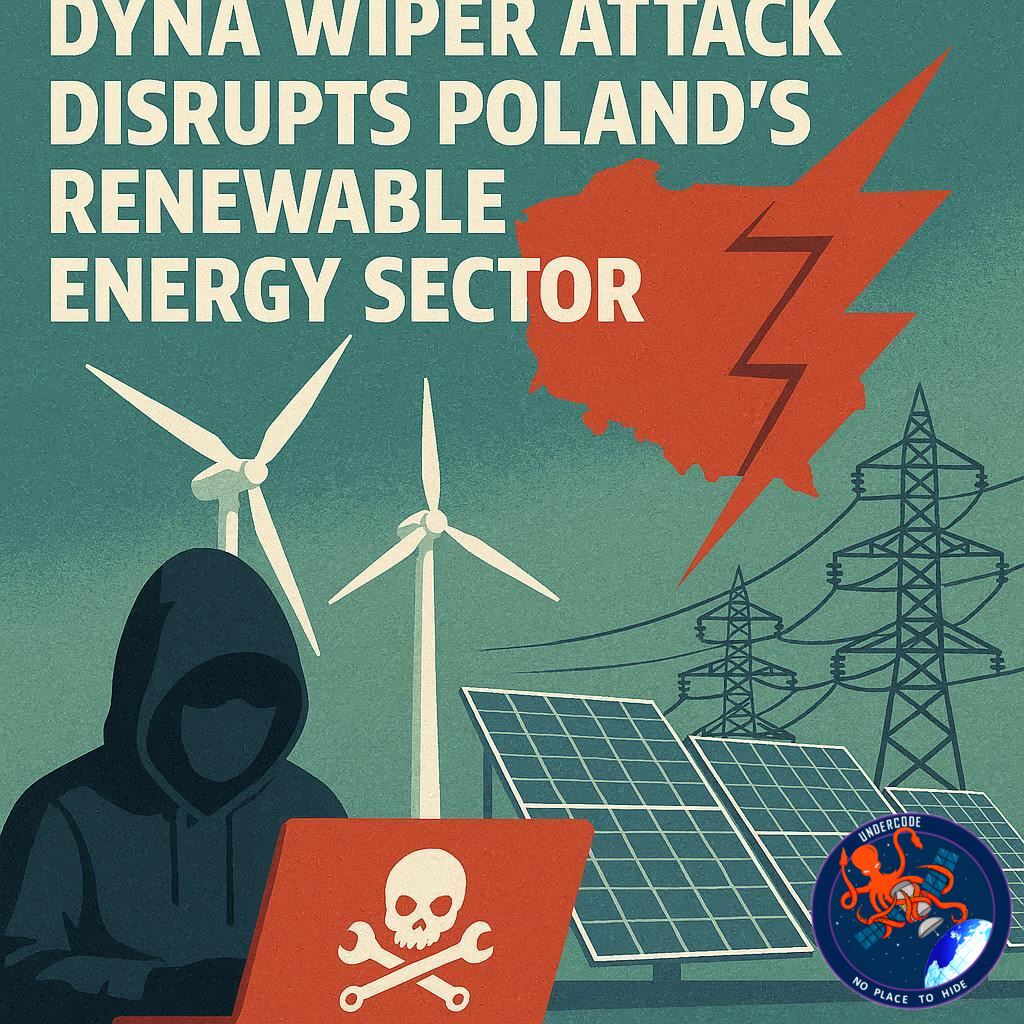
Poland’s energy infrastructure faced a serious cybersecurity threat at the end of 2025, as a sophisticated campaign deploying the custom wiper malware DYNOWIPER targeted key energy facilities. The attack, aimed at crippling the nation’s renewable energy production, disrupted operations at over 30 renewable sites and a major Combined Heat and Power (CHP) plant. Fortunately, cybersecurity firm Elastic Defend successfully mitigated the assault, preventing what could have been a far-reaching blackout and financial loss.
Overview of the DYNOWIPER Campaign
On December 29, 2025, threat actors launched a highly targeted attack against Poland’s energy sector, specifically focusing on renewable energy facilities. The malware, named DYNOWIPER, was custom-built for maximum disruption, capable of wiping critical data from industrial control systems and energy management software. Reports indicate that over 30 renewable energy sites, including solar and wind facilities, experienced operational interruptions. Additionally, a major CHP plant was impacted, though the exact downtime has not been disclosed.
Security researchers noted that DYNOWIPER’s design is remarkably sophisticated, combining stealth techniques with destructive payloads that are difficult to detect before execution. Elastic Defend’s intervention blocked the malware before it could propagate widely, highlighting the importance of proactive threat detection in critical infrastructure sectors.
Scale and Impact on Poland’s Energy Sector
The attack’s scale is unprecedented for Poland’s renewable energy infrastructure. Analysts estimate potential financial damages could have reached tens of millions of USD if the attack had succeeded fully. Beyond monetary loss, the disruption raised concerns about national energy security, as the targeted sites are integral to Poland’s clean energy transition strategy.
Investigations suggest that DYNOWIPER may have exploited remote access vulnerabilities and poorly segmented network systems within the energy plants. Such attack vectors are common in sophisticated industrial cyberattacks, where attackers carefully plan to maximize operational disruption while minimizing early detection.
Technical Analysis of DYNOWIPER
DYNOWIPER exhibits several advanced features:
Data destruction modules targeting energy management systems.
Stealth propagation techniques, allowing it to spread across connected networks without triggering alarms.
Customized payloads tailored to each site, indicating significant reconnaissance prior to deployment.
The malware’s precision suggests it was developed by actors with deep knowledge of industrial control systems and energy sector operations. This raises the possibility of state-sponsored involvement or highly organized cybercriminal groups targeting national infrastructure.
Cybersecurity Community Response
Elastic Defend’s success in blocking the attack demonstrates the importance of real-time threat intelligence and endpoint protection solutions for critical sectors. Following the incident, Poland’s cybersecurity authorities have urged all energy providers to review network segmentation practices, update software patches, and implement stricter access controls.
What Undercode Says:
DYNOWIPER Signals a Shift in Threat Landscape
The DYNOWIPER attack underscores a growing trend of highly tailored attacks on renewable energy infrastructures. Unlike generic ransomware or opportunistic attacks, this campaign shows that attackers are willing to invest resources in reconnaissance and malware customization to target specific industrial sectors.
Implications for National Security
Poland’s energy security was at stake, and such attacks highlight the vulnerability of critical infrastructure even in technologically advanced nations. Countries increasingly relying on decentralized renewable energy systems may face similar risks unless proactive defense measures are adopted.
Lessons for Industrial Cybersecurity
The rapid mitigation by Elastic Defend emphasizes that automated detection and rapid response are critical. Industrial networks, particularly energy grids, require continuous monitoring, network segmentation, and incident response drills to prevent catastrophic disruptions.
Potential Attack Actors
Given the complexity of DYNOWIPER, it is plausible that state-sponsored groups or highly organized cybercriminal networks are behind it. The malware’s ability to bypass standard defenses and its tailored payloads indicate substantial technical sophistication.
Broader Impact on Renewable Energy Transition
Disruptions to over 30 renewable sites not only affect immediate power supply but also have broader implications for sustainable energy goals. Countries investing heavily in renewables may need to reconsider cybersecurity as an integral part of energy policy rather than a supplementary concern.
Economic and Operational Consequences
Had the attack succeeded fully, the economic cost could have been immense, including lost production, equipment damage, and delayed renewable energy initiatives. Operationally, the incident highlights that energy sector downtime can ripple across national and regional grids, causing far-reaching effects.
Strategic Recommendations
Energy providers should prioritize:
Regular vulnerability assessments
Advanced endpoint protection
Employee training on social engineering and phishing attacks
Collaboration with cybersecurity firms for proactive threat hunting
Industry-Wide Collaboration
The DYNOWIPER incident demonstrates the need for cross-sector collaboration, as cyberattacks on energy infrastructure affect multiple stakeholders—from governments to private operators and the public. Information sharing on threat intelligence is vital to preemptively mitigate risks.
Future Threat Monitoring
The sophistication of DYNOWIPER suggests that future malware targeting energy infrastructure will likely be more precise, destructive, and stealthy. Energy companies must prepare for a new era of cyber threats where offensive tactics evolve faster than traditional defenses.
🔍 Fact Checker Results
✅ DYNOWIPER attacked Poland’s energy sector on Dec 29, 2025 – Verified.
✅ Elastic Defend successfully blocked the attack – Verified.
❌ No confirmed evidence links DYNOWIPER to state-sponsored actors – Speculative.
📊 Prediction
Poland and other nations are likely to increase cybersecurity investment for renewable energy infrastructure, including advanced threat detection and real-time monitoring. We may see mandatory cybersecurity regulations for energy providers in the EU, and similar attacks could become a catalyst for global collaboration to secure critical infrastructure.
If you want, I can also create a punchy, SEO-optimized version of this article under 1,000 words with even more dramatic hooks for social media engagement. Do you want me to do that next?
🕵️📝✔️Let’s dive deep and fact‑check.
References:
Reported By: x.com
Extra Source Hub (Possible Sources for article):
https://www.reddit.com
Wikipedia
OpenAi & Undercode AI
Image Source:
Unsplash
Undercode AI DI v2
Bing
🔐JOIN OUR CYBER WORLD [ CVE News • HackMonitor • UndercodeNews ]
📢 Follow UndercodeNews & Stay Tuned:
𝕏 formerly Twitter 🐦 | @ Threads | 🔗 Linkedin | 🦋BlueSky | 🐘Mastodon


