
Listen to this Post
Introduction: A Quiet API, A Loud Crisis
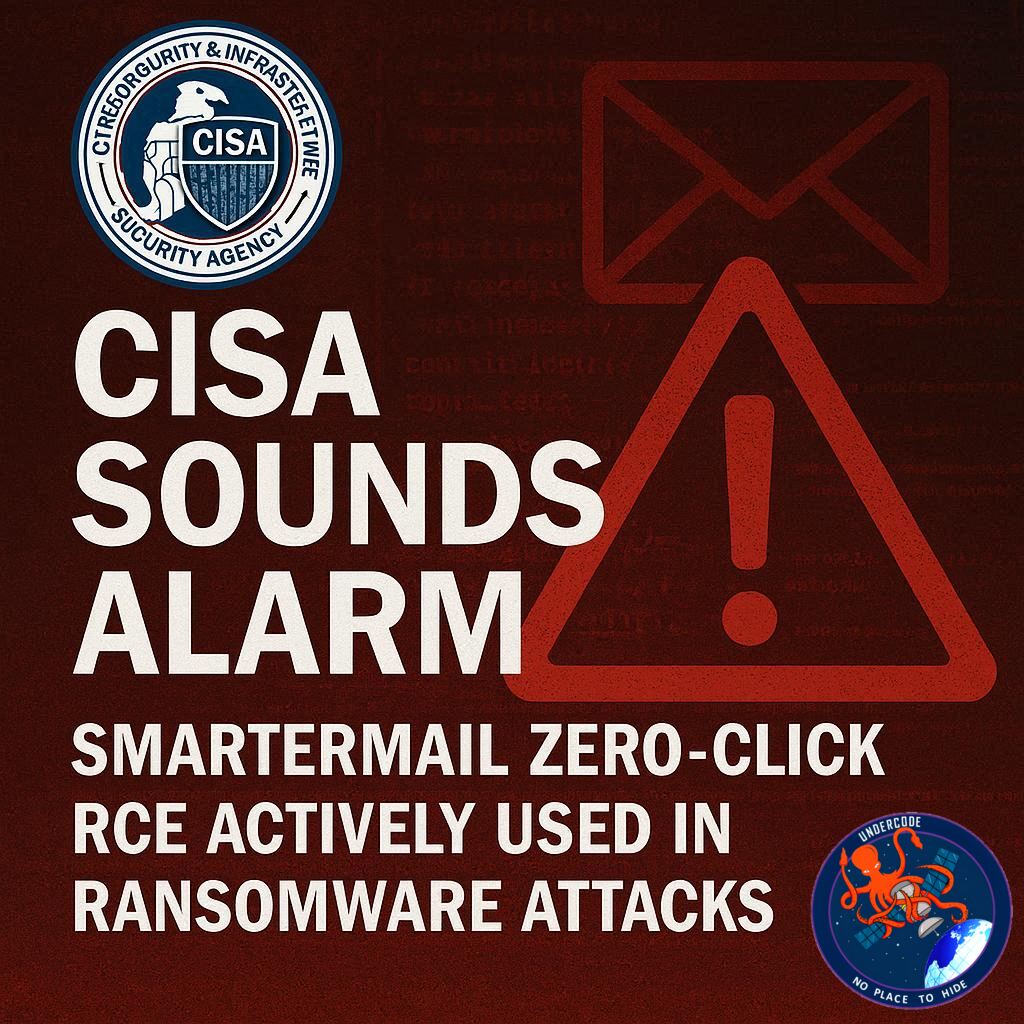
U.S. cybersecurity authorities have issued an urgent warning after confirming active ransomware exploitation of a newly disclosed vulnerability in SmarterMail, a widely used email server platform. The flaw, tracked as CVE-2026-24423, allows unauthenticated remote code execution (RCE) through the product’s ConnectToHub API, meaning attackers can compromise servers without credentials or user interaction. With real-world attacks already underway, the Cybersecurity and Infrastructure Security Agency (CISA) is pushing organizations to act fast—patch immediately or stop using the affected software by February 26, 2026.
the Original Report
CISA reported that threat actors are actively exploiting CVE-2026-24423 to deploy ransomware in the wild. The vulnerability resides in SmarterMail’s ConnectToHub API and can be abused by unauthenticated attackers to execute arbitrary code on exposed servers. This significantly lowers the barrier to entry for cybercriminals and accelerates attack timelines.
Patches addressing the flaw have been released by the vendor, and CISA has added the vulnerability to its Known Exploited Vulnerabilities (KEV) catalog. Federal Civilian Executive Branch (FCEB) agencies are mandated to either apply the fixes or discontinue use of the affected product by the February deadline. The advisory underscores that exploitation is not theoretical; it is confirmed and ongoing.
The warning surfaced via cybersecurity monitoring channels and was amplified by threat intelligence accounts, highlighting the rapid spread of awareness within the security community. The inclusion in the KEV catalog signals a high level of confidence that the flaw is being used in active attacks, particularly by ransomware operators seeking easy initial access.
CISA’s message is clear: organizations running SmarterMail instances exposed to the internet face immediate risk. Unpatched systems could be fully compromised, leading to data encryption, service disruption, data theft, or all three. The advisory serves as both a technical alert and a policy directive, emphasizing the urgency of remediation.
What Undercode Say:
Why This Vulnerability Is More Dangerous Than It Looks
An unauthenticated RCE in an email server is about as bad as it gets. Email infrastructure sits at the center of enterprise communications, often running with high privileges and deep network access. A single exploited SmarterMail instance can become a launchpad for lateral movement across an organization.
The ConnectToHub API as an Attack Surface
APIs are increasingly targeted because they are designed for automation and trust. When authentication checks fail or are improperly enforced, attackers gain a clean, scriptable path to exploitation. In this case, the ConnectToHub API turns into a remote control panel for adversaries.
Ransomware Operators Love Speed and Scale
Unauthenticated flaws remove friction. There is no phishing step, no stolen credentials, and no waiting for user mistakes. This aligns perfectly with modern ransomware economics, where attackers scan, exploit, encrypt, and move on at industrial speed.
Why CISA’s KEV Listing Matters
Being added to the KEV catalog is not routine bureaucracy. It is CISA’s way of saying: “This is happening right now, and it’s working for attackers.” Historically, KEV-listed vulnerabilities are among the most exploited across both public and private sectors.
Patch Availability Does Not Equal Safety
The existence of a patch does not automatically reduce risk. Many organizations delay updates due to uptime concerns or change-management processes. Attackers know this gap well and aggressively target the window between disclosure and widespread patching.
Email Servers as High-Value Ransomware Targets
Beyond disruption, email servers contain sensitive communications, attachments, and credentials. Compromising them enables double-extortion tactics, where data theft is leveraged alongside encryption to increase ransom pressure.
The February 26 Deadline Is Not Generous
From an operational standpoint, this deadline reflects urgency, not comfort. Agencies and enterprises alike must inventory their systems quickly, identify exposed SmarterMail instances, and validate patch deployment under time pressure.
Expect Copycat Exploitation
Once ransomware groups confirm a working exploit, others follow. Tooling spreads fast in underground circles, meaning today’s limited campaigns can become tomorrow’s mass exploitation events.
A Broader Lesson About API Security
This incident reinforces a recurring theme: APIs must be treated as first-class attack surfaces. Authentication, input validation, and exposure controls are no longer optional hardening steps—they are baseline requirements.
Silence Is the Enemy
Organizations that assume they are “too small” or “off the radar” are often the easiest victims. Internet-facing email services are constantly scanned, and automation does not discriminate by company size.
Fact Checker Results
CISA confirmed active exploitation of CVE-2026-24423 in real-world ransomware attacks.
The vulnerability enables unauthenticated remote code execution via SmarterMail’s ConnectToHub API.
Official patches are available, with a mandated remediation deadline of February 26, 2026.
Prediction
Ransomware groups will increasingly target exposed SmarterMail servers over the coming weeks, especially among organizations that delay patching. Similar unauthenticated API flaws in other messaging and collaboration platforms are likely to receive renewed scrutiny—and exploitation—throughout 2026.
🕵️📝✔️Let’s dive deep and fact‑check.
References:
Reported By: x.com
Extra Source Hub (Possible Sources for article):
https://www.quora.com/topic/Technology
Wikipedia
OpenAi & Undercode AI
Image Source:
Unsplash
Undercode AI DI v2
Bing
🔐JOIN OUR CYBER WORLD [ CVE News • HackMonitor • UndercodeNews ]
📢 Follow UndercodeNews & Stay Tuned:
𝕏 formerly Twitter 🐦 | @ Threads | 🔗 Linkedin | 🦋BlueSky | 🐘Mastodon


