
Listen to this Post
The Return to a Simpler Computing Era
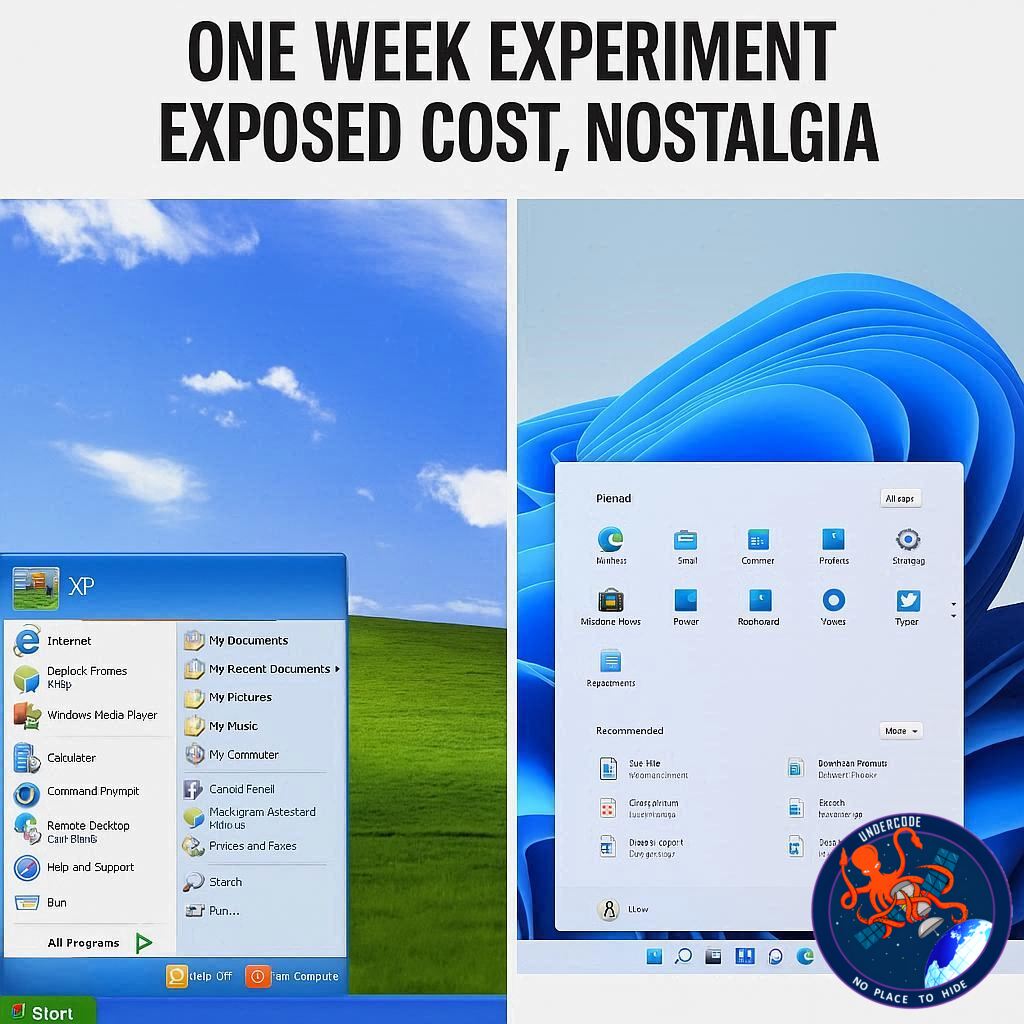
Twenty-five years ago, personal computing felt different. Operating systems were events, not background utilities, and Windows XP arrived as a cultural moment rather than a quiet update. It represented Microsoft’s pivot from enterprise-first design toward an interface that welcomed everyday users with color, sound, and personality. In contrast, Windows 11 reflects a modern philosophy shaped by cloud dependency, telemetry, and aggressive AI integration. This article revisits Windows XP through a one-week experiment, not as a museum piece, but as a functioning operating system placed against the realities of modern computing expectations.
A Compressed the Windows XP Experiment
The experiment began with the decision to abandon Windows 11, driven by frustration over excessive AI features, system instability, and invasive data collection practices. Windows XP was chosen as an alternative, less for practicality and more as an act of protest and curiosity. Installing XP on modern hardware proved impractical without extensive modification, leading to the use of a virtual machine on macOS for added security. Even this safer route highlighted how obsolete the operating system has become, with no official updates for over a decade and severe vulnerability to modern threats.
The installation process itself triggered nostalgia, from entering a CD key to hearing the iconic startup sound and seeing the Bliss wallpaper. However, that emotional high faded quickly. Updating the system required a community-built workaround, Legacy Update, and took hours. Validation failures removed visual features, reinforcing how tightly Microsoft once controlled its ecosystem. Daily use exposed deeper issues. Performance felt painfully slow, search functionality was primitive and awkward, and basic navigation relied heavily on mouse interaction rather than efficient keyboard input.
Productivity attempts failed almost entirely. Internet Explorer 6 collapsed under modern web standards, while alternative browsers designed for retro systems proved unstable. Office software installations failed due to activation issues, leaving even offline work unreliable. Entertainment options were similarly constrained. Streaming services were inaccessible, YouTube barely loaded, and gaming required extreme compromises in resolution and functionality. By the end of the week, the experiment concluded with a firm rejection of Windows XP as a viable environment. Nostalgia gave way to frustration, and the return to Windows 11, despite its flaws, felt like relief rather than defeat.
What Undercode Say:
Windows XP’s failure in this experiment is not a reflection of poor design, but of how fundamentally computing has evolved. XP was engineered for a world without persistent internet connections, cloud authentication, real-time search indexing, or browser-centric workflows. Judging it by modern standards exposes not its weaknesses, but the assumptions that once defined personal computing.
The real takeaway lies in what Windows 11 has become. The frustration that motivated this experiment stems from a growing disconnect between user intent and operating system priorities. Modern Windows is no longer just a platform for applications. It is a data pipeline, an AI showcase, and a constantly shifting interface shaped by corporate strategy rather than user comfort. XP, for all its flaws, was static, predictable, and locally sovereign. It did not change behavior overnight or introduce features without consent.
However, simplicity alone does not equal usability. Search integration, background indexing, driver abstraction, and web compatibility are not luxuries. They are structural necessities. Windows XP collapses without them, proving that minimalism must evolve alongside user expectations. The experiment unintentionally highlights a deeper truth. The ideal operating system likely exists somewhere between these extremes, offering modern performance and security without turning the user into a product.
This comparison also exposes how nostalgia distorts memory. Windows XP felt fast because everything else was slower. It felt intuitive because workflows were simpler. Reintroducing it today strips away that illusion and replaces it with friction. The failure is not emotional. It is architectural. Operating systems are reflections of their time, and forcing one era into another rarely produces harmony.
Fact Checker Results
✅ Windows XP has not received official security updates for over a decade.
✅ Modern web standards are largely incompatible with Internet Explorer 6.
❌ Windows XP was not designed to function securely in an always-online ecosystem.
Prediction
📊 Microsoft will continue scaling back visible AI features in Windows 11 while deepening background integration.
📊 Future Windows releases will prioritize modular control to regain user trust.
📊 Legacy operating systems will remain valuable as design references, not practical alternatives.
▶️ Related Video (80% Match):
🕵️📝✔️Let’s dive deep and fact‑check.
References:
Reported By: www.techradar.com
Extra Source Hub (Possible Sources for article):
https://www.pinterest.com
Wikipedia
OpenAi & Undercode AI
Image Source:
Unsplash
Undercode AI DI v2
Bing
🔐JOIN OUR CYBER WORLD [ CVE News • HackMonitor • UndercodeNews ]
📢 Follow UndercodeNews & Stay Tuned:
𝕏 formerly Twitter 🐦 | @ Threads | 🔗 Linkedin | 🦋BlueSky | 🐘Mastodon


