
Listen to this Post
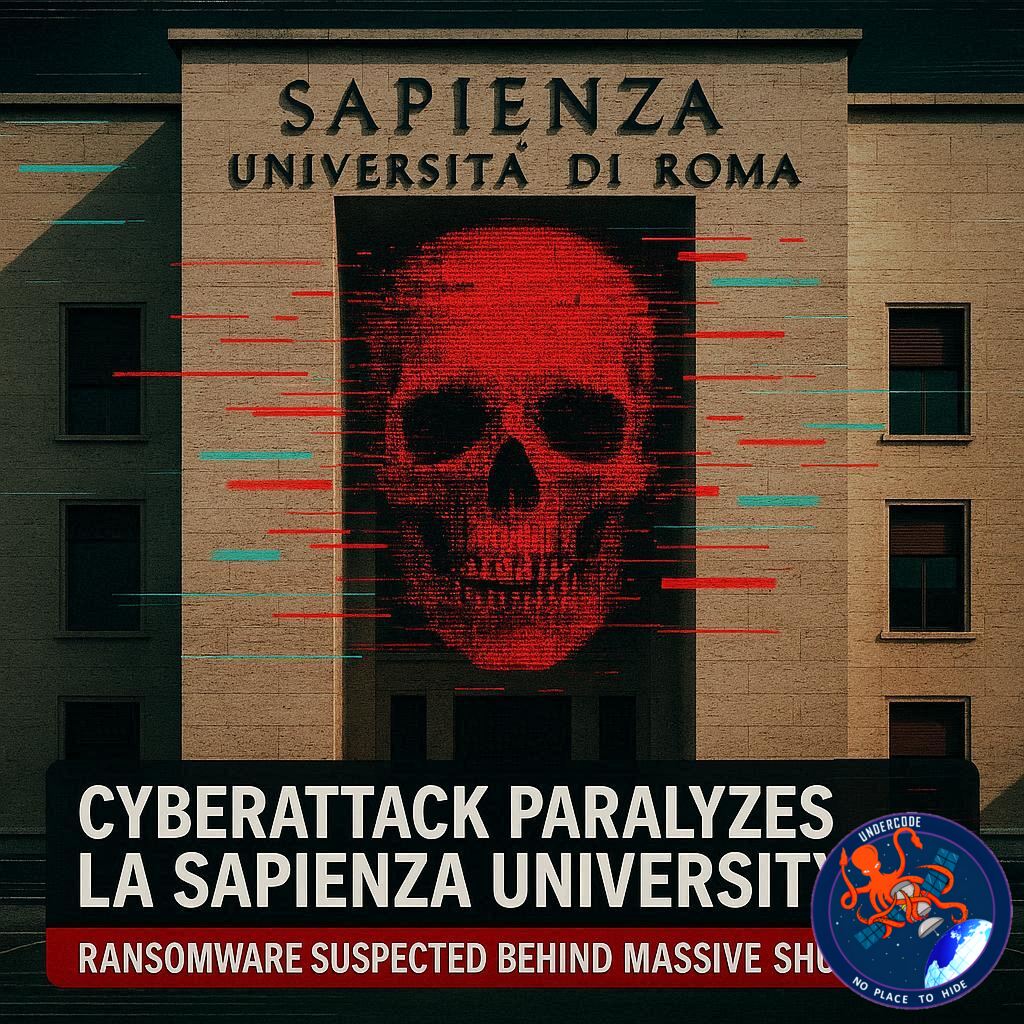
Digital Blackout Hits Italy’s Largest University
Since February 2, Rome’s La Sapienza University has been grappling with a severe cyber incident that forced the complete shutdown of its digital infrastructure. As one of Italy’s most prestigious and largest universities, serving roughly 122,000 students, the disruption immediately rippled across academic and administrative life. Online systems used for exam bookings, tuition payment verification, and faculty communication went dark, leaving students and staff dependent on fragmented updates shared mainly through social media channels. The absence of a clear recovery timeline only intensified frustration and uncertainty across the university community.
Emergency Shutdown to Contain a Growing Threat
University officials confirmed that the outage was not the result of a routine technical failure but a deliberate cyberattack. As a defensive move, La Sapienza ordered an immediate shutdown of network systems to protect data integrity and prevent further spread of the threat. This kind of drastic containment measure strongly suggests a ransomware scenario, where continued connectivity could allow attackers to expand access, encrypt additional systems, or exfiltrate sensitive data.
Ransomware Allegations and Emerging Threat Actors
Public reporting quickly converged on the conclusion that ransomware was involved. Italian media outlets linked the incident to a next-generation ransomware strain known as Bablock, described as one of the most aggressive and destructive variants seen in 2025. According to multiple reports, the malware may have been deployed by a previously unknown cybercrime group tracked as Femwar02, believed to have connections to pro-Russian hacking ecosystems. Investigators reportedly noted that the malware avoids encrypting systems configured in Russian or post-Soviet languages, a behavioral pattern often associated with Russian-aligned ransomware operations.
Institutional Response and Law Enforcement Involvement
By February 3, the university issued an official update stating that the emergency was being managed in a coordinated manner, involving administrative offices, academic structures, and student representatives. The incident was formally reported to Italian law enforcement authorities and the National Cybersecurity Agency, both of which are now supporting the response and investigation. Meanwhile, physical Infopoints across faculties remained operational but severely limited, as staff could not access digital databases needed to answer most inquiries.
Ongoing Investigation and Uncertain Recovery
As forensic analysis continues, university technicians are assessing the full scope of the breach before restoring systems from backups. It remains unclear whether all critical data can be fully recovered or whether some information may remain inaccessible due to encryption or potential data loss. The attack underscores the growing vulnerability of large educational institutions, which often operate vast, complex networks that can be difficult to secure against modern ransomware campaigns.
What Undercode Say: A University as a High-Value Cyber Target
Large universities like La Sapienza represent an almost ideal target for ransomware operators. They combine massive user populations, decentralized IT environments, and time-sensitive operations. Exam schedules, enrollment deadlines, and payment systems create natural pressure points, increasing the likelihood that administrators will rush recovery efforts. From an attacker’s perspective, this urgency translates into leverage, even if no ransom demand has yet been publicly disclosed.
What Undercode Say: Bablock and the Evolution of Ransomware Tactics
The reported use of Bablock highlights how modern ransomware has evolved beyond simple file encryption. By borrowing code from Babuk, LockBit, and DarkSide, this malware family reflects a modular and adaptive design philosophy. Attackers reuse proven components, refine evasion techniques, and deploy payloads that are harder to detect with traditional security tools. This hybrid codebase approach reduces development costs while increasing operational reliability.
What Undercode Say: Geopolitical Signals Hidden in Malware Behavior
One of the most telling details in this case is the malware’s apparent avoidance of systems set to Russian or post-Soviet languages. While not definitive proof of state involvement, this pattern has repeatedly appeared in ransomware campaigns linked to Russian-speaking cybercriminal groups. It suggests an informal boundary where attackers avoid domestic targets, possibly to reduce legal risk or tacitly comply with local enforcement expectations.
What Undercode Say: Crisis Communication as a Secondary Casualty
The university’s reliance on social media for updates reveals a critical weakness in crisis communication planning. When core IT systems fail, institutions often discover that their backup communication strategies are insufficient. The lack of detailed, centralized updates not only frustrates users but can also damage institutional credibility. Cyber resilience today must include not just technical recovery, but clear and authoritative communication channels that function independently of compromised infrastructure.
What Undercode Say: Lessons for the Education Sector
This incident should serve as a warning to universities across Europe and beyond. Educational institutions are no longer peripheral targets. They hold valuable personal data, intellectual property, and research assets, often protected by uneven security controls. Investment in segmented networks, offline backups, continuous monitoring, and incident response drills is no longer optional. Without these measures, universities risk becoming repeat victims in an increasingly hostile cyber landscape.
🔍 Fact Checker Results
✅ La Sapienza University confirmed a cyberattack and infrastructure shutdown to protect data.
✅ Multiple media reports link the incident to Bablock ransomware and the Femwar02 group.
❌ No public confirmation yet exists regarding ransom demands or data exfiltration outcomes.
📊 Prediction
🔮 Universities across Europe are likely to accelerate cybersecurity audits and backup strategies following this incident.
🔮 Ransomware groups will continue refining region-aware malware to evade political and legal consequences.
🔮 Future attacks may increasingly target academic calendars to maximize operational disruption and leverage.
▶️ Related Video (86% Match):
🕵️📝✔️Let’s dive deep and fact‑check.
References:
Reported By: securityaffairs.com
Extra Source Hub (Possible Sources for article):
https://www.digitaltrends.com
Wikipedia
OpenAi & Undercode AI
Image Source:
Unsplash
Undercode AI DI v2
Bing
🔐JOIN OUR CYBER WORLD [ CVE News • HackMonitor • UndercodeNews ]
📢 Follow UndercodeNews & Stay Tuned:
𝕏 formerly Twitter 🐦 | @ Threads | 🔗 Linkedin | 🦋BlueSky | 🐘Mastodon


