
Listen to this Post
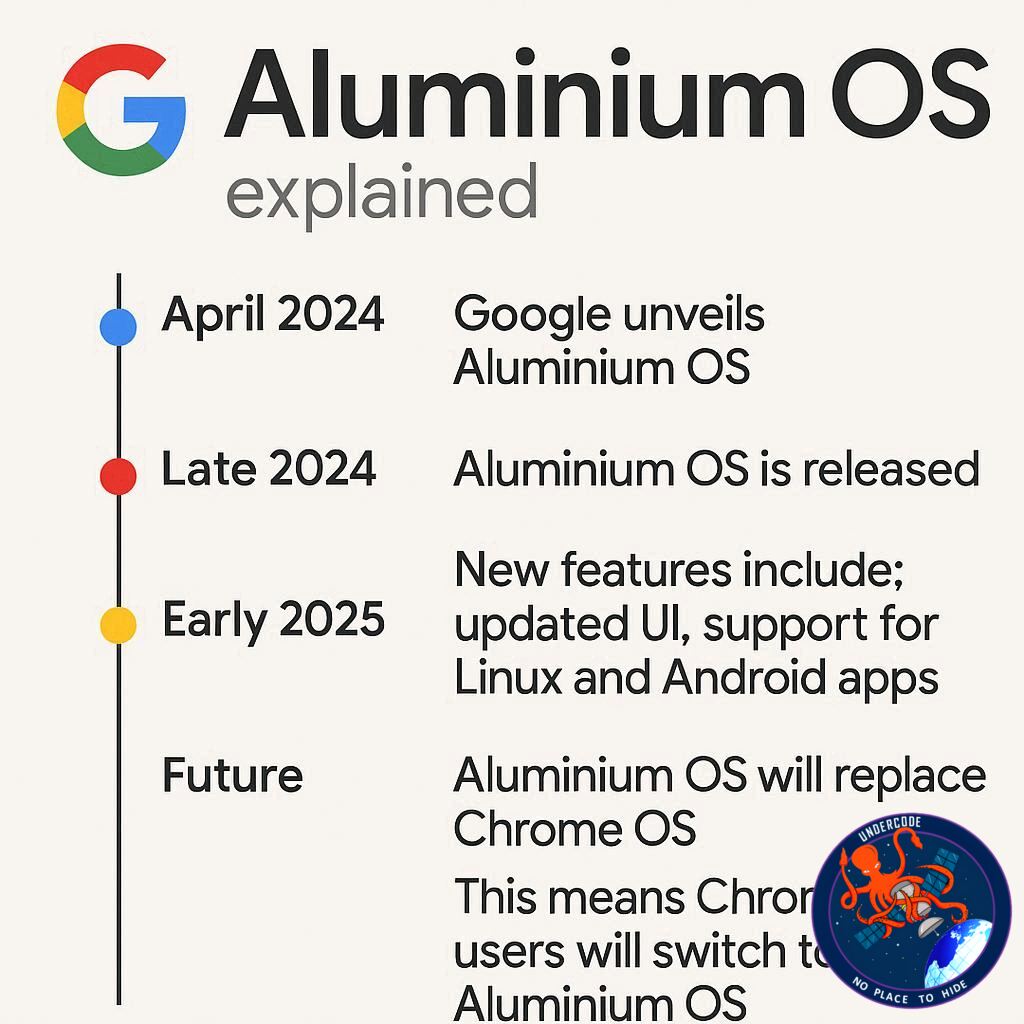
Introduction: Google’s Biggest OS Shift in a Decade
Google is quietly preparing one of the most significant operating system transitions in its history. Known internally and now publicly as Aluminium OS, this new platform is designed to unify Android and ChromeOS into a single, AI-first operating system. While Google has spoken cautiously about timelines, court documents, job listings, and executive remarks paint a clearer picture: Aluminium OS is not an experiment, but a long-term replacement strategy for ChromeOS as we know it. For millions of Chromebook users, developers, and enterprise customers, this move raises important questions about compatibility, longevity, and the future of desktop computing under Google’s ecosystem.
Aluminium OS at a Glance
Aluminium OS is a new Android-based operating system built for laptops, tablets, desktops, and hybrid devices. It merges ChromeOS’s security and simplicity with Android’s app ecosystem, while placing Gemini AI at the core of the user experience. Rather than maintaining two parallel platforms, Google is consolidating its efforts into one unified system optimized for Arm-based hardware and AI-driven workflows.
Launch Timeline: What Google Says vs What Documents Reveal
Publicly, Google has been careful not to commit to a firm launch date for Aluminium OS. During the September 2025 Snapdragon Summit, Android chief Sameer Samat hinted that the long-rumored Android-ChromeOS merger could arrive “next year.” That statement initially fueled expectations of a 2026 debut.
However, court testimony from August 2025 later contradicted the optimism. Internal discussions revealed that Google was only hoping for a 2026 launch, not guaranteeing it. Subsequent reports suggest the company has now pushed its expectations further, with 2028 emerging as a more realistic target for a full consumer rollout.
ChromeOS Support Will Last Longer Than Expected
One critical detail for existing users is that ChromeOS is not being abandoned overnight. Internal documents indicate that ChromeOS will continue receiving updates until at least 2034, extending beyond earlier assumptions. This extended support window is crucial for schools, enterprises, and governments that rely heavily on Chromebooks and require long device lifecycles.
Why Google Is Merging Android and ChromeOS
For years, Google has maintained two operating systems with overlapping purposes. ChromeOS dominated education and lightweight enterprise use, while Android expanded from phones into tablets and foldables. Maintaining both has increasingly led to duplicated effort, fragmented features, and inconsistent developer experiences.
Aluminium OS represents a strategic reset. By building on Android 16 or 17, Google can leverage Android’s massive app ecosystem while incorporating ChromeOS’s desktop-grade windowing, security model, and update system. The result is a single platform designed to scale from mobile screens to full desktop workstations.
Built on Android 16 or 17: A New Foundation
At its core, Aluminium OS is expected to run on Android 16 or 17, rather than a forked or hybrid kernel. This decision signals Google’s confidence that Android is mature enough to handle desktop-level workloads. Enhanced window management, keyboard and mouse optimization, and multi-monitor support are expected to be standard rather than optional features.
This approach also simplifies development. Apps built for Aluminium OS will not need ChromeOS-specific adaptations, reducing fragmentation and encouraging faster innovation.
Deep Gemini AI Integration From the Ground Up
Unlike previous operating systems where AI features were layered on top, Aluminium OS is designed with Gemini AI embedded at the system level. Gemini is not just an assistant; it functions as an intelligent layer that understands user context, application behavior, and workflow patterns.
This integration allows the OS to proactively assist users rather than react to commands. From document summaries to task automation, AI becomes a constant background collaborator.
On-Device AI and Privacy-First Design
A major pillar of Aluminium OS is its use of on-device AI processing. Dedicated NPUs handle many Gemini tasks locally, reducing reliance on cloud servers. This design improves response times and addresses long-standing privacy concerns associated with cloud-based AI systems.
Sensitive tasks such as document analysis, email summarization, and workflow suggestions can be processed directly on the device, giving users greater control over their data.
Intelligent Multitasking and Window Management
Aluminium OS introduces context-aware multitasking that adapts to how users work. The system can suggest optimal window layouts based on screen size, active apps, and usage history. For example, writing tools and reference materials may automatically align side-by-side when the OS detects a research workflow.
This dynamic layout management aims to reduce friction and eliminate manual window adjustments that slow productivity.
Real-Time Summaries Across the System
One of the most practical Gemini features is real-time summarization. Aluminium OS can generate concise summaries for documents, web pages, emails, and even meeting transcripts directly within the operating system.
Instead of opening separate apps or extensions, users receive AI-generated insights wherever they are working, saving time and reducing cognitive overload.
Developer-Focused AI Tools
For developers, Aluminium OS includes a built-in AI assistant integrated into terminals and development environments. This assistant supports code generation, debugging, and error explanation without leaving the workflow.
By embedding AI directly into system tools, Google aims to make Aluminium OS especially attractive to developers who already rely heavily on Android Studio, Linux containers, and command-line utilities.
Workflow Automation Through Natural Language
Another key feature is intelligent workflow automation. Aluminium OS learns repetitive actions and suggests automations that can be triggered using natural language. Tasks such as file organization, data syncing, or app launching can be automated without complex scripting.
This lowers the barrier for productivity automation, making advanced workflows accessible to non-technical users.
Universal Translation and Predictive Search
Language support is a major focus. Aluminium OS offers universal translation across apps, supporting over 100 languages. Translation works system-wide rather than app-by-app, enabling seamless multilingual communication.
Predictive search is also enhanced. Instead of matching keywords, the OS understands intent, context, and prior activity to deliver more relevant results.
What Aluminium OS Means for Existing Chromebook Users
For current Chromebook owners, the transition will be gradual. Google has committed to 10–11 years of updates for newer Chromebooks, ensuring long-term stability. However, not all devices will be eligible for Aluminium OS.
Internally, the existing platform is referred to as “ChromeOS Classic.” Devices with hardware limitations, particularly older processors lacking sufficient AI acceleration, will remain on ChromeOS Classic until their Auto Update Expiration dates.
ChromeOS Classic Will Still Be Supported
According to Android Authority, ChromeOS Classic devices will continue receiving security updates into the mid-2030s. This ensures that schools and organizations are not forced into premature hardware upgrades.
While these devices may miss out on Aluminium OS’s advanced AI features, they will remain secure and functional for their intended lifespan.
Qualcomm and Arm at the Center of the Strategy
Aluminium OS is being developed with Qualcomm’s Arm-based PC chips as a primary target. Job listings confirm close collaboration between Google and Qualcomm, signaling a push toward energy-efficient, AI-optimized hardware.
This focus aligns with industry trends as Arm-based laptops gain traction for their battery life and performance efficiency.
A Long-Term Vision, Not a Sudden Switch
Despite early hype, Aluminium OS is not a sudden replacement. Google is deliberately pacing the transition to avoid disrupting education and enterprise customers. By extending ChromeOS support and delaying Aluminium OS until the platform is fully mature, Google appears committed to a controlled, low-risk rollout.
What Undercode Say:
A Strategic Consolidation, Not Just an Upgrade
From an industry perspective, Aluminium OS is less about innovation and more about consolidation. Google is acknowledging that maintaining parallel operating systems no longer makes strategic sense. By choosing Android as the foundation, Google leverages scale, developer familiarity, and a mature ecosystem.
AI as the Differentiator
What truly separates Aluminium OS from previous attempts is Gemini’s deep integration. This is not AI as a feature, but AI as infrastructure. The OS itself becomes adaptive, predictive, and increasingly personalized over time.
Risk of Fragmentation Still Exists
Despite the promise, fragmentation remains a risk. ChromeOS Classic devices will coexist with Aluminium OS for years, potentially complicating support and app optimization. Google must manage this transition carefully to avoid repeating mistakes seen in earlier Android tablet strategies.
Education and Enterprise Will Decide Success
Chromebooks dominate education and certain enterprise sectors. Aluminium OS must match ChromeOS’s reliability and security standards to retain this audience. Any perception of instability or forced upgrades could slow adoption significantly.
Arm-First Is a Calculated Bet
By centering Aluminium OS around Arm, Google is betting on the future of PC computing. If Arm-based performance continues to improve, this decision will age well. If not, compatibility concerns could resurface.
The Timeline Signals Caution
A likely 2028 launch shows restraint. Google appears willing to delay rather than ship an incomplete platform. This patience suggests Aluminium OS is meant to be foundational, not experimental.
Fact Checker Results
Verification of Core Claims
✅ Aluminium OS is confirmed through job listings, court testimony, and executive statements.
✅ ChromeOS support extending into the 2030s aligns with documented Auto Update policies.
❌ A fixed public launch date has not been officially announced by Google.
Prediction
The Future of Google’s Desktop Ecosystem 🚀
Aluminium OS is likely to debut quietly, targeting developers and premium devices first. Over time, it will replace ChromeOS as default on new hardware, while legacy devices fade out naturally. If Gemini delivers on its promise, Aluminium OS could redefine how AI integrates into everyday computing — not as a tool you open, but as a system you live inside 🤖📈
🕵️📝✔️Let’s dive deep and fact‑check.
References:
Reported By: zeenews.india.com
Extra Source Hub (Possible Sources for article):
https://www.instagram.com
Wikipedia
OpenAi & Undercode AI
Image Source:
Unsplash
Undercode AI DI v2
Bing
🔐JOIN OUR CYBER WORLD [ CVE News • HackMonitor • UndercodeNews ]
📢 Follow UndercodeNews & Stay Tuned:
𝕏 formerly Twitter 🐦 | @ Threads | 🔗 Linkedin | 🦋BlueSky | 🐘Mastodon


