
Listen to this Post
Apple Shifts Focus From Design to Raw Power
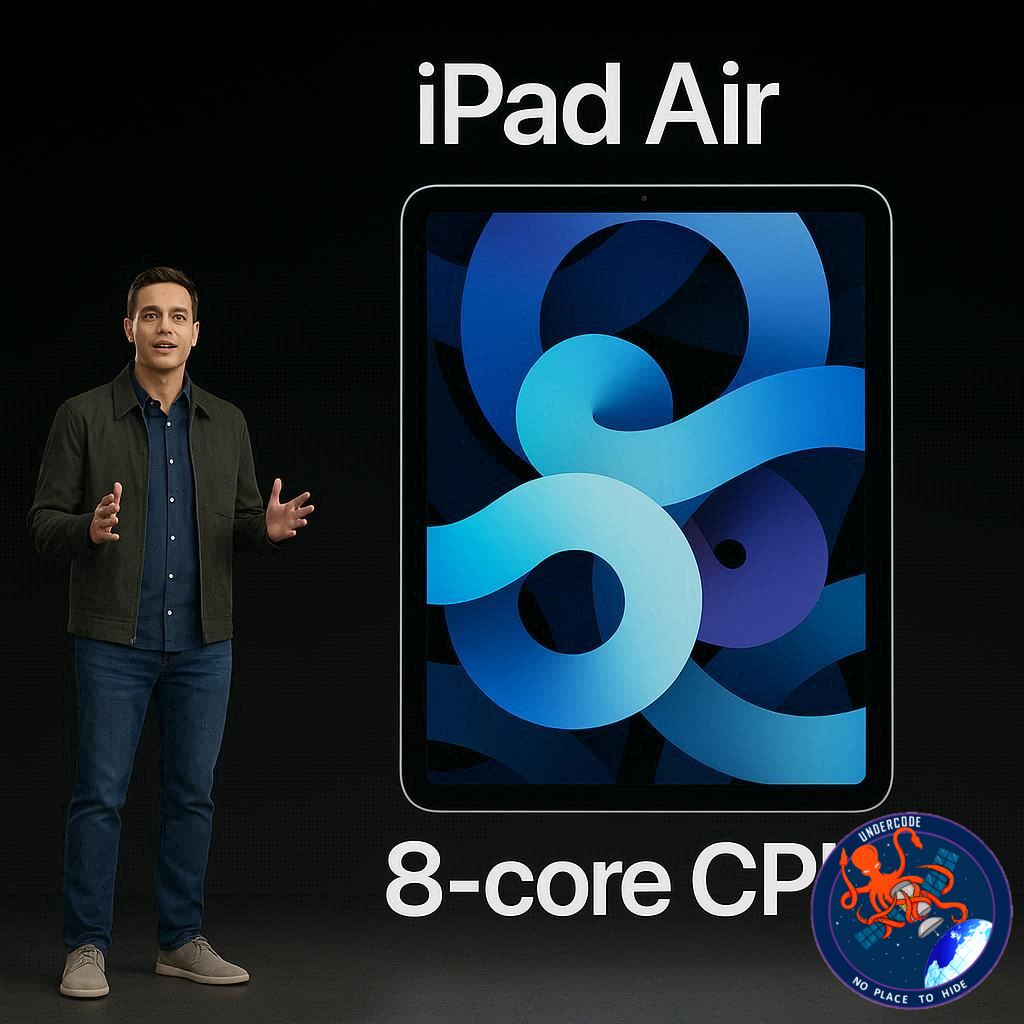
Apple is quietly preparing a refresh of its iPad lineup, and this time the spotlight is firmly on performance rather than visual reinvention. According to industry insights from Bloomberg’s Mark Gurman, the upcoming iPad 12 and iPad Air 8 will prioritize faster processors while keeping their external designs largely unchanged. For users hoping for a dramatic redesign, this update cycle may feel conservative, but under the hood, Apple is making moves that signal a deeper strategic shift.
Faster Chips Define the Next iPad Generation
The next-generation entry-level iPad is expected to be powered by Apple’s A18 chipset, while the iPad Air 8 is rumored to jump straight to the M4 processor. This marks a significant leap in computational capability, especially for the base model. Apple’s decision reinforces a clear message: performance scalability across product tiers now matters more than cosmetic evolution.
Apple Intelligence Reaches the Entry-Level iPad
One of the most consequential upgrades is the introduction of Apple Intelligence support on the base iPad. By equipping the iPad 12 with the A18 chip, Apple enables its AI-powered feature suite on an entry-level device for the first time. This move lowers the barrier to Apple’s on-device AI tools and positions the base iPad as more than just a casual consumption device.
Marketing AI as a Core iPad Feature
Apple is expected to emphasize Apple Intelligence heavily in its marketing strategy. By tying AI functionality to affordability, the company can reposition the entry-level iPad as a smart productivity companion rather than a budget fallback. This could reshape buyer perception, especially in education and enterprise environments.
iPad Mini Poised for a Hardware Leap
While the iPad 12 and iPad Air 8 focus on internal upgrades, the iPad mini appears to be the exception. Reports suggest Apple is planning to introduce an OLED display to the iPad mini, significantly enhancing contrast, color accuracy, and visual depth. If confirmed, this would make the mini the most visually advanced iPad in the lineup this year.
OLED Display Elevates the Compact iPad
An OLED-equipped iPad mini would stand out not just within the iPad family, but also against competitors in the compact tablet segment. Improved blacks, richer colors, and better power efficiency could redefine the mini’s appeal, especially for media consumption and creative work on a smaller canvas.
iPad Sales Show Signs of Recovery
Apple’s iPad business has recently regained momentum. During the holiday quarter, iPad revenue grew 6 percent year-over-year, exceeding Wall Street expectations. Notably, the entry-level iPad played a major role in this rebound, validating Apple’s strategy of pairing accessibility with meaningful capability.
Enterprise Push Shapes the iPad Roadmap
Apple is increasingly targeting enterprise customers with its iPad lineup. The upcoming refresh is expected to reinforce this direction by blending affordability, performance, and AI-driven features. Faster processors and Apple Intelligence support make iPads more viable for professional workflows, data analysis, and managed deployments.
Main the Original
Apple is preparing to launch the iPad 12 and iPad Air 8, focusing primarily on performance upgrades rather than design changes. According to Bloomberg’s Mark Gurman, both models will retain last year’s hardware design while introducing faster processors. The entry-level iPad is expected to use the A18 chip, enabling support for Apple Intelligence for the first time on a base model. The iPad Air 8, on the other hand, is rumored to feature the powerful M4 chip. While some customers may be disappointed by the lack of visual updates, Apple appears confident that improved speed and AI capabilities will drive demand. The report also notes that the iPad mini could receive a more substantial upgrade, including an OLED display, making it the most hardware-forward iPad this year. Apple’s iPad sales have recently shown growth, with a 6 percent year-over-year revenue increase during the holiday quarter. Much of this success came from the entry-level iPad, which Apple now plans to promote more aggressively, particularly toward enterprise customers. The upcoming refresh aims to build on this momentum by combining affordability, performance, and AI-powered features.
What Undercode Say:
Apple’s current iPad strategy reflects a broader shift in how the company defines innovation. Instead of chasing visual novelty, Apple is doubling down on silicon leadership and AI integration. This approach suggests confidence that performance gains and intelligent software experiences now matter more to users than thinner bezels or new chassis designs.
The decision to bring Apple Intelligence to the entry-level iPad is especially telling. Apple is effectively democratizing AI within its ecosystem, ensuring that advanced features are no longer reserved for premium devices. This move could accelerate adoption of Apple Intelligence by expanding its reach to students, small businesses, and first-time iPad buyers.
Equipping the iPad Air with an M4 chip further blurs the line between tablets and laptops. With desktop-class performance in a lightweight form factor, the iPad Air increasingly competes with the MacBook Air for certain users. Apple appears comfortable with this overlap, using performance tiers rather than form factors to differentiate products.
The rumored OLED upgrade for the iPad mini introduces an interesting contrast. While larger iPads stagnate visually, the smallest model may become the most technologically exciting. This could reposition the iPad mini as a premium compact device rather than a niche option.
From a business perspective, Apple’s renewed focus on enterprise customers is logical. Organizations value longevity, performance stability, and AI-assisted productivity more than aesthetic updates. Faster chips and AI capabilities directly support this use case.
However, there is risk in this strategy. Consumers often associate innovation with visible change. By offering mostly internal upgrades, Apple may struggle to generate excitement among casual buyers who upgrade infrequently. Marketing Apple Intelligence effectively will be crucial to offset this perception.
Overall, Apple’s iPad refresh signals a mature product category entering a phase of quiet refinement. The company is optimizing the experience rather than reinventing it, betting that intelligence and power will define the next era of tablet computing.
Fact Checker Results
✅ Bloomberg’s Mark Gurman has reported that upcoming iPads will focus on faster processors rather than new designs.
✅ Entry-level iPads gaining Apple Intelligence support aligns with Apple’s move to the A18 chipset.
❌ OLED display plans for the iPad mini remain unconfirmed and should be treated as speculative.
Prediction
📊 Apple will increasingly market iPads as AI-first productivity devices rather than entertainment tablets.
📊 The performance gap between iPads and Macs will continue to narrow, especially with M-series chips spreading across models.
📊 If OLED arrives on the iPad mini, Apple may later expand the technology to larger iPads once costs stabilize.
🕵️📝✔️Let’s dive deep and fact‑check.
References:
Reported By: timesofindia.indiatimes.com
Extra Source Hub (Possible Sources for article):
https://www.quora.com/topic/Technology
Wikipedia
OpenAi & Undercode AI
Image Source:
Unsplash
Undercode AI DI v2
Bing
🔐JOIN OUR CYBER WORLD [ CVE News • HackMonitor • UndercodeNews ]
📢 Follow UndercodeNews & Stay Tuned:
𝕏 formerly Twitter 🐦 | @ Threads | 🔗 Linkedin | 🦋BlueSky | 🐘Mastodon


