
Listen to this Post
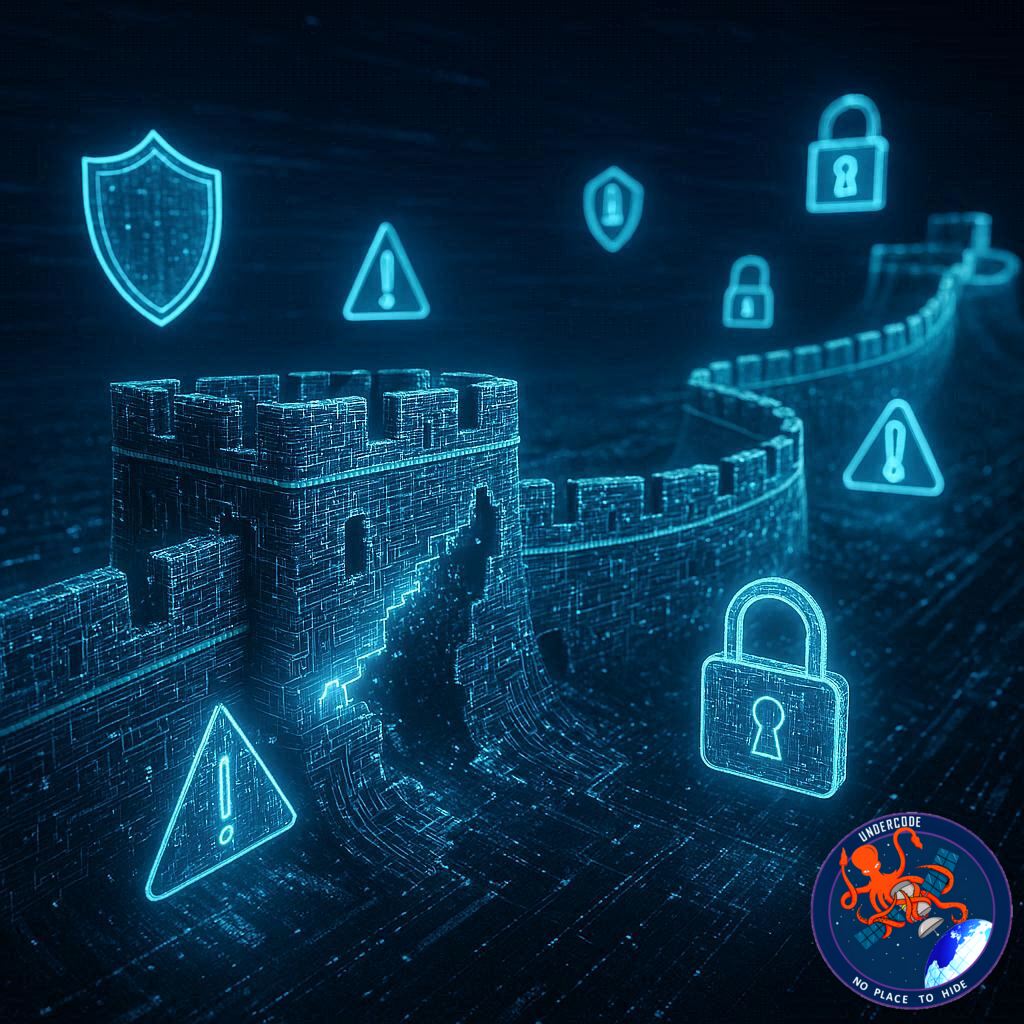
In cybersecurity, the temptation is to believe that a stronger perimeter guarantees safety. The Great Wall of China offers a historical lesson: massive walls may deter enemies, but the system behind them matters far more. When the Ming Dynasty faced both internal rebellion and external invasion, its stone fortifications held—but the human system managing them collapsed. General Wu Sangui opened the gates, and the Manchus swept through, founding the Qing Dynasty. The wall didn’t fail; the system protecting it did. Today, AI security faces a similar paradox: cloud infrastructure is important, but walls alone cannot defend complex AI systems.
The AI Security Landscape
Modern organizations are rapidly adopting AI, but security strategies often lag behind. A recent Palo Alto Networks report revealed that 99% of organizations faced at least one AI attack in the past year. This demonstrates a crucial insight: defending the infrastructure alone does not equate to defending the system.
AI systems are ecosystems, not isolated workloads. They rely on open-source libraries, external data pipelines, evaluation frameworks, plug-ins, agent tools, and human operators. Focusing exclusively on cloud hardening creates the illusion of security while leaving critical weak points exposed. Attackers rarely strike head-on; they exploit gaps where control is weakest, often human or process-related.
The problem extends to trust. Most organizations deploy models they did not create, trained on data they did not curate. Even with self-hosted models, reliance on external components persists. AI agents further complicate security: they can execute complex workflows, access internal data, and act based on mixed-trust inputs. Manipulating an agent’s input often yields far more damage than breaching a hardened cloud environment.
Humans remain the soft underbelly of AI security. Just as underpaid Ming soldiers could be bribed or distracted, today’s insiders may be coerced via phishing, fake vendor requests, or operational pressure. The strongest cloud defenses cannot prevent manipulation of the human gatekeepers.
Fortress Fallacy in AI
The traditional “fortress” mindset assumes that securing the infrastructure secures the system. This works for deterministic workloads with well-defined boundaries—but AI systems break both assumptions. Their complexity, external dependencies, and human interactions create an attack surface far beyond the cloud perimeter.
Security from within requires shifting the focus: reducing risk, detecting threats quickly, and limiting damage. Everything is potentially breachable, so organizations must adopt comprehensive threat models. These should include upstream and downstream dependencies, agent permissions, plug-ins, and human operators.
Non-human identities like agents, service accounts, and credentials demand rigorous management. Privilege should be minimized, just-in-time access enforced, and monitoring implemented to detect anomalies. Audit-grade change control is critical: every permission change, policy update, or tool modification must be traceable. Malicious AI actions often appear legitimate in traditional logs, making traceability essential.
Cloud hardening alone is insufficient. The real solution lies in governance of delegated authority, securing supply chains, and building systems that can prove what happened when—not if—something goes wrong. AI security requires resilient systems, not just taller walls.
What Undercode Say:
AI security is a fundamentally systemic problem. Perimeter defenses are necessary but insufficient; the human and procedural elements of AI systems are the real weak points. Companies relying solely on cloud hardening face a false sense of security, while attackers exploit gaps in governance, agent permissions, and supply chains.
A strong AI security strategy must incorporate full-spectrum threat modeling, covering data sources, agent workflows, plug-ins, and human decision-making. Every component outside the immediate cloud perimeter can be a vector for compromise. Attackers rarely exploit technology alone—they exploit trust, authority, and access.
Privileged agents and service accounts need the same rigorous controls as human operators: zero-standing privileges, contextual approvals, and continuous monitoring. Security teams must assume that manipulation is always possible, ensuring traceability from input to output. Without this, AI incidents will go undetected until damage is irreversible.
Historical analogies like the Ming Dynasty illustrate that even the strongest walls fail without resilient human systems. For AI, this translates into governance structures, operational transparency, and auditable workflows. Organizations must balance defense, detection, and internal controls rather than focusing solely on infrastructure.
The supply chain is another crucial focus. AI systems rely on external models, libraries, and data sources. Any compromise upstream can cascade into production, creating systemic vulnerabilities. Proper vetting, monitoring, and restrictions are as important as cloud hardening.
Finally, AI security requires cultural change. Humans must understand risks, follow strict access protocols, and recognize that shortcuts during operational crises can become catastrophic. A fortress is only as strong as the people who operate it, and digital walls cannot replace human diligence.
Fact Checker Results
✅ AI systems face attacks not just through infrastructure but via human and supply chain weaknesses.
✅ 99% of organizations report at least one AI attack annually, confirming widespread exposure.
❌ Sole reliance on cloud security does not address agent permissions, data supply chains, or insider risk.
Prediction
🚨 AI security will increasingly shift toward systemic defenses, prioritizing governance, auditing, and supply chain resilience over cloud-only hardening.
🔒 Organizations that implement full-spectrum threat modeling will reduce risk, detect incidents faster, and limit operational impact.
⚠️ Those ignoring human and procedural vulnerabilities may face breaches even in the most secure cloud environments, reinforcing that walls alone cannot stop sophisticated attackers.
If you want, I can also create a visual diagram showing AI security weak points inspired by the Great Wall analogy—it would make the article much more engaging and intuitive. Do you want me to do that next?
🕵️📝✔️Let’s dive deep and fact‑check.
References:
Reported By: cyberscoop.com
Extra Source Hub (Possible Sources for article):
https://www.linkedin.com
Wikipedia
OpenAi & Undercode AI
Image Source:
Unsplash
Undercode AI DI v2
Bing
🔐JOIN OUR CYBER WORLD [ CVE News • HackMonitor • UndercodeNews ]
📢 Follow UndercodeNews & Stay Tuned:
𝕏 formerly Twitter 🐦 | @ Threads | 🔗 Linkedin | 🦋BlueSky | 🐘Mastodon


