
Listen to this Post
Introduction
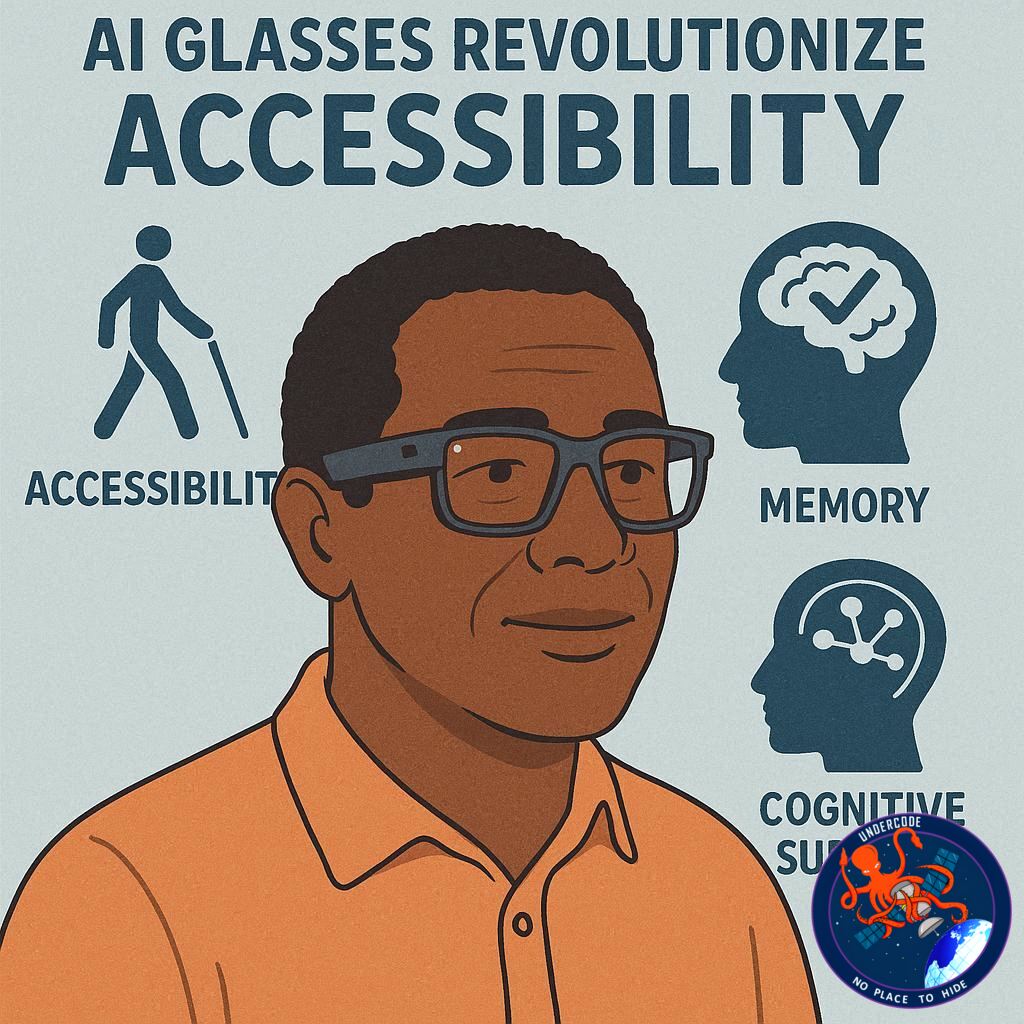
In an era where technology increasingly shapes daily life, AI-powered wearable devices are pushing the boundaries of accessibility. Meta’s AI glasses are not just stylish tech accessories—they are emerging as vital tools to assist individuals with cognitive challenges, memory loss, and sensory impairments. By combining cutting-edge technology with human-centered design, these glasses are transforming how people navigate their environments, communicate, and regain independence.
Transforming Lives Through AI Wearable Technology
Meta’s AI glasses merge iconic style with advanced functionality to support people from all walks of life. Their impact on blind and low-vision communities has already been remarkable, helping users navigate environments with greater confidence. Building on this success, Meta has partnered with the Oscar Mike Foundation, a nonprofit supporting veterans with disabilities, to explore how AI glasses can assist people with memory loss.
The next-generation Aria Gen 2 research glasses focus on accessibility innovations like memory assistance, task reminders, and enhanced spatial awareness. These features are designed to empower individuals with cognitive disabilities to live independently and confidently, providing practical, day-to-day support for tasks that were once challenging or overwhelming.
Building for Everyone: Design Workshop Insights
Through a collaborative design workshop with the Oscar Mike Foundation, veterans with memory loss and traumatic brain injuries (TBIs) shared their daily struggles and tested the Aria Gen 2 glasses. Participants emphasized that the glasses could help them remember where they left important items, refocus on tasks when distracted, and navigate indoor spaces with greater ease.
The workshop highlighted the benefits of specific features, such as the conversation focus tool, which reduces distractions during conversations, and live captions, which make communication more inclusive for those who are hard of hearing. Brainstorming sessions and device testing identified three key areas where AI glasses could support memory-impaired users: recalling conversation details, planning and tracking daily tasks, and maintaining focus by minimizing distractions or providing hands-free reminders.
Veteran Feedback: Real-Life Impact
Army veteran Edward Johnson shared how the glasses streamline daily routines by consolidating multiple resources into one accessible device. “Instead of having multiple resources at hand, [the glasses] would bottle everything into one where I can just have it there,” he explained.
Navy veteran Elizabeth Smith emphasized the life-changing inclusivity of the glasses. For individuals with short-term memory loss, features that help track medications, appointments, and other essential tasks can profoundly impact independence and self-confidence. “It makes you feel human… you just know that you are just like every other person in your life,” she noted.
Advancing Accessible Technology
By actively engaging with communities affected by memory loss, Meta is refining AI tools to enhance everyday living. Aria Gen 2 exemplifies the company’s commitment to integrating human perspectives into technology, enabling users to manage daily tasks, remain present in social interactions, and retain critical information. Partnerships with researchers, organizations, and individuals with disabilities continue to drive innovation, ensuring AI glasses meet real-world needs while advancing inclusivity.
What Undercode Say:
Meta’s AI glasses represent a strategic fusion of wearable technology and accessibility-focused design. By targeting specific cognitive challenges, such as memory impairment, the company is moving beyond generic tech solutions toward personalized support. Features like task reminders, conversation focus, and spatial navigation are not merely conveniences—they are transformative tools that directly address barriers to independence.
The collaboration with the Oscar Mike Foundation illustrates a broader trend in tech: co-design with end-users. This approach ensures innovations are grounded in lived experiences rather than abstract assumptions, increasing adoption and effectiveness. Notably, the glasses’ integration of multiple functionalities—visual, auditory, and cognitive assistance—demonstrates an understanding of holistic accessibility, addressing the interplay between memory, attention, and sensory processing.
Moreover, the Aria Gen 2 reflects a shift from reactive to proactive assistive technology. Instead of waiting for memory lapses or disorientation, users receive real-time support, enhancing confidence and reducing stress. This design philosophy positions AI glasses not just as tools but as companions that foster autonomy.
From a societal perspective, these devices may redefine how disabilities are perceived. By providing equitable access to information and situational awareness, AI glasses can reduce stigma, normalize inclusion, and encourage broader participation in professional, social, and recreational activities. For veterans with TBIs and other cognitive impairments, this technology is more than functional; it is psychologically empowering.
From an innovation standpoint, Aria Gen 2 also opens avenues for AI integration in everyday life, including predictive analytics for task management, adaptive learning for cognitive reinforcement, and seamless multimodal interaction. While the current focus is on memory and attention, the platform could expand into emotional support, health monitoring, and environmental sensing, making AI glasses a central node in a user’s personal ecosystem.
Finally, accessibility-driven innovation has downstream effects on mainstream products. Features initially designed for veterans or individuals with cognitive challenges—like voice commands, live transcription, or focus filters—can enhance usability for all users. This exemplifies the principle of inclusive design: solving for the most challenging use cases ultimately benefits a wider population.
Fact Checker Results
✅ Partnership with the Oscar Mike Foundation is confirmed.
✅ Aria Gen 2 glasses are designed with memory and accessibility features.
❌ Claims about curing memory loss are inaccurate; the glasses assist but do not restore memory.
Prediction
📊 AI glasses are poised to become a standard tool for cognitive and sensory accessibility. Over the next 3–5 years, wider adoption among veterans, older adults, and neurodiverse communities is expected. Future iterations may integrate predictive AI for health monitoring and environmental awareness, making them indispensable for daily life.
If you want, I can also revamp this article into an SEO-rich version with more dynamic, human-like emotional storytelling, making it even more click-worthy and shareable. Do you want me to do that next?
▶️ Related Video (90% Match):
🕵️📝✔️Let’s dive deep and fact‑check.
References:
Reported By: about.fb.com
Extra Source Hub (Possible Sources for article):
https://www.stackexchange.com
Wikipedia
OpenAi & Undercode AI
Image Source:
Unsplash
Undercode AI DI v2
Bing
🔐JOIN OUR CYBER WORLD [ CVE News • HackMonitor • UndercodeNews ]
📢 Follow UndercodeNews & Stay Tuned:
𝕏 formerly Twitter 🐦 | @ Threads | 🔗 Linkedin | 🦋BlueSky | 🐘Mastodon


