
Listen to this Post
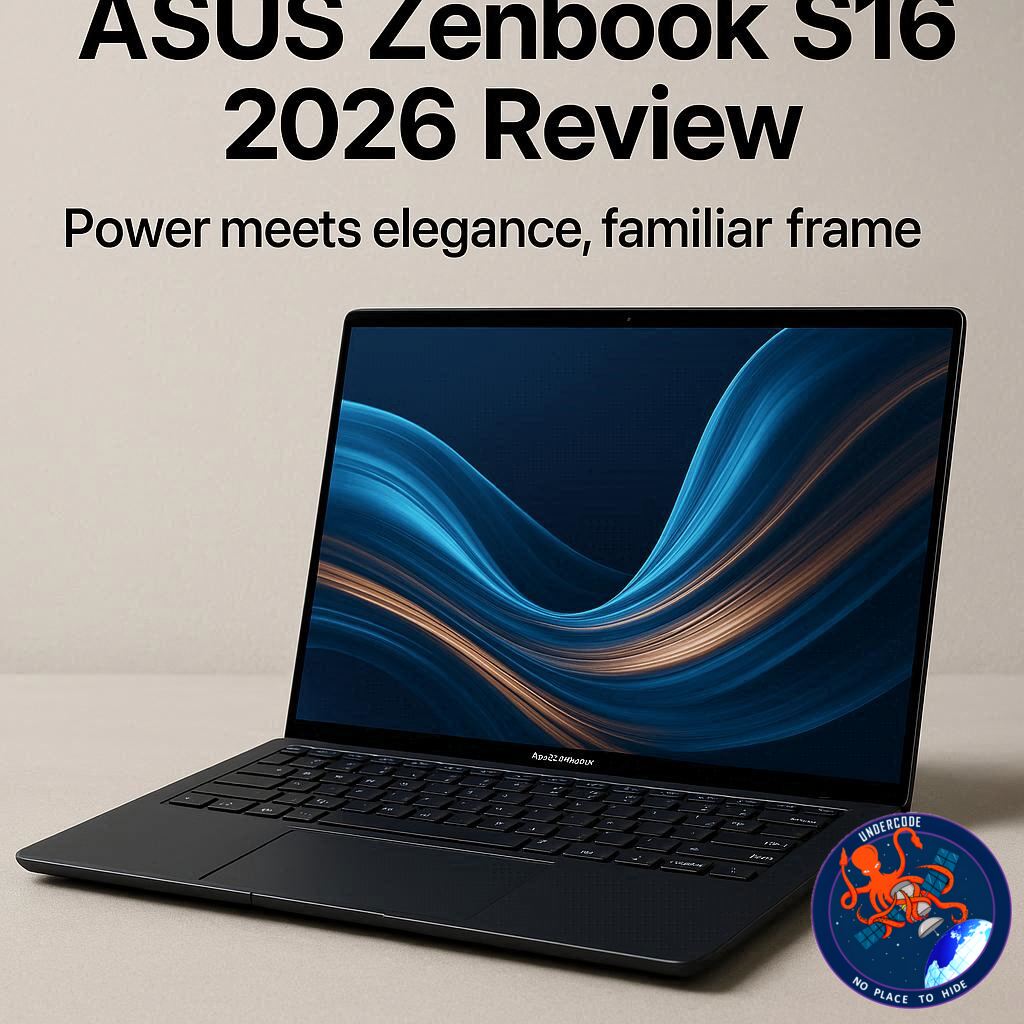
The Asus Zenbook S16 returns in 2026 with a design that will feel instantly familiar to anyone who has seen last year’s model. At first glance, it’s hard to spot the difference—same sleek Ceraluminum body, 1.1 cm thin profile, and two understated color options. Yet, beneath that familiar exterior, Asus has made significant upgrades that promise to transform daily computing, from faster memory and refined thermals to the introduction of AMD’s latest Zen 5 silicon. At a price of roughly $2,050 USD (Rs 1,69,990), expectations are high—and the Zenbook S16 seems poised to meet them.
Familiar Design That Still Impresses
The standout feature of the Zenbook S16 remains its Ceraluminum chassis. Three years after first encountering this textured, almost ceramic-like surface, it continues to feel distinctive, resisting fingerprints and scuffs while remaining light at 1.5 kg for a 16-inch laptop. The build quality is robust, the hinge firm, and the Scandinavian White color remains crisp and refined. While only two color options are available, a darker variant could make this design-forward flagship even more striking.
OLED Display Excellence
The 16-inch 3K Lumina OLED screen has seen no changes—and none were necessary. With Delta E calibration under 1, True Black HDR support, and touch functionality, the display continues to outperform most IPS competitors. Asus reinforces confidence with a burn-in warranty that promises free screen replacement during the coverage period, a rare gesture in the OLED laptop market.
Zen 5 Power Under the Hood
The real star of the refresh is AMD’s Ryzen AI 9 465 processor, built on the Zen 5 architecture. Coupled with 32 GB of LPDDR5X memory and a 1 TB PCIe 4.0 SSD, the laptop handles real-world workloads with ease—be it multitasking across Chrome, Slack, documents, and light photo editing. The enhanced cooling system allows a sustained 28W power envelope, surpassing most ultraportables that top out around 15W. This is achieved through dual fans, a 0.7 mm vapor chamber, and 3,522 geometric vents across the keyboard deck, combining engineering prowess with aesthetic appeal.
Efficient Cooling and Battery Performance
Despite the power boost, the Zenbook S16 remains quiet during regular usage. Its 83 Wh battery has been holding up well, although further testing will determine whether it can last a full workday with the OLED display active. The laptop also includes an NPU for AI tasks and Copilot+ PC readiness, future-proofing the machine even if current AI software remains largely experimental.
Daily Use Highlights
Practicality is another key strength. The keyboard provides satisfying travel and feedback for extended typing sessions, the six-speaker Dolby Atmos setup delivers clear audio for calls and casual streaming, and the laptop is well-equipped with ports including USB4, HDMI, USB-A, SD card slot, and a headphone jack. Wi-Fi 7 support and USB-C charging—even via a power bank—round out the package.
Early Impressions
In a few days of testing, the Zenbook S16 shows that Asus made the right decisions. Instead of chasing a flashy redesign, the company improved the hardware and fine-tuned the cooling system, delivering a laptop that performs confidently without drawing unnecessary attention. Long-term questions remain regarding sustained thermals and battery longevity, but the initial experience is promising.
What Undercode Say:
The 2026 Zenbook S16 illustrates a shift in Asus’ strategy from aesthetic novelty to technical refinement. By retaining the same iconic design, Asus signals confidence in a form factor that already differentiates itself in a crowded market. The Ceraluminum chassis continues to excel in durability, texture, and premium appeal, proving that design longevity can be as compelling as cutting-edge looks.
The OLED display remains a segment leader, not because of raw specifications alone, but due to Asus’ attention to real-world concerns such as burn-in and color fidelity. This focus on functional longevity alongside visual quality reinforces Asus’ brand as thoughtful rather than purely trendy.
Zen 5 architecture is where the refresh truly shines. Sustained 28W performance in a 1.1 cm thin chassis is remarkable, demonstrating Asus’ thermal innovation. The integration of a dual-fan system, vapor chamber, and thousands of geometric vents reflects a careful engineering approach that balances performance, noise, and aesthetics. In practical terms, this means the laptop doesn’t throttle under the demands of multitasking—a critical consideration for power users and professionals.
Memory and storage choices, while fast, show some limitations. LPDDR5X memory is soldered, offering no upgrade path, and PCIe 4.0 SSDs, though sufficient, are already behind the curve compared to PCIe 5.0. Nevertheless, the combination supports typical professional workloads comfortably, indicating that Asus has accurately calibrated performance for mainstream creators rather than niche enthusiasts.
The inclusion of AI capabilities via an NPU is forward-thinking. While Windows AI integration remains largely experimental, having the hardware ready ensures the Zenbook S16 is not obsolete when software catches up. This reflects a strategic move by Asus to future-proof its flagship offering.
Other refinements—keyboard feel, audio output, and port variety—highlight a holistic design philosophy. Asus balances premium aesthetics with practical daily usability, avoiding compromises common in thin-and-light laptops. USB4 and HDMI, paired with SD card access and Wi-Fi 7, create an ecosystem-ready laptop capable of seamless integration into modern workflows.
Battery life remains an open question, particularly with the OLED display engaged at peak brightness. Early reports suggest reasonable endurance, but extended use will reveal the laptop’s true stamina. The ability to charge over USB-C, including via power bank, mitigates some anxiety about running out of power, but real-world performance in intensive scenarios will be decisive.
In terms of market positioning, the Zenbook S16 continues to blend elegance and power. It does not reinvent the ultrabook but refines it intelligently, creating a device that feels both current and enduring. Asus’ restraint in avoiding unnecessary design changes allows the machine’s engineering and performance to take center stage.
Overall, the Zenbook S16 reflects a broader trend in premium laptops: the convergence of thoughtful industrial design, advanced thermal management, and future-ready hardware. Asus has prioritized user experience over gimmicks, delivering a laptop that performs reliably, looks polished, and remains practical for professional users. The quiet confidence of this device—rather than flashy upgrades—may well be its strongest selling point.
Fact Checker Results:
✅ Ceraluminum chassis is durable and fingerprint-resistant.
✅ 16-inch 3K Lumina OLED display features Delta E <1 and True Black HDR.
❌ PCIe 5.0 SSD support is not included; it uses PCIe 4.0.
Prediction 📊
The Zenbook S16 is poised to strengthen Asus’ foothold in the premium ultrabook segment. Its combination of Zen 5 performance, OLED excellence, and thermal innovation suggests it will appeal to content creators and professionals seeking a balance of power and portability. Expect the AI-ready features to gain more relevance as Windows integrates Copilot+ tools, potentially extending the device’s useful lifecycle well beyond typical ultrabooks.
🕵️📝✔️Let’s dive deep and fact‑check.
References:
Reported By: timesofindia.indiatimes.com
Extra Source Hub (Possible Sources for article):
https://www.instagram.com
Wikipedia
OpenAi & Undercode AI
Image Source:
Unsplash
Undercode AI DI v2
Bing
🔐JOIN OUR CYBER WORLD [ CVE News • HackMonitor • UndercodeNews ]
📢 Follow UndercodeNews & Stay Tuned:
𝕏 formerly Twitter 🐦 | @ Threads | 🔗 Linkedin | 🦋BlueSky | 🐘Mastodon


