
Listen to this Post
Introduction: A Digital Heist Targeting Centuries of Human History
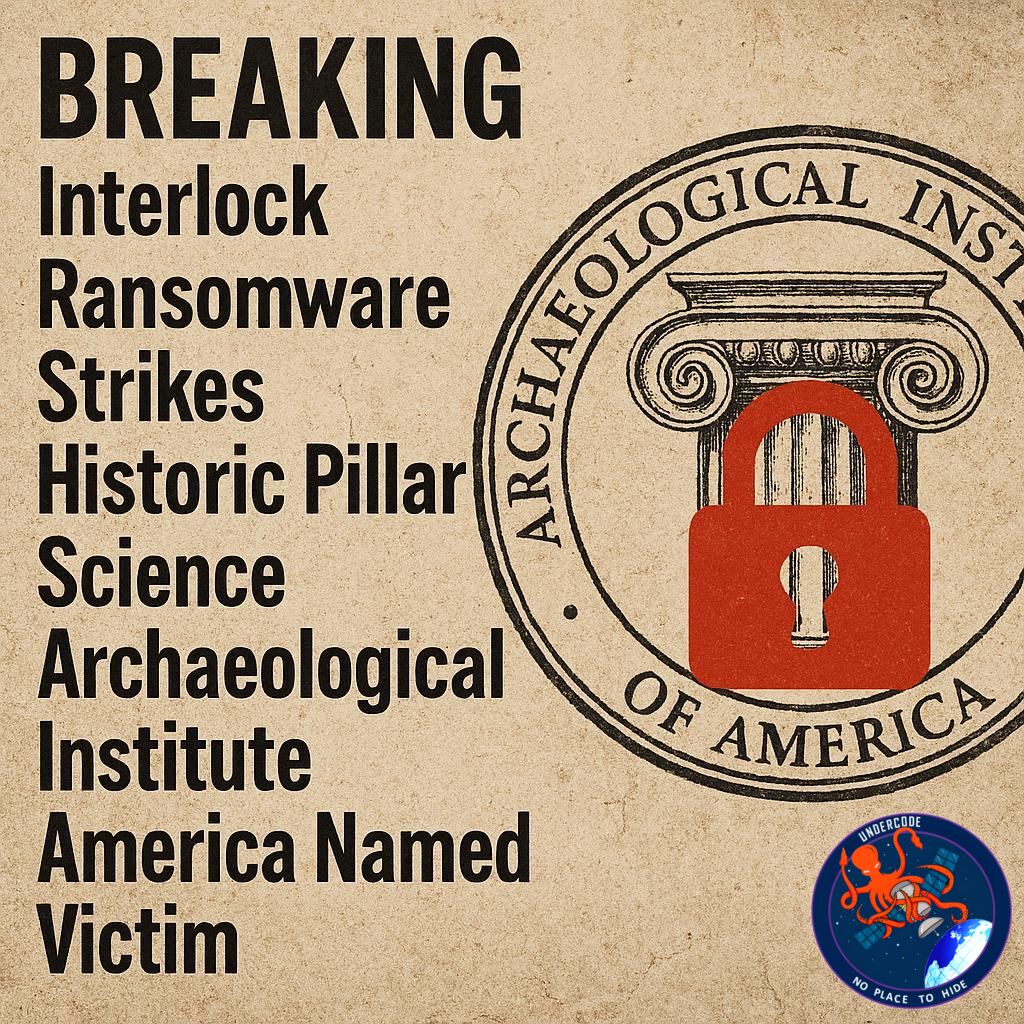
A new ransomware incident is sending shockwaves through the academic and cultural heritage community. Cybercriminals operating under the Interlock ransomware banner have allegedly targeted the Archaeological Institute of America, one of the world’s oldest and most respected organizations dedicated to archaeological research and preservation. The claim surfaced through dark web monitoring and threat intelligence reporting, highlighting once again how ransomware groups are expanding their scope beyond corporations into institutions that safeguard human history.
the Incident: What We Know So Far
According to intelligence shared by the ThreatMon Threat Intelligence Team, the Interlock ransomware group has publicly listed the Archaeological Institute of America (AIA) as one of its latest victims. The disclosure appeared on February 13, 2026, at approximately 5:02 PM UTC, following monitoring of ransomware-related activity on dark web leak sites.
Interlock is believed to have used its usual playbook: infiltrating internal systems, extracting sensitive data, and then publishing the victim’s name as leverage for extortion. While no detailed dataset or proof-of-leak has been released publicly at this stage, the inclusion of AIA on the group’s victim list suggests at least partial network compromise.
The detection was attributed to ThreatMon, a cybersecurity intelligence platform known for tracking indicators of compromise (IOCs), command-and-control (C2) infrastructure, and ransomware group operations across underground forums and leak sites. Their platform flagged the listing as part of ongoing ransomware activity tied to Interlock.
At the time of reporting, the Archaeological Institute of America had not issued a public statement confirming or denying the breach. There is also no verified information yet on whether personal data, research archives, donor records, or internal communications were accessed or exfiltrated.
This incident underscores a growing pattern in which ransomware groups increasingly target nonprofits, academic institutions, and cultural organizations—entities often rich in valuable data but comparatively under-resourced in cybersecurity defenses.
What Undercode Say:
The alleged attack on the Archaeological Institute of America is symbolically significant, even beyond its immediate cybersecurity implications. Ransomware groups traditionally focused on enterprises with clear revenue streams, but recent years show a strategic shift toward institutions where reputational pressure can be just as powerful as financial leverage.
Academic and research organizations like AIA often store decades of unpublished research, excavation data, peer correspondence, grant documentation, and donor information. While such data may not seem lucrative at first glance, it holds immense value—both academically and emotionally. The threat of destroying or leaking irreplaceable research can be a powerful extortion tool.
Interlock’s choice of target may also reflect opportunistic reconnaissance. Nonprofits frequently rely on legacy systems, limited IT staff, and trust-based collaboration models, making them softer targets compared to hardened financial or tech firms. Even basic security gaps—unpatched servers, reused credentials, or exposed remote access services—can open the door to a full-scale ransomware incident.
Another critical angle is reputational risk. For an institution built on credibility, trust, and scholarly integrity, even the perception of a data breach can have lasting consequences. Granting bodies, academic partners, and donors may demand reassurances, audits, and transparency, all of which consume time and resources long after the technical incident is resolved.
From a broader threat landscape perspective, this case fits into a worrying trend: ransomware is no longer just a financial crime, but a form of digital coercion that threatens knowledge preservation itself. When attackers target institutions dedicated to history, science, or culture, the collateral damage extends far beyond balance sheets.
If confirmed, this incident should serve as a wake-up call for research institutions worldwide. Cybersecurity can no longer be treated as a secondary concern or an IT-only issue—it is now inseparable from institutional resilience, mission continuity, and public trust.
🔍 Fact Checker Results
✅ Interlock is an active ransomware group known for naming victims on leak sites.
✅ ThreatMon actively monitors dark web ransomware activity and victim disclosures.
❌ No public confirmation yet from the Archaeological Institute of America regarding data theft or ransom demands.
📊 Prediction
The Interlock group is likely to escalate pressure by releasing partial data samples if negotiations stall. More academic and nonprofit institutions may appear on ransomware victim lists in 2026 as attackers increasingly exploit underfunded security environments.
🕵️📝✔️Let’s dive deep and fact‑check.
References:
Reported By: x.com
Extra Source Hub (Possible Sources for article):
https://www.instagram.com
Wikipedia
OpenAi & Undercode AI
Image Source:
Unsplash
Undercode AI DI v2
Bing
🔐JOIN OUR CYBER WORLD [ CVE News • HackMonitor • UndercodeNews ]
📢 Follow UndercodeNews & Stay Tuned:
𝕏 formerly Twitter 🐦 | @ Threads | 🔗 Linkedin | 🦋BlueSky | 🐘Mastodon


