
Listen to this Post
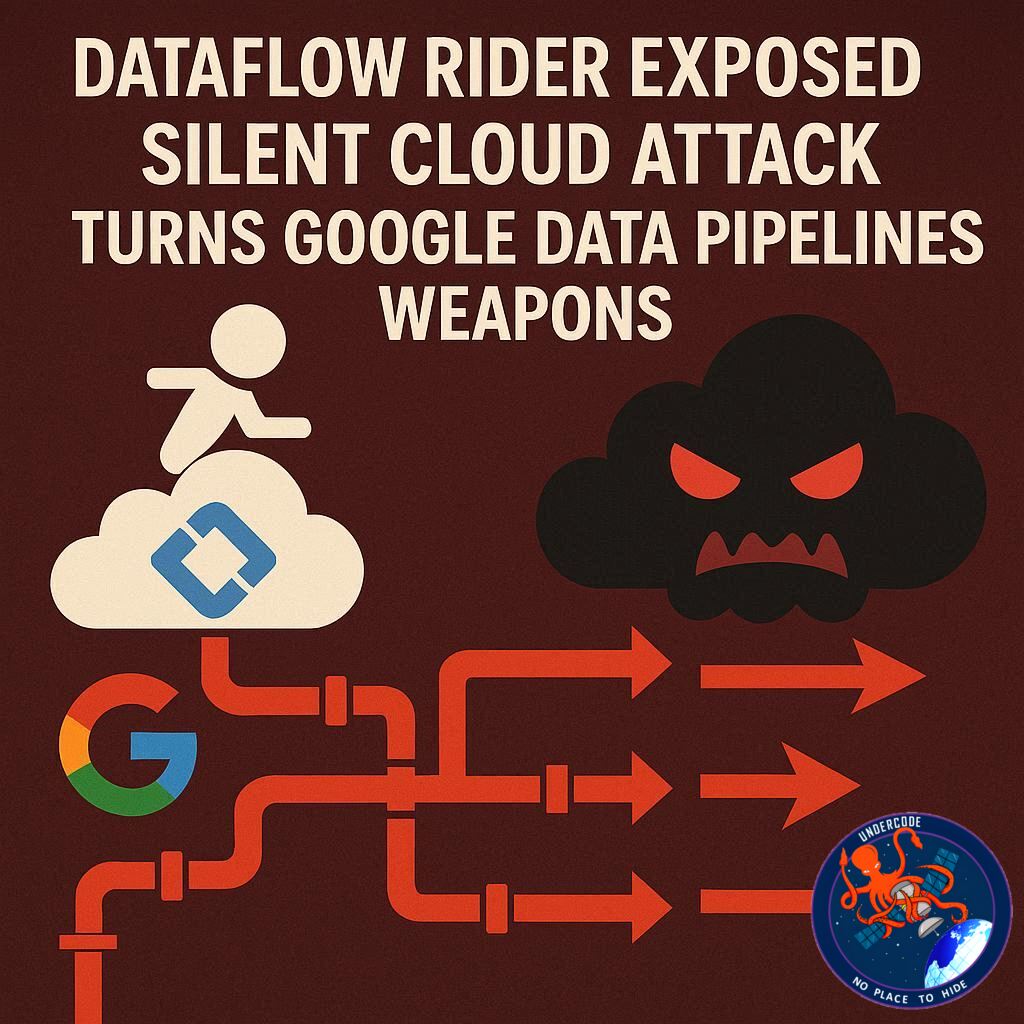
Introduction: A New Cloud Threat Slips Under the Radar
Cloud infrastructure is often treated as a fortress—scalable, resilient, and secure by design. But a newly disclosed attack technique proves that even managed cloud services can become powerful tools for attackers when misconfigurations and access assumptions collide. Security researchers have revealed Dataflow Rider, a stealthy attack that abuses trusted cloud mechanics to hijack data pipelines from the inside, transforming legitimate services into conduits for espionage, credential theft, and lateral movement across cloud environments.
the Original Report
Varonis has disclosed a novel cloud attack technique dubbed Dataflow Rider, targeting environments that rely on Google’s managed data processing services. The attack hinges on a surprisingly simple but dangerous premise: if an attacker gains write access to a Google Cloud Storage bucket, they may be able to manipulate how downstream data processing jobs behave.
The attack specifically abuses integrations between Google Cloud Storage and Google Dataflow, a service widely used for large-scale data analytics and ETL workloads. In many real-world deployments, Dataflow pipelines automatically ingest files placed into storage buckets, assuming that anything written there is trusted.
By injecting malicious or specially crafted files into these buckets, attackers can effectively hijack active Dataflow jobs. Once compromised, these pipelines can be coerced into leaking sensitive data, exposing service account credentials, or executing unintended logic that benefits the attacker. Because the activity occurs within legitimate cloud services, traditional security tools may fail to flag the behavior as suspicious.
According to the report, the consequences extend far beyond simple data exposure. A successful Dataflow Rider attack can enable credential compromise, allowing attackers to pivot deeper into the cloud environment. From there, they may move laterally into other services, escalate privileges, and quietly map an organization’s cloud infrastructure without triggering alarms.
What makes the threat particularly dangerous is its low-noise nature. No malware is required, no exploit code is dropped, and no perimeter defenses are directly breached. Instead, the attacker abuses trust relationships already baked into cloud workflows. The disclosure highlights how cloud-native attacks are increasingly about abusing design assumptions, not breaking software.
What Undercode Say:
Why Dataflow Rider Signals a Bigger Shift in Cloud Attacks
Dataflow Rider is less about a single vulnerability and more about a mindset shift in offensive cloud security. Attackers are no longer obsessed with zero-days alone; they are studying how cloud services are meant to work—and then twisting that logic against defenders. This attack demonstrates how write access, often considered low-risk compared to admin permissions, can become devastating in the right context.
The Hidden Risk of “Trusted” Automation
Modern cloud architectures thrive on automation. Files appear in a bucket, pipelines process them automatically, dashboards update in real time. But automation without strict validation is a gift to adversaries. Dataflow Rider shows that when ingestion pipelines lack strong integrity checks, the cloud effectively becomes an execution environment for attacker-controlled inputs.
Why Detection Is So Hard
Traditional security monitoring focuses on external threats: unusual IP addresses, malware signatures, or suspicious binaries. Dataflow Rider operates entirely inside trusted services, using legitimate APIs and identities. To a security team, it may look like normal data processing activity—until sensitive data starts quietly leaking out.
Service Accounts: The Real Crown Jewels
One of the most alarming aspects of the attack is its potential to expose service account credentials. In cloud environments, these accounts often have broad permissions and limited oversight. Once compromised, they can act as master keys, enabling attackers to explore databases, message queues, and even production workloads.
Misconfigurations as an Attack Surface
The attack reinforces a harsh reality: cloud breaches increasingly start with misconfigurations, not exploits. Overly permissive bucket access, weak IAM boundaries, and assumptions about internal trust are all ingredients attackers rely on. Dataflow Rider simply connects the dots in a way many organizations never anticipated.
Why This Matters Beyond Google Cloud
While the technique was demonstrated in Google Cloud environments, the underlying concept is cloud-agnostic. Any platform where storage triggers automated processing jobs could be vulnerable to similar abuse. This makes Dataflow Rider a blueprint, not just a one-off attack.
What Defenders Should Rethink
Security teams must move beyond “who can access what” and start asking “what happens after access is granted.” Input validation, strict separation of duties, and continuous monitoring of pipeline behavior are no longer optional. Cloud-native threats demand cloud-native threat models.
Fact Checker Results
✅ Varonis did disclose a cloud attack technique named Dataflow Rider.
✅ The attack abuses write access to cloud storage integrated with Dataflow pipelines.
✅ The reported risks include data theft, credential exposure, and lateral movement.
📊 Prediction
Dataflow Rider is likely just the beginning of a wave of pipeline-centric cloud attacks. As organizations double down on automation and serverless data processing, attackers will increasingly target the invisible glue between services. In the near future, cloud security incidents will be less about breached servers—and more about poisoned workflows quietly doing exactly what they were told to do.
🕵️📝✔️Let’s dive deep and fact‑check.
References:
Reported By: x.com
Extra Source Hub (Possible Sources for article):
https://www.twitter.com
Wikipedia
OpenAi & Undercode AI
Image Source:
Unsplash
Undercode AI DI v2
Bing
🔐JOIN OUR CYBER WORLD [ CVE News • HackMonitor • UndercodeNews ]
📢 Follow UndercodeNews & Stay Tuned:
𝕏 formerly Twitter 🐦 | @ Threads | 🔗 Linkedin | 🦋BlueSky | 🐘Mastodon


