
Listen to this Post
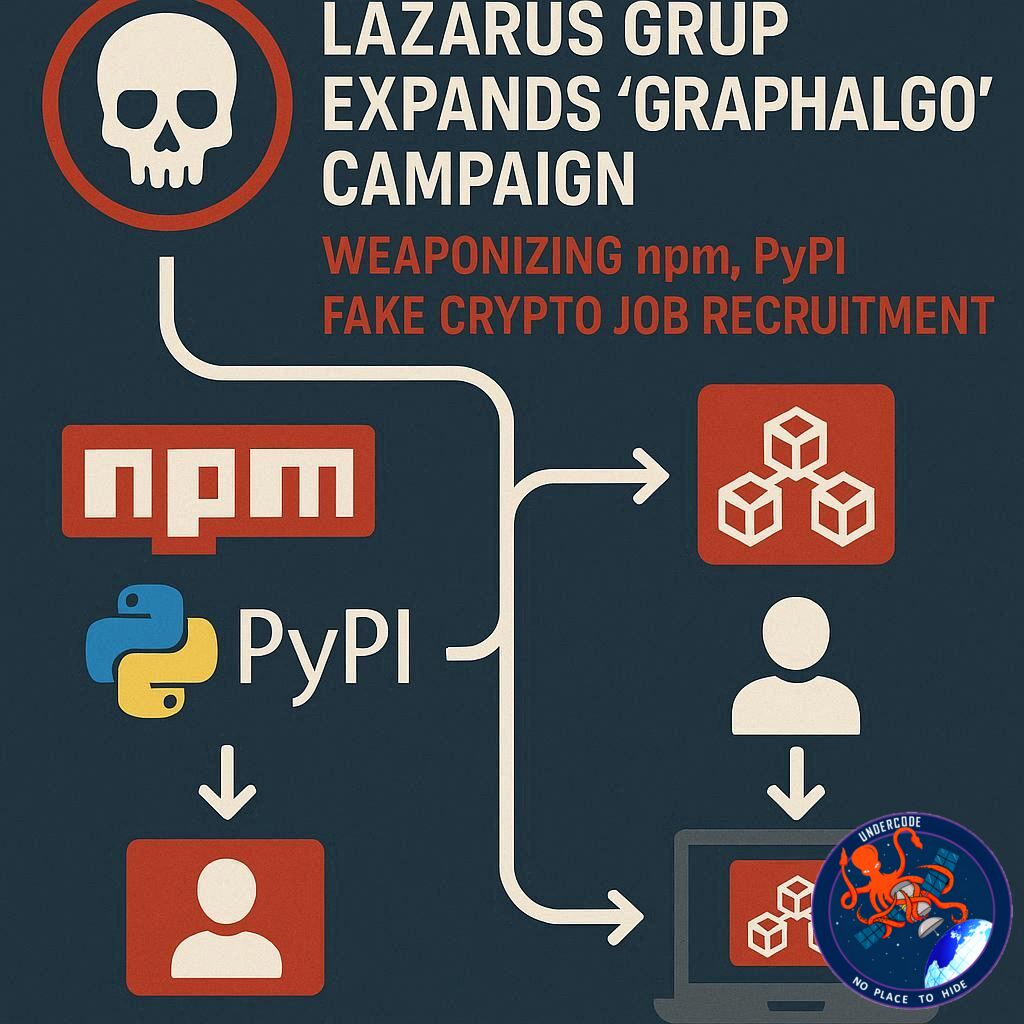
The global software supply chain is once again under siege, and this time the attack hides behind the promise of a dream job. Security researchers have uncovered a calculated operation targeting developers through fraudulent cryptocurrency recruitment campaigns. Behind the polished LinkedIn messages and seemingly legitimate coding challenges lies a sophisticated malware distribution network linked to the North Korea–associated Lazarus Group. The campaign, dubbed Graphalgo, reveals how modern cyber-espionage blends social engineering, open-source trust, and modular malware architecture into a single strategic weapon.
Discovery of the Graphalgo Campaign and Its Timeline
Researchers at ReversingLabs identified a new branch of an ongoing fake recruiter campaign attributed to the Lazarus Group. The operation, named Graphalgo after one of its initial malicious npm packages, has been active since May 2025. It represents yet another evolution in the group’s persistent attempts to infiltrate the software supply chain by exploiting developer ecosystems.
Targeting Developers Through Professional Networking Platforms
The attackers approached victims primarily through professional and community platforms such as LinkedIn, Facebook, and Reddit. Posing as recruiters from a blockchain investment firm, they invited developers to complete technical interview tasks. The outreach appeared credible, often using convincing profiles and realistic job descriptions centered around cryptocurrency development.
Fake Blockchain Company as Operational Front
At the core of the deception was a fabricated blockchain firm called Veltrix Capital. The entity maintained professional-looking websites and GitHub organizations, carefully designed to appear authentic. Yet scrutiny revealed missing leadership information, shallow corporate details, and AI-generated content. When exposure risk increased, operators simply rotated to new domains and brand identities, preserving the campaign’s longevity.
Weaponized Interview Repositories on GitHub
The so-called interview assignments were hosted on GitHub and written in JavaScript or Python. At first glance, these repositories appeared to be harmless algorithmic tasks. Hidden within the project dependencies, however, were malicious packages designed to execute upon installation. Candidates who downloaded and ran the code unknowingly activated malware on their own development environments.
Abuse of npm and PyPI Ecosystems
The backend of the campaign relied on poisoned open-source packages uploaded to npm and PyPI. Early versions used “graph-” prefixed packages that imitated legitimate libraries. Later, attackers deployed “big-” prefixed packages that built credibility by functioning normally before introducing malicious updates. One npm package, bigmathutils, surpassed 10,000 downloads before receiving a compromised update, demonstrating how trust can be cultivated before exploitation.
Multi-Phase Modular Attack Architecture
Graphalgo follows a carefully layered design. First, attackers construct a credible front organization. Second, they release interview tasks linked to malicious dependencies. Third, they recruit victims across multiple platforms. Fourth, they deploy staged malware updates through open-source repositories. Finally, the infection culminates in the delivery of a remote access trojan capable of file manipulation, command execution, and process control.
Sophisticated Remote Access and Crypto-Focused Targeting
Once executed, the malware retrieves a remote access trojan that communicates with command-and-control servers using token-protected channels. It also scans for cryptocurrency wallets, including MetaMask, indicating financial motives alongside espionage objectives. The combination of encrypted payloads, delayed activation, and modular switching infrastructure underscores a level of planning rarely seen in amateur cybercrime.
Historical Pattern of Lazarus Supply Chain Attacks
The Lazarus Group has a documented history of exploiting npm and PyPI. Previous campaigns, such as VMConnect in 2023, leveraged fake repositories and malicious packages to infect developers. Subsequent evolutions involved deceptive coding challenges disguised as recruitment processes. Other cybersecurity firms, including Phylum, Palo Alto Networks Unit 42, Veracode, and Socket, have documented similar tactics across npm ecosystems.
Attribution Indicators and State-Sponsored Characteristics
Attribution to Lazarus is supported by recurring operational fingerprints. These include fake crypto recruitment themes, multistage encrypted malware, delayed malicious updates, command-and-control servers protected by authentication tokens, and timestamps aligned with GMT+9, corresponding to North Korean time zones. The modular campaign structure allows operators to replace exposed recruitment fronts while maintaining consistent backend infrastructure, suggesting state-backed resilience and funding.
What Undercode Say:
The Graphalgo campaign illustrates a dangerous truth about modern cybersecurity. The open-source ecosystem thrives on trust, speed, and collaboration. That same openness has become its weakest link. Developers routinely install packages without deep inspection, assuming community vetting will filter malicious code. Lazarus understands this psychology better than many defenders do.
By targeting developers rather than end users, attackers position themselves upstream in the software supply chain. A single compromised developer environment can cascade into corporate networks, production systems, or even customer-facing applications. This is not random hacking. It is strategic infiltration.
The fake recruiter narrative is particularly effective because it weaponizes ambition. Developers seeking career growth are less suspicious when approached with lucrative blockchain opportunities. Cryptocurrency themes amplify the appeal, especially in a market still driven by speculation and rapid innovation. The attackers are not merely distributing malware; they are engineering emotional manipulation.
Another striking element is the patience demonstrated in package management. Publishing a benign package, allowing it to accumulate thousands of downloads, then introducing malicious code in a later update reveals disciplined long-term planning. It contradicts the stereotype of chaotic cybercrime. This resembles intelligence tradecraft.
The modular architecture ensures operational continuity. If one fake company collapses, another appears. If one package is removed, new ones surface. Backend infrastructure persists beneath shifting facades. This resilience mirrors military doctrine, where redundancy and adaptability are core principles.
The scanning for cryptocurrency wallets like MetaMask signals financial motivation intertwined with espionage. North Korea has repeatedly leveraged cyber operations to generate revenue under sanctions pressure. Cryptocurrency theft provides liquidity without traditional banking oversight. Attacking developers in blockchain ecosystems aligns perfectly with that strategy.
The broader implication is unsettling. Package managers such as npm and PyPI are foundational to modern development. Nearly every web or cloud application depends on them. When these ecosystems are infiltrated, the ripple effect can extend globally within hours. The software supply chain becomes an invisible battlefield.
Security controls must evolve accordingly. Static code review is insufficient when malware activates through delayed updates. Organizations must monitor dependency changes, enforce strict version pinning, and adopt zero-trust principles even within development environments. Continuous verification should replace blind reliance on community popularity metrics.
The campaign also highlights the role of AI-generated content in building deceptive credibility. Fake websites, fabricated corporate biographies, and synthetic marketing materials reduce operational cost while increasing scale. State-sponsored actors can now spin up convincing digital identities within days.
Ultimately, Graphalgo is not just another malware campaign. It is a blueprint for future cyber operations. It demonstrates how geopolitical actors exploit professional networking, open-source ecosystems, and cryptocurrency incentives simultaneously. The intersection of these domains forms a new attack surface, one that defenders have yet to fully secure.
The question is no longer whether supply chain attacks will continue. It is how deeply they will embed themselves before defensive frameworks catch up.
Fact Checker Results
✅ The campaign has been active since May 2025 and targets npm and PyPI ecosystems.
✅ Fake recruiter tactics and crypto-focused lures align with documented Lazarus methodologies.
❌ There is no public evidence confirming Veltrix Capital as a legitimate blockchain company.
Prediction
🔮 Supply chain attacks leveraging fake recruitment will increase as state-backed actors refine social engineering.
📈 Open-source repositories will implement stricter package verification and anomaly detection mechanisms.
💰 Cryptocurrency-focused malware operations linked to North Korean groups are likely to intensify under ongoing sanctions pressure.
🕵️📝✔️Let’s dive deep and fact‑check.
References:
Reported By: securityaffairs.com
Extra Source Hub (Possible Sources for article):
https://www.quora.com/topic/Technology
Wikipedia
OpenAi & Undercode AI
Image Source:
Unsplash
Undercode AI DI v2
Bing
🔐JOIN OUR CYBER WORLD [ CVE News • HackMonitor • UndercodeNews ]
📢 Follow UndercodeNews & Stay Tuned:
𝕏 formerly Twitter 🐦 | @ Threads | 🔗 Linkedin | 🦋BlueSky | 🐘Mastodon


