
Listen to this Post
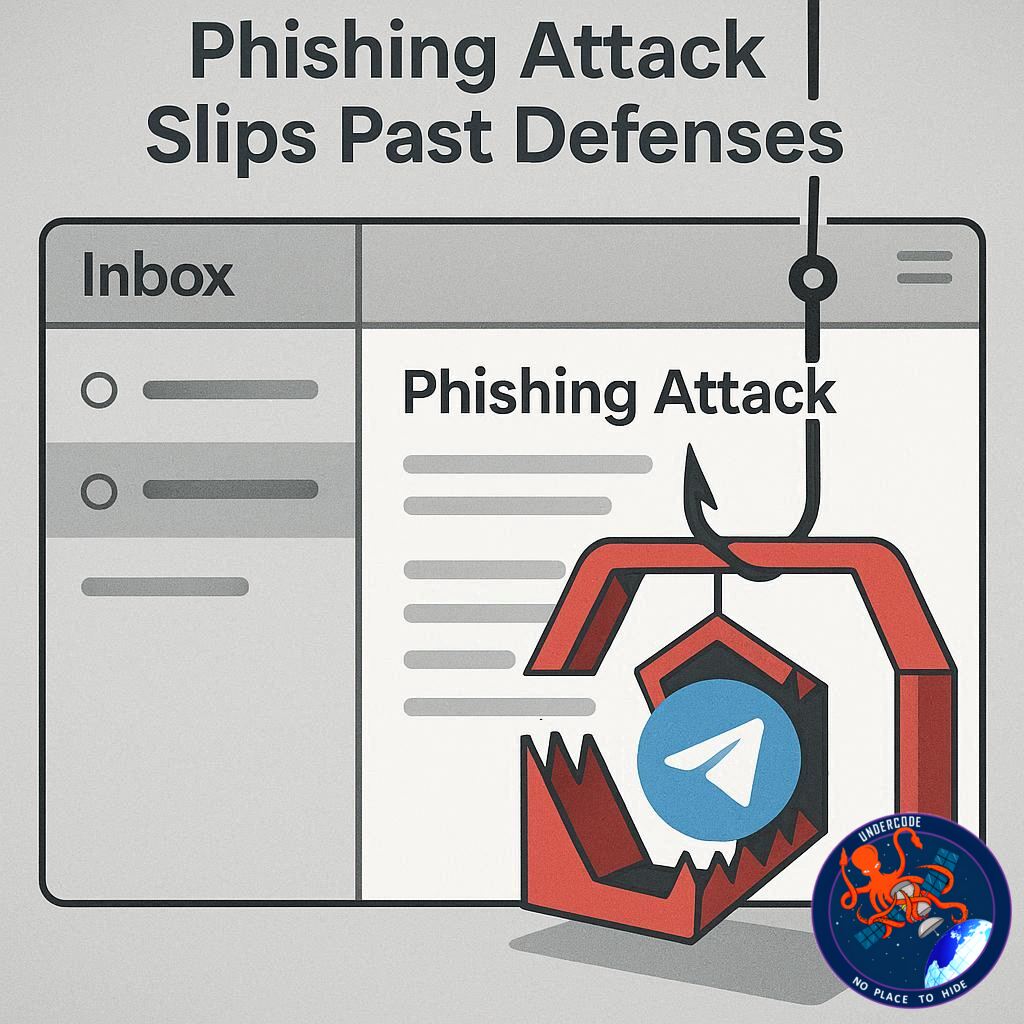
Introduction: A Silent Breach Hiding in Plain Sight
A seemingly routine internal email has exposed a growing blind spot in corporate cybersecurity. In a recent incident highlighted by threat researchers, attackers leveraged email spoofing, an HTML-based phishing attachment, and the Telegram Bot API to quietly harvest credentials and exfiltrate data. The attack underscores how modern phishing campaigns are evolving—becoming more adaptive, stealthy, and effective at bypassing traditional detection tools.
The Original Incident at a Glance
The attack was first shared by Cybersecurity News Everyday via a post referencing research published on HendryAdrian.com. While brief, the disclosure reveals a layered phishing operation designed to mimic trusted internal communication channels.
How the Phishing Email Was Crafted
The attackers spoofed an internal sender, making the email appear as if it originated from within the organization. This tactic exploits employee trust and increases the likelihood that recipients will open the message without suspicion.
The Role of the HTML Attachment
Instead of linking to an external phishing site, the email carried an HTML attachment. Once opened, the file rendered a fake login page locally, reducing reliance on external URLs that are more easily flagged by email security gateways.
Fake Login Page, Real Consequences
The counterfeit login page was designed to closely resemble a legitimate internal authentication portal. Unsuspecting users who entered their credentials effectively handed over access keys to the attackers.
Credential Harvesting in Real Time
As soon as credentials were entered, they were captured and prepared for exfiltration. The process was automated, ensuring minimal delay between user interaction and data theft.
Exfiltration via Telegram Bot API
Rather than using traditional command-and-control servers, the attackers routed stolen data through the Telegram Bot API to an attacker-controlled bot. This choice blends malicious traffic with legitimate messaging platform activity, making detection significantly harder.
Why Telegram Is Attractive to Attackers
Telegram offers ease of setup, encrypted communications, and global accessibility. For attackers, it provides a low-cost, resilient channel for data exfiltration that often flies under the radar of corporate monitoring tools.
Minimal Footprint, Maximum Impact
By avoiding obvious malware payloads and using trusted platforms, the attack left few forensic artifacts. This “living-off-the-land” style approach reduces the chances of immediate discovery.
Broader Implications for Email Security
This incident highlights a shift away from noisy phishing campaigns toward precision-targeted attacks that exploit human trust and overlooked technical gaps, such as insufficient HTML attachment inspection.
Detection Challenges for Security Teams
Many email security solutions focus heavily on URL analysis and executable attachments. HTML files, especially those without external links, may receive less scrutiny—creating an opening for abuse.
Lessons for Organizations
Employees remain a critical line of defense. Without regular training on emerging phishing techniques, even well-protected networks can be compromised by a single convincing email.
What Undercode Say:
Adaptive Phishing Is the New Normal
This attack is not an outlier—it represents the maturation of phishing into a highly adaptive threat vector. Attackers are clearly studying enterprise defenses and adjusting tactics accordingly.
Trust Exploitation Beats Technical Exploits
Rather than breaking systems, the attackers broke assumptions. By impersonating an internal sender, they bypassed skepticism and turned routine workflow into an attack surface.
HTML Attachments Are Underrated Risks
HTML attachments are often treated as benign, yet they can fully replicate phishing websites offline. Security policies that ignore this format are increasingly outdated.
Messaging Platforms as Covert Channels
Using Telegram for data exfiltration reflects a broader trend: attackers are co-opting mainstream platforms to mask malicious activity. Blocking such services outright is rarely practical, forcing defenders to rethink monitoring strategies.
Email Authentication Alone Is Not Enough
Technologies like SPF, DKIM, and DMARC help, but they are not foolproof—especially when misconfigured or when attackers exploit internal forwarding and display-name spoofing.
The Human Factor Remains Central
No amount of tooling can fully compensate for a lack of user awareness. Regular, realistic phishing simulations are essential to reduce click-through and credential submission rates.
Incident Response Must Assume Credential Loss
Organizations should plan as if credentials will eventually be compromised. Rapid detection, forced resets, and conditional access controls can limit the blast radius.
Telegram Traffic Deserves Visibility
Security teams should consider adding contextual monitoring for API usage tied to messaging platforms, especially when such traffic originates from endpoints handling sensitive data.
This Attack Signals Strategic Patience
The simplicity of the technique suggests confidence. Attackers no longer need complex malware when subtle social engineering achieves the same—or better—results.
A Warning Shot for 2026
As phishing continues to evolve, defenders must adapt just as quickly. Ignoring these quieter, smarter attacks will only invite more of them.
🔍 Fact Checker Results
✅ The attack used email spoofing and an HTML attachment to harvest credentials.
✅ Stolen data was exfiltrated using the Telegram Bot API to an attacker-controlled bot.
❌ No evidence suggests a traditional malware payload was involved in this incident.
📊 Prediction
Phishing campaigns in 2026 will increasingly abandon external links and malware in favor of attachment-based deception and legitimate cloud or messaging APIs. Organizations that fail to adapt email inspection and user training strategies will see higher rates of credential compromise despite modern security stacks.
🕵️📝✔️Let’s dive deep and fact‑check.
References:
Reported By: x.com
Extra Source Hub (Possible Sources for article):
https://www.stackexchange.com
Wikipedia
OpenAi & Undercode AI
Image Source:
Unsplash
Undercode AI DI v2
Bing
🔐JOIN OUR CYBER WORLD [ CVE News • HackMonitor • UndercodeNews ]
📢 Follow UndercodeNews & Stay Tuned:
𝕏 formerly Twitter 🐦 | @ Threads | 🔗 Linkedin | 🦋BlueSky | 🐘Mastodon


