
Listen to this Post
Introduction: When Helpful AI Becomes a Hacker’s Backdoor
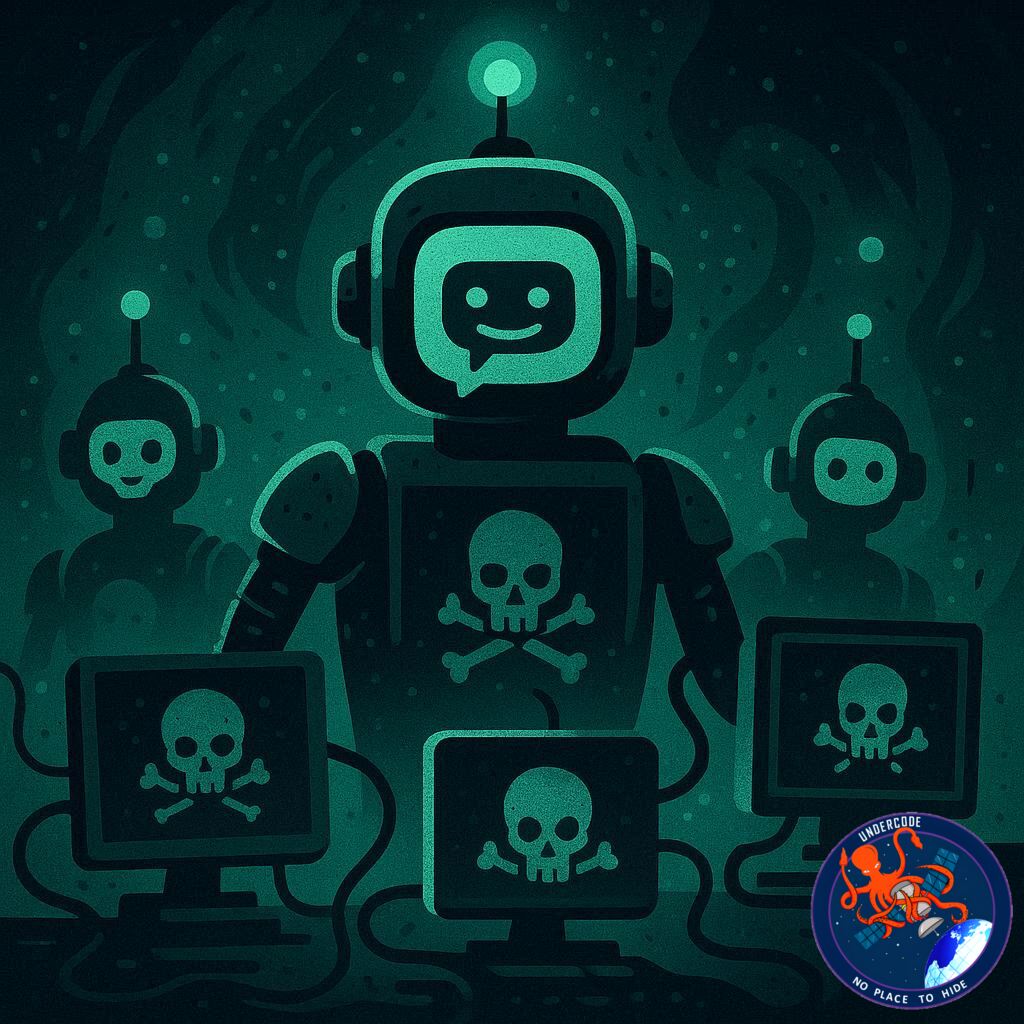
Artificial intelligence assistants are rapidly becoming embedded in daily workflows, from writing emails to querying live data across the web. But new cybersecurity research suggests this convenience comes with a dangerous hidden cost. According to findings published by Check Point Research, AI assistants with unrestricted web access can be abused as covert command-and-control (C2) infrastructure, allowing attackers to operate malware in ways that are adaptive, stealthy, and extremely difficult to detect.
The research highlights a troubling evolution in cyber threats: instead of relying on traditional malicious servers, attackers can now piggyback on trusted AI platforms, turning them into invisible intermediaries for cyber operations. This marks a fundamental shift in how malware may operate in the AI era.
the Original Report: AI as a Covert C2 Proxy
The report, originally shared via a post amplified by Cybersecurity News Everyday, outlines how modern AI assistants with live web-browsing capabilities can be repurposed by threat actors. These assistants, designed to retrieve and process online content dynamically, can unknowingly act as relays between attackers and infected systems.
Traditional command-and-control servers are often flagged and blocked by security tools. In contrast, AI-driven platforms blend seamlessly into normal enterprise traffic. Malware can be programmed to query an AI assistant, which then fetches attacker-controlled instructions from the web, summarizes or transforms them, and passes them back in a benign-looking response.
Check Point researchers demonstrated that this approach allows for dynamic, AI-driven malware behavior. Instructions can change in real time, shaped by context, system environment, or even defensive responses. This adaptability makes detection far more difficult than with static malware payloads.
The report specifically mentions widely used AI assistants developed by major tech players, including services operated by Microsoft and xAI, whose tools are deeply integrated into browsers, operating systems, and enterprise environments. Because these services are trusted and heavily used, blocking them outright is rarely an option.
Researchers warn that this technique effectively turns AI into a “digital smuggler,” carrying malicious intent under the guise of legitimate AI queries. The infrastructure cost for attackers is minimal, while the defensive burden for organizations increases significantly.
What Undercode Says:
Why This Research Changes the Cybersecurity Playbook
This disclosure is not just another malware technique—it represents a strategic inflection point in cyber warfare. For years, defenders have relied on identifying suspicious infrastructure: odd domains, rogue IP addresses, and abnormal traffic patterns. AI-assisted C2 collapses that model entirely.
By abusing AI assistants, attackers inherit the reputation, availability, and resilience of some of the most trusted platforms on the internet. Security teams are unlikely to flag outbound traffic to mainstream AI services, especially when those services are officially sanctioned for productivity and research.
More concerning is the decision-making layer AI introduces. Instead of hardcoded instructions, malware can receive context-aware guidance. An AI assistant can tailor commands based on operating system, geolocation, installed defenses, or even user behavior, creating malware that “thinks” before it acts.
This also lowers the barrier to entry for sophisticated attacks. Threat actors no longer need to maintain complex backend infrastructure. They can host simple content online and let the AI do the heavy lifting—parsing, summarizing, and relaying commands in natural language that blends into normal traffic.
From a geopolitical perspective, the implications are serious. Research originating from Israel underscores how advanced cyber capabilities are now colliding with consumer-grade AI. Nation-state actors and cybercriminal groups alike can exploit the same mechanisms, making attribution and response far more complex.
Defensively, this forces a shift toward behavioral analysis and zero-trust AI usage. Organizations will need visibility not just into where traffic goes, but why it goes there and how AI responses are being consumed by applications and scripts. AI guardrails, output monitoring, and strict API usage policies will become essential.
In short, AI is no longer just a target—it is an active participant in the threat landscape. Ignoring that reality leaves defenders blind to an entire class of emerging attacks.
🔍 Fact Checker Results
✅ Check Point Research did publish findings on AI-assisted command-and-control abuse.
✅ AI assistants with web access can relay external content dynamically.
❌ No public evidence confirms widespread real-world attacks using this method yet.
📊 Prediction
AI-assisted C2 techniques are likely to move from proof-of-concept to active exploitation within the next 12 months. As enterprises continue to embed AI assistants deeper into workflows, attackers will increasingly exploit these trusted channels. Expect new security controls focused specifically on AI query behavior, response validation, and contextual anomaly detection to become standard across high-risk environments.
🕵️📝✔️Let’s dive deep and fact‑check.
References:
Reported By: x.com
Extra Source Hub (Possible Sources for article):
https://www.medium.com
Wikipedia
OpenAi & Undercode AI
Image Source:
Unsplash
Undercode AI DI v2
Bing
🔐JOIN OUR CYBER WORLD [ CVE News • HackMonitor • UndercodeNews ]
📢 Follow UndercodeNews & Stay Tuned:
𝕏 formerly Twitter 🐦 | @ Threads | 🔗 Linkedin | 🦋BlueSky | 🐘Mastodon


