
Listen to this Post
A Strategic Pause Amid Record-Breaking Crowds and Global Diplomacy
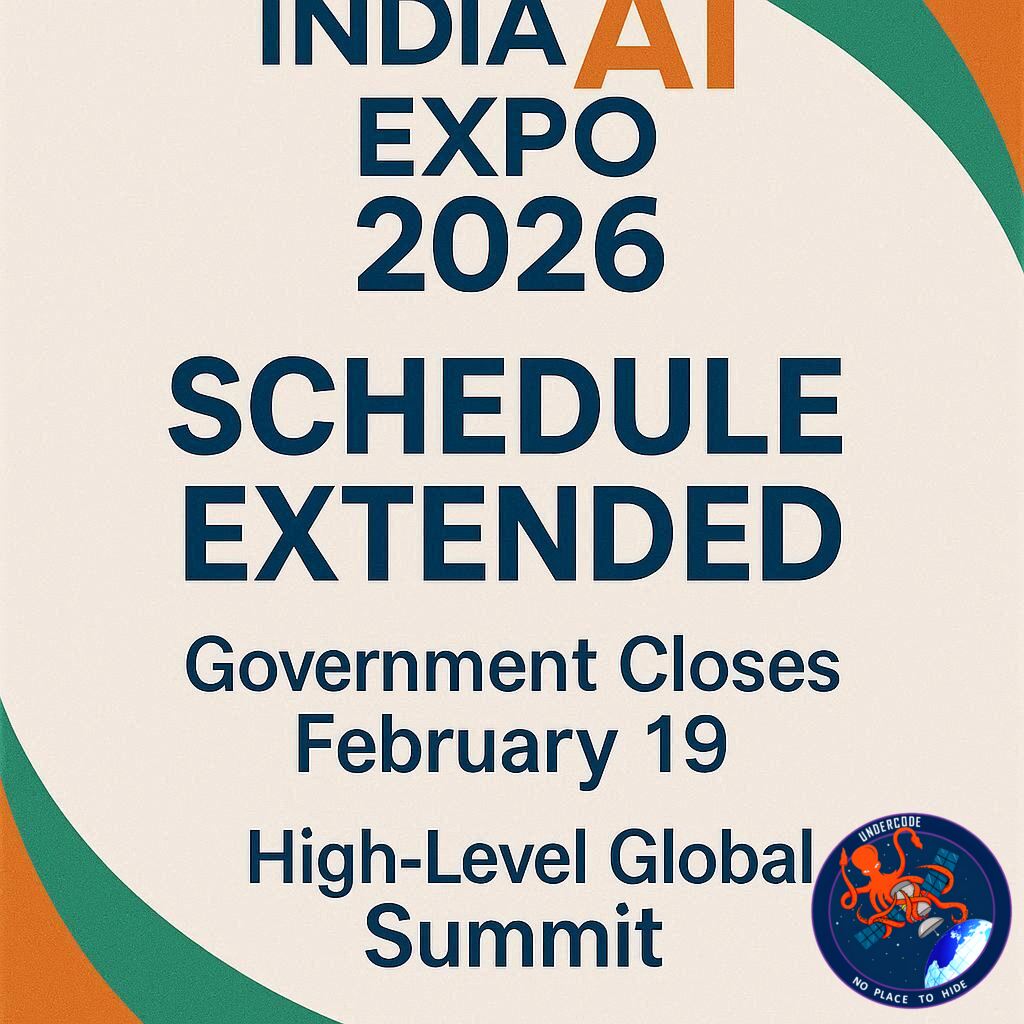
India’s flagship artificial intelligence showcase has taken an unexpected yet strategic turn. The government has officially announced that the India AI Expo 2026, currently underway at Bharat Mandapam, will remain closed to the general public on Thursday, February 19. The decision, described as necessary to manage record-breaking crowds and accommodate high-level diplomatic engagements, signals just how large and geopolitically significant this event has become.
Rather than shortening the experience, authorities have extended the expo by one additional day. Visitors will now have access until Saturday, February 21, and daily visiting hours have been expanded to 8:00 pm. The adjustment reflects both overwhelming public enthusiasm and the intense security requirements surrounding world leaders who are set to attend the parallel India AI Impact Summit.
Government Announces Extension Due to Unprecedented Enthusiasm
Officials confirmed that the expo extension was driven by extraordinary visitor turnout. According to S. Krishnan, Secretary of the Ministry of Electronics and Information Technology, the event witnessed huge enthusiasm from attendees eager to explore cutting-edge AI technologies.
The extension aims to create a smoother and more comfortable experience for the tens of thousands who have flooded the venue. By adding an extra day and extending operating hours, the government seeks to prevent overcrowding while preserving the momentum generated by the event.
Why February 19 Is Closed to the Public
The closure on February 19 is not a cancellation but a transformation of the venue into a restricted diplomatic zone. Prime Minister Narendra Modi is scheduled to inaugurate the India AI Impact Summit that morning, marking a high-profile convergence of technology and statecraft.
The day’s agenda includes keynote addresses by Prime Minister Modi, the President of France, and the Secretary-General of the United Nations. These sessions are designed to position India at the center of global AI governance discussions.
Security protocols surrounding visiting Heads of State require tight access control, leading to the temporary public closure.
High-Level Diplomatic Engagements Behind Closed Doors
The summit program is packed with strategic discussions. At 11:00 am, the Prime Minister and visiting global leaders will conduct a private walkthrough of the expo pavilions. This symbolic tour highlights India’s technological ambitions and showcases domestic AI capabilities to international stakeholders.
At noon, a critical meeting will focus on global AI governance frameworks and infrastructure development. In the evening, a session scheduled at 5:30 pm will connect government leaders with influential global technology executives, reinforcing public-private alignment in AI strategy.
These interactions reflect more than ceremonial diplomacy. They represent coordinated discussions on standards, regulation, and investment pathways in artificial intelligence.
A Gathering of the World’s AI Power Players
The India AI Impact Summit is expected to draw over 500 global AI leaders. This includes approximately 100 CEOs and founders, 150 academicians and researchers, and 400 CTOs, vice presidents, and philanthropic leaders.
More than 100 government representatives will participate, including over 20 Heads of State and Government and around 60 ministers and vice ministers. The scale of attendance underscores the event’s positioning as one of the most significant AI forums globally.
Such numbers demonstrate that India is not merely hosting a tech exhibition but orchestrating a platform for international policy coordination and industrial strategy alignment.
Extended Visiting Hours to Balance Public Access
In addition to adding a full extra day, the government has extended daily visiting hours until 8:00 pm. This move is intended to distribute visitor flow more effectively across time slots, easing congestion and improving accessibility.
For exhibitors, the extension provides additional exposure. For visitors, it ensures that the temporary closure does not diminish the opportunity to explore the showcased innovations.
The adjustment reflects logistical flexibility and highlights the administration’s responsiveness to public demand.
What Undercode Say:
India’s decision to temporarily close the expo while extending its duration reveals something deeper than simple crowd management. It signals a shift in how nations treat artificial intelligence events. This is no longer just a trade fair. It is a geopolitical arena.
When over 20 Heads of State gather around AI discussions, the message is unmistakable. Artificial intelligence has moved from research labs to national security strategies. The presence of global leaders, ministers, and top technology executives suggests that regulatory alignment and infrastructure investment are now diplomatic priorities.
Closing the expo for a day might appear inconvenient at first glance, but it elevates the event’s status. Restricted-access diplomacy transforms Bharat Mandapam into a secure policy laboratory where frameworks for global AI governance can be shaped.
India appears to be positioning itself as a bridge between developed economies and emerging markets in AI infrastructure. Hosting such a wide array of leaders gives New Delhi leverage in conversations around ethical AI, data sovereignty, and digital public infrastructure.
There is also an economic narrative unfolding. Extended hours and an additional day maximize footfall and exhibitor engagement. This benefits startups, research institutions, and technology firms seeking partnerships or capital.
The integration of political leadership with corporate decision-makers in a single venue reflects a coordinated ecosystem approach. Governments set direction, corporations build platforms, and academia refines the science. Bringing them together under one roof accelerates strategic alignment.
The presence of the President of France and the UN Secretary-General suggests multilateral engagement rather than purely bilateral negotiations. This broadens the conversation beyond national interests to global governance norms.
India’s AI strategy increasingly emphasizes digital public goods, scalable infrastructure, and sovereign innovation. By showcasing domestic achievements to world leaders during private walkthroughs, the country sends a powerful signal about its readiness to compete and collaborate simultaneously.
From a crowd management perspective, extending hours until 8:00 pm is pragmatic. It indicates data-driven planning, possibly influenced by visitor analytics and foot traffic patterns. The added day prevents negative sentiment that could arise from a simple closure without compensation.
More importantly, the move demonstrates adaptability. Major international events often require security adjustments, but not all governments manage to maintain public goodwill while enforcing restrictions. Here, the extension reframes the closure as a strategic necessity rather than an inconvenience.
The summit’s composition also reveals the layered structure of AI governance. CEOs and founders represent innovation and commercialization. Academicians bring theoretical and ethical grounding. CTOs and VPs translate strategy into deployment. Ministers and Heads of State provide regulatory direction.
When these layers intersect, policy becomes more pragmatic. Instead of abstract regulation, leaders can engage directly with those building AI systems.
The timing is significant. As countries race to define standards for generative AI, infrastructure investment, and AI safety, hosting a summit of this magnitude places India at the center of the regulatory conversation.
India’s digital transformation initiatives have already gained international recognition. Integrating AI governance into this framework could further strengthen its influence in global technology policymaking.
This event also signals competition. The United States, China, and the European Union are shaping their own AI governance narratives. India’s summit may be an attempt to articulate an alternative model that balances innovation with inclusivity.
Ultimately, the closure on February 19 is less about access and more about ambition. It reflects a nation using a technology expo as a diplomatic instrument, aligning innovation with foreign policy, and transforming a public exhibition into a strategic summit of global consequence.
Fact Checker Results
✅ The expo was officially extended by one day to accommodate high attendance and security needs.
✅ February 19 closure is tied to restricted events involving Prime Minister Narendra Modi and global leaders.
✅ The summit is expected to host over 500 global AI leaders, including Heads of State and senior executives.
Prediction
🔮 India’s AI diplomacy will likely expand into formal international partnerships and regulatory frameworks within the next year.
📈 The India AI Expo may evolve into an annual geopolitical technology summit attracting even greater global participation.
🤖 AI governance discussions initiated here could influence multilateral standards across emerging economies.
🕵️📝✔️Let’s dive deep and fact‑check.
References:
Reported By: timesofindia.indiatimes.com
Extra Source Hub (Possible Sources for article):
https://www.digitaltrends.com
Wikipedia
OpenAi & Undercode AI
Image Source:
Unsplash
Undercode AI DI v2
Bing
🔐JOIN OUR CYBER WORLD [ CVE News • HackMonitor • UndercodeNews ]
📢 Follow UndercodeNews & Stay Tuned:
𝕏 formerly Twitter 🐦 | @ Threads | 🔗 Linkedin | 🦋BlueSky | 🐘Mastodon


